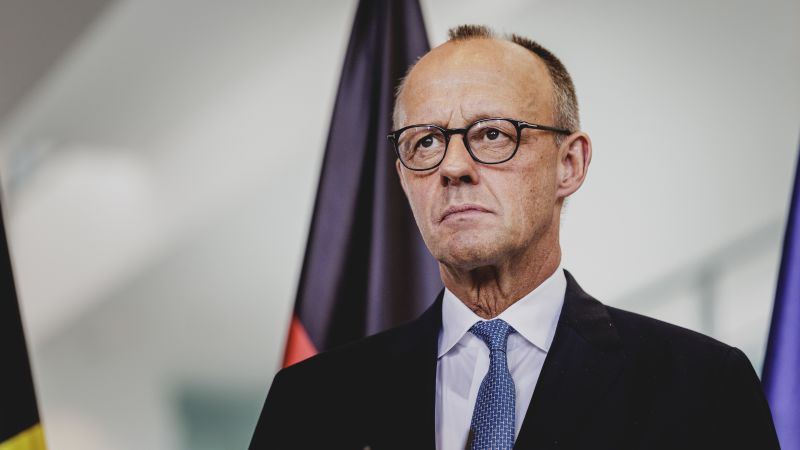
German Chancellor Friedrich Merz has announced a significant policy shift, advocating for the European Union to leverage $160 billion of frozen Russian Central Bank assets as an interest-free loan to Ukraine, exclusively for weapons procurement. This U-turn by Berlin, previously hesitant due to legal concerns, aims to enhance Ukraine's military resilience and concurrently boost Europe's defense industry. Merz intends to push for EU approval at upcoming summits, acknowledging potential member state opposition while the Kremlin has warned of retaliatory measures, signaling a critical development in asset utilization and geopolitical financing.
Germany's government, under Chancellor Friedrich Merz, has executed a significant policy reversal by proposing the European Union utilize $160 billion of frozen Russian Central Bank assets. This pivot from Berlin's previous stance, which cited legal and financial hesitations, advocates for an interest-free loan to Ukraine designated exclusively for weapons procurement. The plan is structured to provide Ukraine with military resilience for several years, with repayment contingent on future Russian war reparations. This hawkish proposal, which Merz aims to push through upcoming EU summits, carries dual objectives: reinforcing Ukraine's military and simultaneously stimulating Europe's own defense industry through controlled procurement. However, the initiative introduces considerable geopolitical risk, evidenced by the Kremlin's explicit warning of unanswered consequences. Furthermore, Merz's call for unanimous or large majority approval signals anticipated political friction within the EU, particularly from member states like Hungary and Slovakia, making the outcome of next week's meeting in Copenhagen a critical inflection point.
AI-powered research, real-time alerts, and portfolio analytics for institutional investors.
Overall Sentiment
moderately positive
Sentiment Score
0.50
