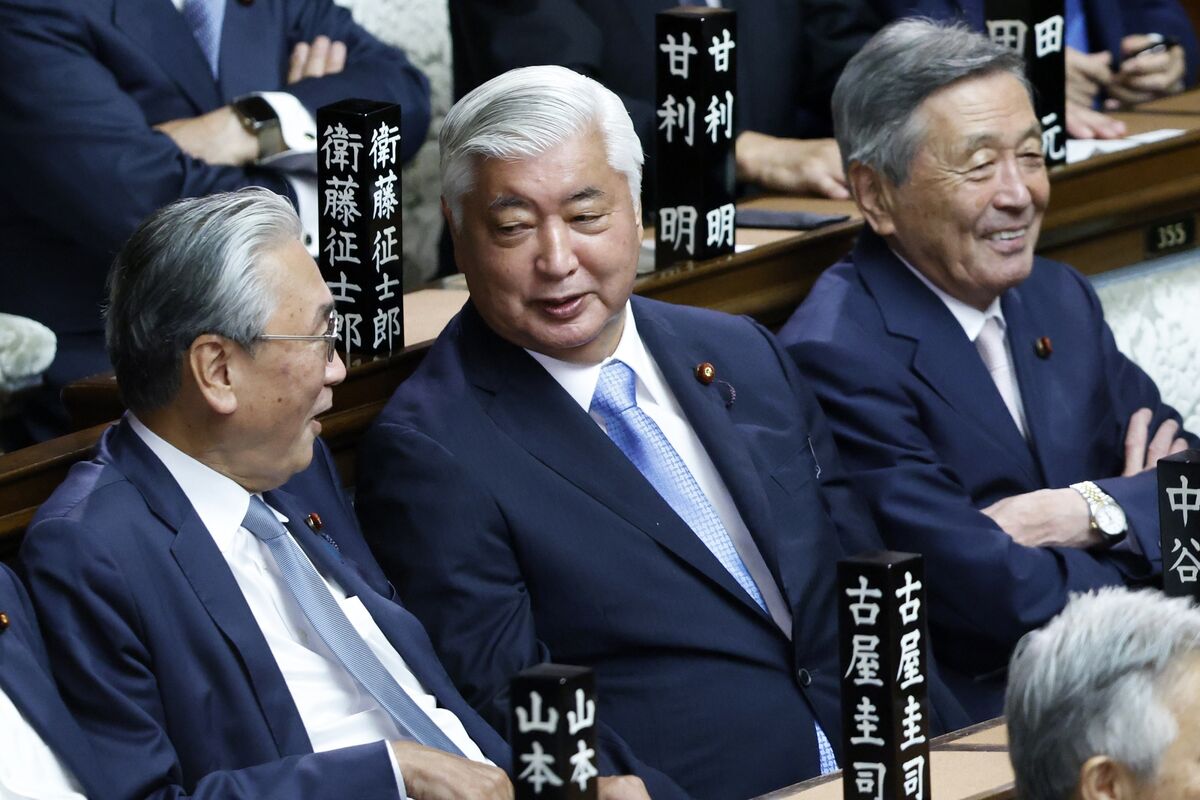
Former Defense Minister Gen Nakatani warned that a redirection of US resources to the Middle East (the Iran conflict) could destabilize the security balance around Japan if equipment is transferred or US force priorities shift. He said the prospect renews the imperative for Japan to strengthen its defense capabilities.
The immediate market implication is not just a headline-driven rerating of defense equities but an acceleration of multi-year procurement and domestic industrial build-out in Japan that favors firms with systems-integration, propulsion, and ground/maritime electronics capabilities. Expect procurement timelines to compress from multi-year planning cycles into 12–36 month accelerated orders for munitions, radars, missiles, and ship retrofits; that favors suppliers with existing production lines versus those needing greenfield capacity. Second-order winners include Japanese primes with vertically integrated manufacturing (engines, shipyards, radar) and their domestic Tier-1 suppliers — this will pull forward demand for precision machining, specialized semiconductors, and C4ISR components across Japan and likely Korea/Australia. Conversely, firms dependent on global just-in-time civilian supply chains (auto OEMs, consumer electronics assemblers) could see supply diversion and spot price inflation for machined parts and specialty chips. Key risk dynamics: days-to-weeks for headline-driven flows, months for budget approvals and contract awards, and multi-year for capability delivery and geopolitical normalization. Reversal triggers include rapid de-escalation in the Middle East, explicit US assurances to maintain Indo-Pacific posture, or Japanese fiscal pushback; these would remove the premium on accelerated domestic procurement. Consensus likely understates the procurement lead-time risk and capacity constraints — markets may underprice margin expansion at select suppliers that can convert idle civilian capacity to defense work quickly, creating asymmetric upside for a handful of names while many broad defense ETFs remain modestly exposed.
AI-powered research, real-time alerts, and portfolio analytics for institutional investors.
Request DemoOverall Sentiment
mildly negative
Sentiment Score
-0.25
