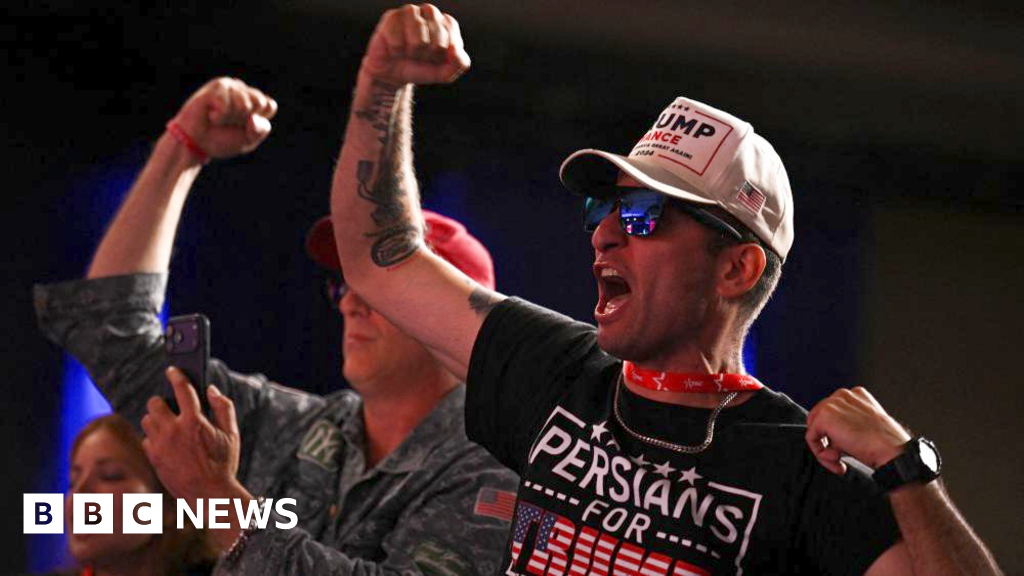
$200bn potential war-funding request and deployments of US Marine amphibious units and paratrooper elements signal elevated geopolitical risk. The Iran conflict is fracturing conservative support — Pew finds 79% of Republicans approve of Trump's conduct but only 49% 'strongly approve' and just 49% support among 18–29s — creating turnout and midterm political risk; expect upward pressure on oil prices, inflationary cost-of-living concerns, and selective gains for defense stocks.
A sustained Gulf security premium and a potential $200bn supplemental will be a clear structural tailwind for prime defense contractors and Tier-1 suppliers over the next 3–12 months. Rough arithmetic: an incremental $100–200bn in DoD funding spread over 12–24 months can translate into mid-single-digit revenue upside for top primes via backlog growth and reactivation of deferred programs, while subcontractor lead times (electronics, composite, missile components) should shorten, lifting margins sequentially.
Energy and inflation are the transmission channels to the real economy: every $10/bbl move up in Brent historically feeds through to roughly +0.2–0.3ppt in US headline CPI within 3–6 months, which risks delaying Fed rate relief and re-pricing long-duration growth assets. That mechanism simultaneously helps upstream and refining cash flow while pressuring airlines, leisure, and consumer discretionary margins; the market will front-run this via sector dispersion not instantaneously but over several rebalancing windows (weeks to a few quarters).
Political second-order effects matter to market structure: tepid enthusiasm among younger conservative voters creates a non-linear electoral tail risk that could alter fiscal priorities into November. A 5–10% drop in turnout among that cohort in key swing districts materially increases the probability of Congressional shifts, which would flip the policy mix from near-term defense stimulus toward regulatory and green-infrastructure narratives — a 6–12 month thematic pivot that would compress defense multiples and re-rate renewable/zero-emission names if it comes to pass.
AI-powered research, real-time alerts, and portfolio analytics for institutional investors.
Overall Sentiment
mildly negative
Sentiment Score
-0.25
