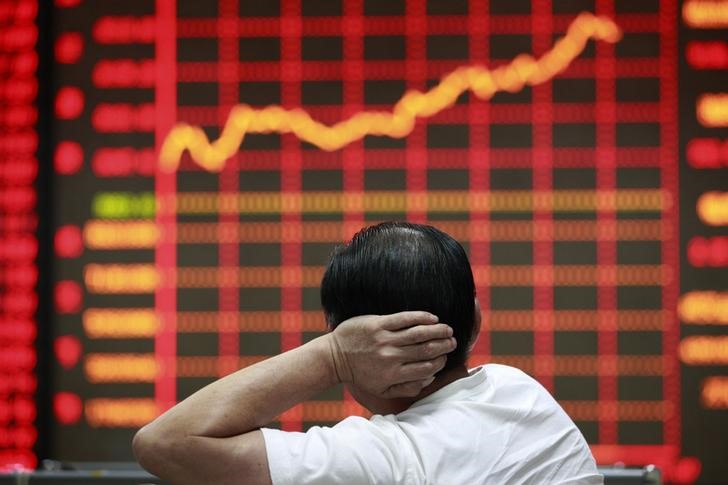
Asian equities fell broadly as renewed U.S.-Iran hostilities and a spike in oil prices worsened risk sentiment, with South Korea’s KOSPI down 4% and Japan’s Nikkei 225 off 1.1%. Inflation data also added pressure: Japan’s PPI came in hotter than expected for May, while Chinese CPI was softer but PPI accelerated at its fastest pace in nearly four years. Chip stocks remained weak, with SoftBank down nearly 10% and the KOSPI hit by renewed losses in heavyweight semiconductor names.
The market is repricing a classic cross-asset squeeze: higher oil volatility is no longer just an energy beta story, it is a macro-duration and margin story. The first-order winners are upstream energy and defense-adjacent assets, but the more interesting second-order losers are anything with high operating leverage to transport, industrial input costs, or discretionary demand—especially in Asia where margin compression can hit before end-demand softens. If crude stays bid for even 2-6 weeks, the market will start discounting lower FY2E earnings for cyclicals and a slower path to policy easing outside the U.S. Semis are getting hit for a reason that goes beyond “risk-off”: the AI trade is becoming more factor-saturated and more rate-sensitive at the same time. When the crowd rotates out of chips on macro shock, the unwind can be nonlinear because positioning is crowded, leverage is embedded in call structures, and valuation support depends on a clean earnings path into H2. That makes the selloff vulnerable to continuation over days, but also vulnerable to a sharp snapback if CPI cools and oil retraces, because the sector’s fundamental narrative has not yet broken. The META-linked rally in India is the more subtle tell. Domestic beneficiaries of U.S. AI capex that are not directly exposed to geopolitical fuel shocks can act as relative safe havens, especially where earnings revisions are still under-owned. Meanwhile, Japan faces a bad mix: imported energy inflation raises the probability of tighter policy just as global risk appetite weakens, which is a poor backdrop for domestically leveraged financial conditions and export-sensitive multiples. Consensus is likely overestimating how durable the inflation impulse is from one geopolitical shock and underestimating how quickly markets can fade it if supply fears do not escalate further. The bigger medium-term risk is not just higher headline CPI; it is a regime shift in inflation expectations that forces central banks to stay tighter for longer, which would pressure long-duration growth and speculative tech leadership even after the initial war premium fades.
AI-powered research, real-time alerts, and portfolio analytics for institutional investors.
Request DemoOverall Sentiment
strongly negative
Sentiment Score
-0.62
Ticker Sentiment
