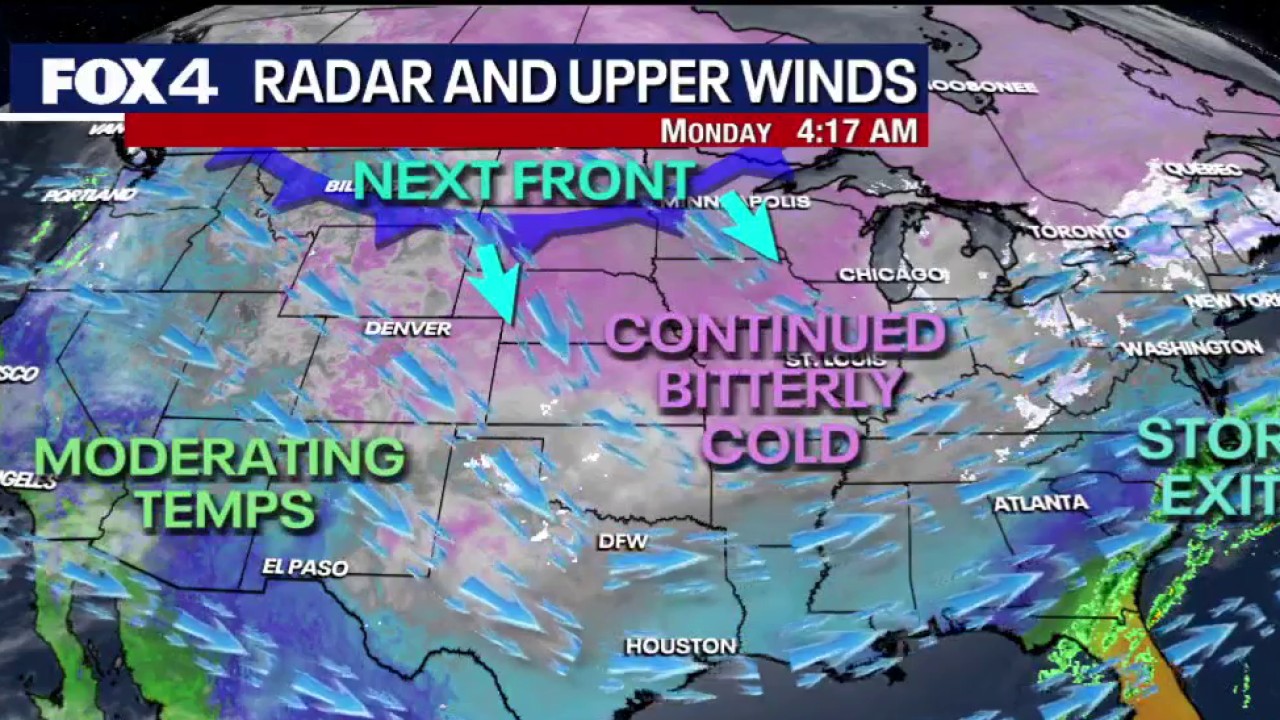
The U.S. Department of Energy issued an emergency order under section 202c of the Federal Power Act directing ERCOT to require large energy consumers (e.g., data centers) to run backup generators if ERCOT resources are exhausted or the grid reaches emergency level three; the order cites some 35 GW of untapped backup generation and is effective through Tuesday. The order exempts critical services (hospitals, 911, water, pipelines, defense) and must be reported to DOE within one day; presently ERCOT reports normal operating reserves while roughly 83,000 Texans face mostly localized outages. For investors, the move reduces immediate blackout risk but could raise short-term localized fuel demand and emissions risks, and has limited broader market impact unless the storm materially degrades grid reserves.
Market structure: The DOE order transiently raises demand for on-site backup generation and distillate fuel while reducing immediate blackout risk—clear beneficiaries are generator OEMs (GNRC, CMI, CAT) and refiners with distillate exposure (VLO, MPC, PSX). Pure-play renewables and grid-only capacity stand to lose marginal pricing power during emergency generator deployments; impact on ERCOT wholesale prices likely muted unless outages exceed 1–2 GW for >24–48 hrs. Cross-asset: expect short-term ULSD (heating oil) and front-month WTI/Nymex distillate basis moves (+2–8%) and a modest uptick in utility/municipal credit spreads if outages expand.
Risk assessment: Tail risks include a prolonged multi-day grid failure (>48 hrs) producing large economic loss and triggering federal/state litigation and stricter emissions/regulatory responses that could cap generator utilization; supply-chain risk for new gensets (lead-times 3–6 months) caps upside for OEM equity. Time horizons: immediate (0–7 days) for fuel and spot operational moves, short-term (1–3 months) for P&L in refiners/OEMs, long-term (6–24 months) for policy-driven winterization capex. Hidden dependencies: diesel logistics in PADD3/Houston and local permitting; catalyst to watch: DOE extension beyond Tue or ERCOT emergency level 3.
trade implications: Tactical long exposure to equipment makers (GNRC 1–2% of portfolio) and refiners (PSX/VLO 1–2%) is favored for 1–3 month windows; use 3-month call spreads to size convexity while limiting drawdown. Relative-value: favor industrial OEMs/winterization contractors (EMR) over renewables ETFs (TAN) where short-term demand for fossil backup undercuts near-term renewable economics. Entry: initiate within 3 trading days; exit if ULSD spot basis in Houston widens >$5/bbl or positions gain 15–25%.
contrarian angles: Consensus overweights OEM headlines but underestimates fuel/logistics constraints—new genset sales are supply-limited, so immediate revenue upside may be smaller than market expects, making refiners a more reliable near-term play. Past parallel: Feb 2021 Texas freeze produced policy backlash and accelerated winterization capex—that implies medium-term winners are engineering/controls firms (EMR) and storage/winterization services, not just generator OEMs. Unintended consequence: increased diesel use can trigger local emissions crackdowns and retroactive penalties—limit holdings size and use options to cap downside.
AI-powered research, real-time alerts, and portfolio analytics for institutional investors.
Request DemoOverall Sentiment
neutral
Sentiment Score
0.00
