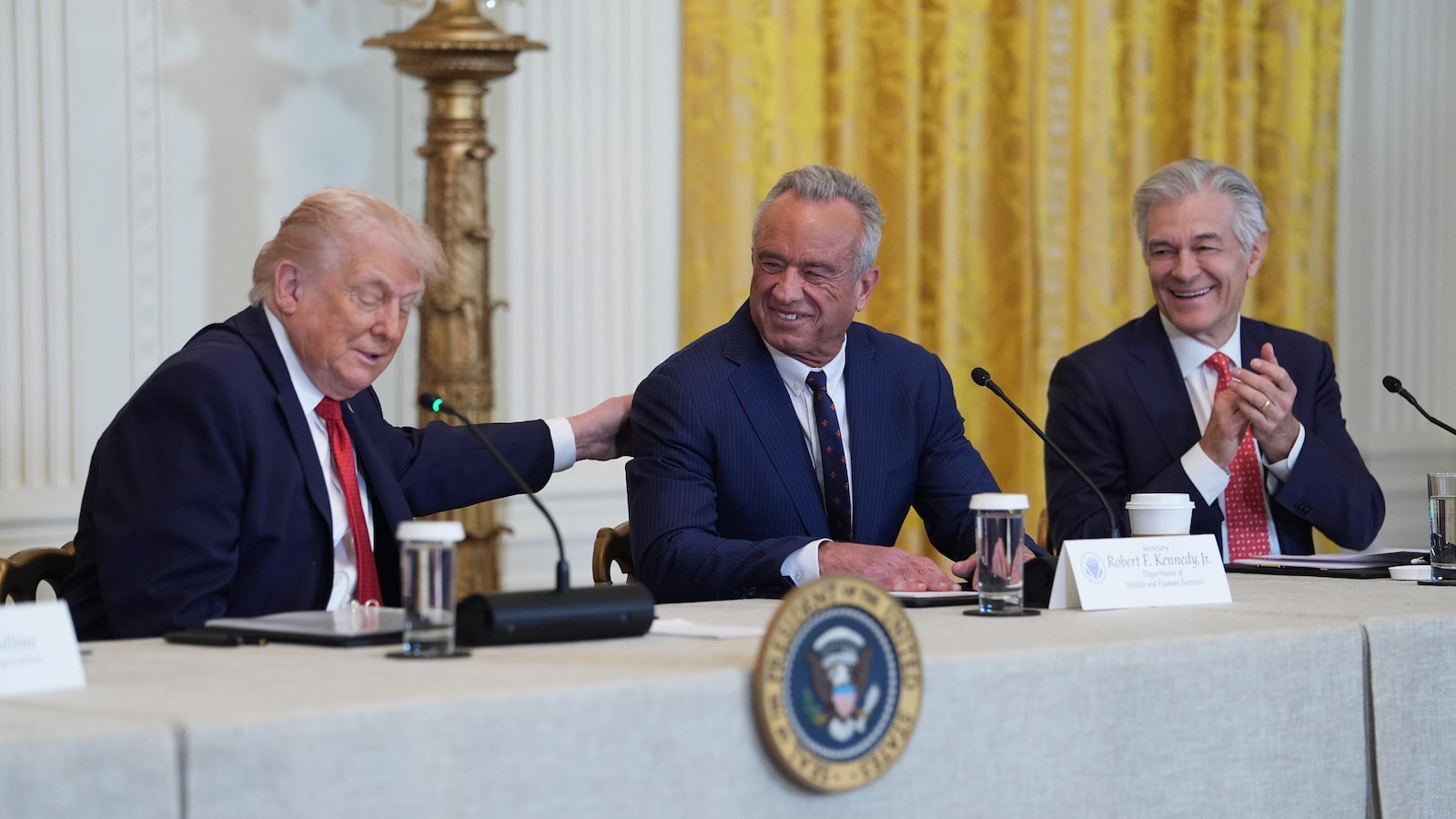
The Trump administration announced 15 additional drugs selected for Medicare’s drug price negotiation program (the third round under the 2022 law), marking the first inclusion of Medicare Part B products and negotiations that will take effect in 2028. The list — which includes Trulicity, Biktarvy, Botox (for Medicare-covered uses), and other treatments for diabetes, HIV, autoimmune disease and cancer — was used by roughly 1.8 million Medicare enrollees and accounted for about 6% of Part B and Part D spending; Tradjenta will be renegotiated. The move signals potential downward pressure on revenues for manufacturers of the listed drugs and prospective taxpayer savings, while creating event risk for affected pharma companies over the negotiation and implementation timeline.
Market structure: Medicare/beneficiaries and taxpayers are clear winners — negotiated prices lower government outlays and enrollee OOP costs; selected manufacturers (e.g., makers of Trulicity, Biktarvy, Botox) lose pricing power on drugs that accounted for ~6% of Part B/D spend and ~1.8M users last year. Expect downward pressure on net unit price growth of 5–15% for impacted molecules by 2028, driving margin compression and faster lifecycle-management activity (indication shifts, rebate reengineering).
Risk assessment: Tail risks include program expansion (more drugs added annually) or cross-border reference pricing spillover that could cut global revenues 3–8% for exposed firms, or successful industry legal challenges delaying implementation into 2028. Near-term (days–months) volatility around CMS offer notices; material EBITDA effects concentrate in 2028–2030. Hidden dependencies: gross-to-net accounting, formulary rebates, and Medicaid best-price triggers can amplify net revenue loss beyond headline price cuts.
Trade implications: Favor financials/insurers (UNH, CVS, CI) that capture some savings — modest long exposure (1–3% AUM) with 6–12 month horizon; be selectively short/high-hedge on makers with concentrated Medicare revenue (consider LLY, GILD, ABBV) using defined-risk put spreads expiring 9–15 months. Options: buy 6–12 month put spreads on single names to cap downside and sell call spreads on insurers to finance buys. Rotate out of small-cap biotech/high P/S names (XBI/IBB) by 2–4%.
Contrarian angles: Consensus may overstate permanent top-line loss — firms can shift volume to commercial channels, raise list prices elsewhere, or restrict Medicare access, generating political backlash and corrective policy. Historical parallels (EU price controls) show short-term EPS pain but durable franchise value; mispricing likely in 6–24 month window where headline fear exceeds long-term fundamental impact.
AI-powered research, real-time alerts, and portfolio analytics for institutional investors.
Request DemoOverall Sentiment
mildly negative
Sentiment Score
-0.25
