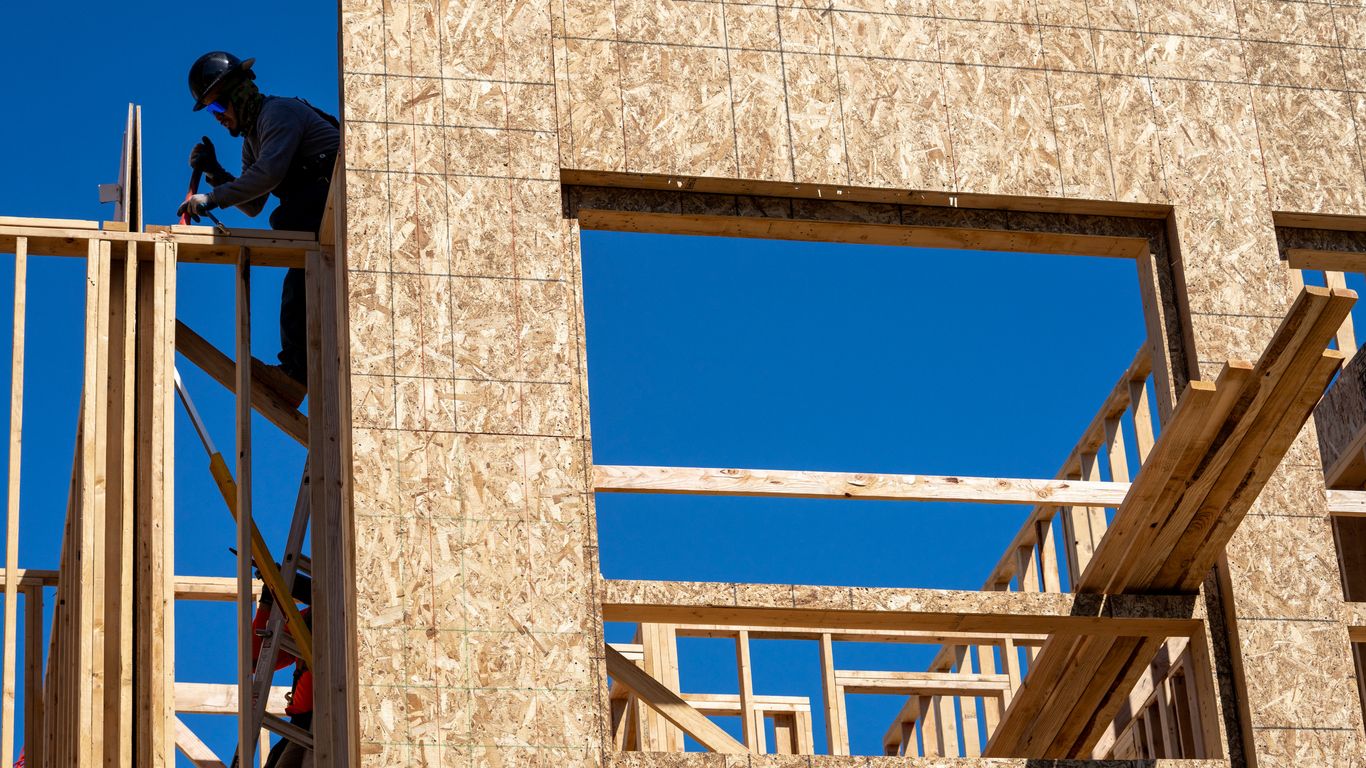
New housing sector indicators reveal a worsening slump, with housing starts falling almost 10% in May to an annualized pace of 1.3 million, and building permits dropping nearly 3% to 898,000, both below expectations. Homebuilder sentiment has plummeted to levels not seen since 2022, driven by elevated mortgage rates, economic uncertainty, and rising building costs, including tariffs on steel and aluminum, and potential tariffs on wood. Lennar reported weaker-than-expected earnings, citing a soft housing market, signaling potential broader economic consequences if other sectors slow concurrently.
The new housing sector is experiencing a significant and worsening downturn, underscored by May's housing starts, which plummeted almost 10% to an annualized 1.3 million units—the slowest rate in five years and considerably below economists' forecasts. Similarly, building permits, a key forward-looking indicator, also reached a five-year low, with permits for single-family homes declining nearly 3% from April to an annualized 898,000. This sharp decline in activity is mirrored by homebuilder sentiment, which fell in June to its lowest level since 2022, with the National Association of Home Builders noting only two periods of lower sentiment since 2012. Lennar Corporation (LEN), a major U.S. homebuilder, directly reflected these conditions by reporting weaker-than-expected quarterly earnings, attributing the miss to a "soft housing market." Lennar's co-CEO Stuart Miller explicitly stated that "new construction has slowed as builders have pulled back on production," citing increasing labor and material costs, with lumber identified as a "particular headache." The sector faces compounding pressures from policy factors, including tariffs on steel and aluminum that have doubled to 50% (excluding UK imports), potential new tariffs on wood materials, and immigration policies targeting a workforce heavily reliant on immigrant labor. These challenges are layered on top of existing market conditions like elevated mortgage rates and broader economic uncertainty, which are sidelining buyers and, in some regions, leading to an oversupply of inventory relative to demand. The primary concern is that this pronounced housing slump, unlike the "rolling recession" previously contained within the industry, could exert a drag on the broader economy if other sectors slow concurrently.
AI-powered research, real-time alerts, and portfolio analytics for institutional investors.
Request DemoOverall Sentiment
strongly negative
Sentiment Score
-0.80
Ticker Sentiment
