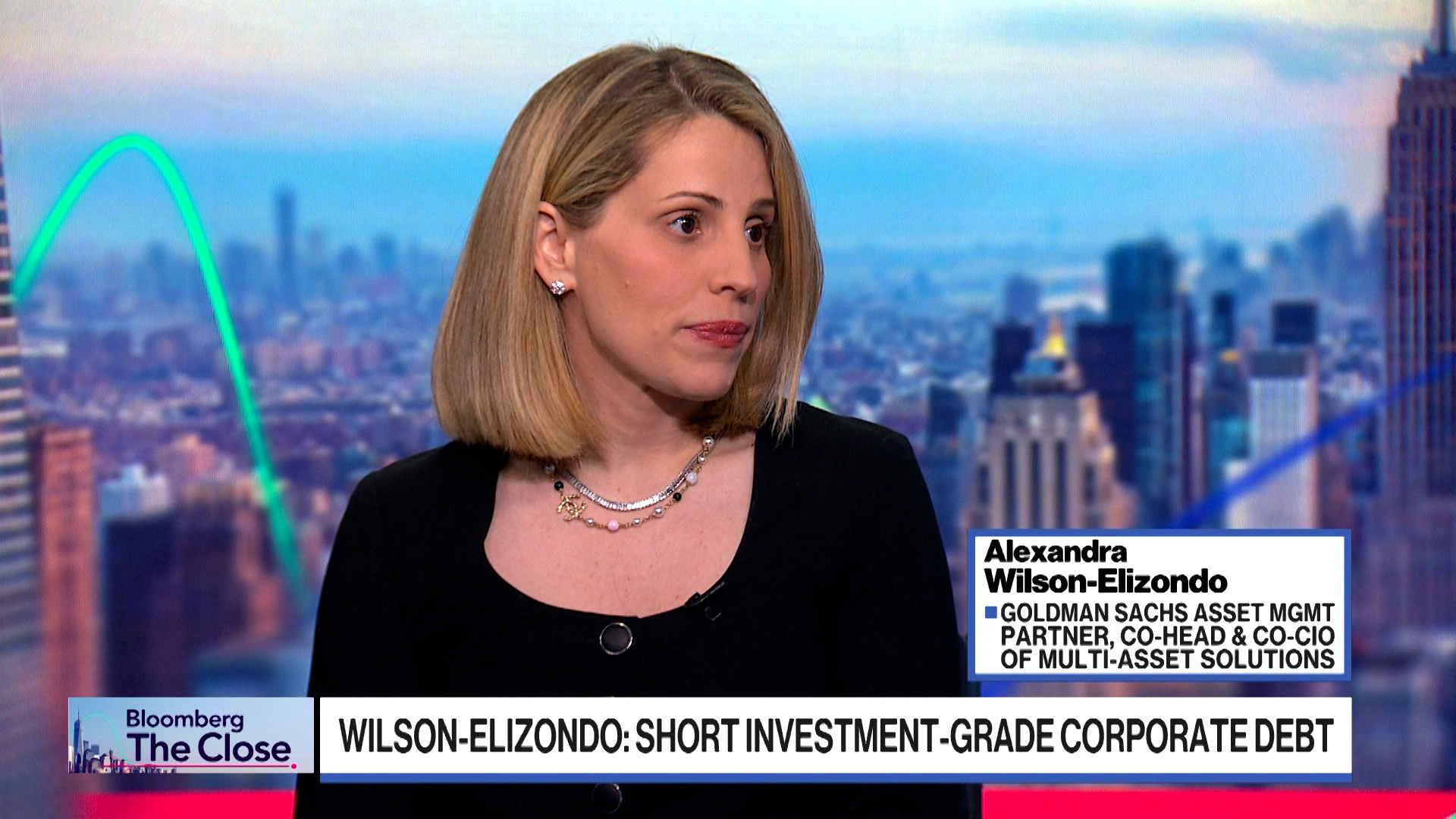
Portfolio managers are participating in the AI-driven rally but positioning conservatively in quality names with high ROIC and low leverage, adding international exposure (India, Hong Kong) where a 'quality' basket trades ~17% cheaper than the broader index. The firm flags risks from concentrated AI exposure and expects heavy corporate issuance to finance AI capex, prompting a contrarian short view on investment‑grade corporate debt as spreads are tight despite a bond index return of ~7.5% YTD. Macro assumptions are for above‑trend growth (~2.4% next year) and higher rates, with a terminal policy rate around 3.0–3.5%, only two potential Fed cuts next year, and limited scope for an extended easing cycle.
Market structure: The near-term winners are low-leverage, high-ROIC “quality” names and non-U.S. markets (India, Hong Kong, parts of Europe) that the speaker says trade ~17% cheaper than broad indices; losers are high-leverage AI pure-plays and long-duration bonds if rates re-normalize to a terminal 3.0–3.5%. Competitive dynamics favor large cloud/infra incumbents (MSFT, AMZN, NVDA) who capture platform rent while many smaller AI firms will need incremental capital, pressuring credit supply. Cross-asset: expect upward pressure on IG issuance (LQD), tighter equity breadth (QQQ concentration), USD strength if Fed stays hawkish, and commodity/capex inputs (semis, copper) to see cyclical uplift.
Risk assessment: Tail risks include an abrupt China/geopolitical shock, major AI regulatory action, or sticky inflation pushing terminal Fed funds >3.5%—each would widen credit spreads by 50–150bp and shave 10–20% off high-multiple growth names. Immediate (days): positioning around the expected 25bp cut; short-term (1–6 months): watch IG issuance and CPI/PCE prints; long-term (1–3 years): structural productivity gains from AI vs. creative destruction. Hidden dependencies: corporate capex funded by IG markets, semiconductor supply constraints, and dollar liquidity conditions.
Trade implications: Direct plays — overweight quality (QUAL or VQ) and India (INDA) while shorting IG credit (LQD) or buying protection; pair trade — long QUAL vs short QQQ (1–1) to capture valuation reversion; options — buy 3–6m put spread on LQD (e.g., 3m 2%/6% OTM) and 6m call spreads on INDA to limit premium. Rotate sectors into healthcare/consumer staples/industrial quality names and reduce exposure to high-debt tech and real estate. Entry/exit: scale into equities before CPI prints if 10Y <3.6%; trim equities if 10Y >4.0% or IG spreads widen >50bp.
Contrarian angles: The consensus is too US-AI–centric; international quality being ~17% cheaper is an underowned structural opportunity—small allocations (1–3% each to INDA and EWH/MCHI) can outperform if China policy is pragmatic. The market may be underpricing IG supply shock risk from capex-driven issuance; spreads are tight and a 50–100bp widening is a realistic stress scenario. Historical parallel: late-cycle concentrated tech rallies (1998–99) led to multi-quarter breadth reversals; don’t mistake short-term AI revenue growth for durable cash-flow/ROIC without balance-sheet strength.
AI-powered research, real-time alerts, and portfolio analytics for institutional investors.
Request DemoOverall Sentiment
mixed
Sentiment Score
-0.05
Ticker Sentiment
