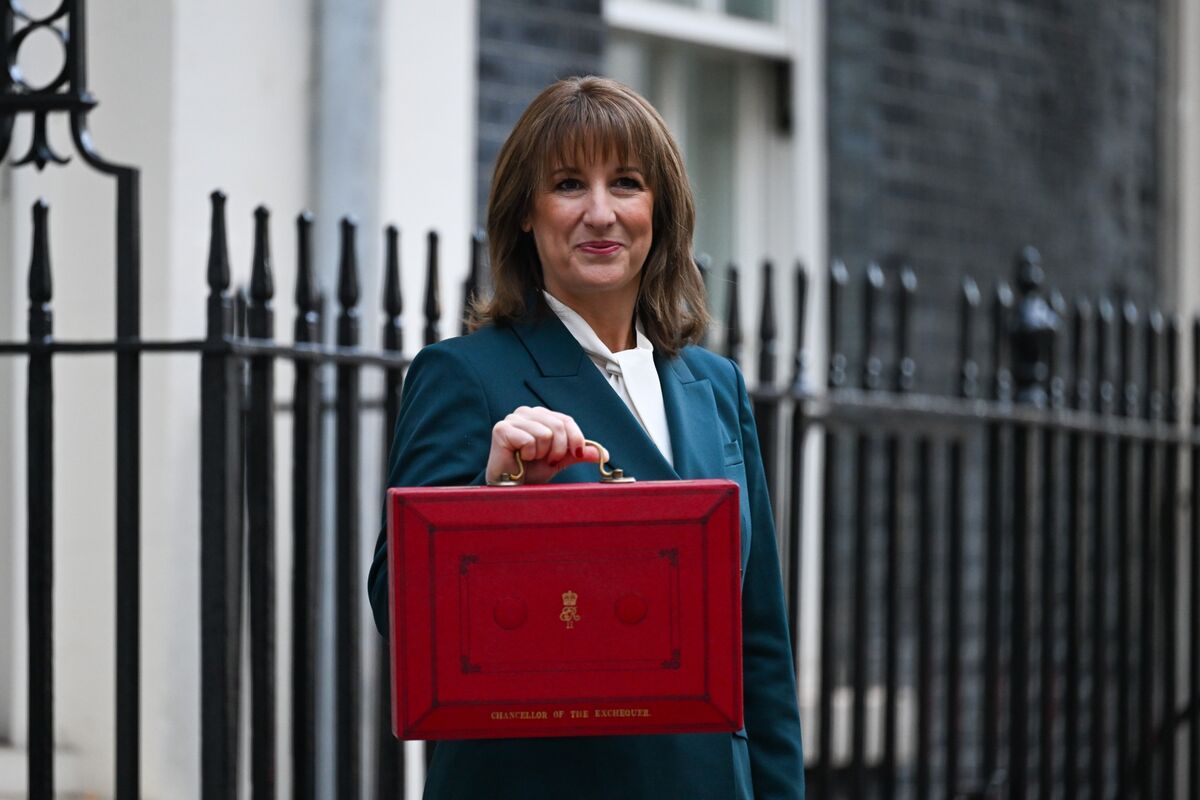
Chancellor Rachel Reeves expanded the UK government’s fiscal headroom to £22 billion from £9.9 billion reported in March, according to an Office for Budget Responsibility analysis published early in error. The £22bn buffer is the largest in a UK spending plan since March 2022 and well above the Bloomberg-surveyed banks' median estimate of £15bn, reinforcing near-term fiscal resilience and potentially easing sovereign risk concerns for gilts and credit observers.
Market structure: A £22bn fiscal buffer materially lowers perceived near-term UK sovereign funding risk which tends to compress gilt spreads and reduce gilt volatility; market mechanics imply a 15–30bp downside in UK 10y yields if confidence holds, supporting long-duration gilts and lowering gilt-implied FX/credit premia. Winners: long-dated gilts, sterling, domestic cyclicals and UK financials that benefit from lower credit volatility; losers: large-cap exporters and commodity plays that gain from a weaker pound or higher global risk premia.
Risk assessment: Tail risks include election-driven rapid fiscal loosening (high-impact, low-probability) and a geopolitical or growth shock that would reverse the rally; if the government deploys the buffer aggressively, gilt yields could re-widen by >40bp. Immediate (days) — lower gilt vols and firmer GBP; short-term (weeks–months) — yield compression and tighter bank CDS; long-term (quarters+) — outcomes hinge on post-election fiscal trajectory and BoE reactions. Hidden dependencies: OBR methodology shifts, rating-action timing, and household consumption sensitivity to FX moves could flip markets.
Trade implications: Tactical long exposure to UK nominal duration and GBP is favoured: long 10y gilts and 3-month GBPUSD calls to capture fiscal credibility; overweight UK banks and domestic cyclicals versus export-heavy FTSE100 names to play a stronger sterling / lower-risk-premium regime. Use options to cap tail risk (buy protection if yields spike); size trades as tactical allocations (1–3% NAV) with explicit stop-losses tied to yield moves (>30–40bp) or GBP moves (>‑1.5%).
Contrarian angles: Consensus may underprice election and policy execution risk — a crowded gilt long + sterling long is vulnerable to a policy U‑turn; history (2022 UK fiscal episode) shows rapid reversals when markets suspect unfunded promises. Mispricing opportunity: sell short exporters (FTSE100 heavyweights) vs long FTSE250/domestic small caps if sterling re-rates >2–3% in 1–3 months. Monitor OBR updates and PM/Chancellor speeches for catalyst risk within 30 days.
AI-powered research, real-time alerts, and portfolio analytics for institutional investors.
Request DemoOverall Sentiment
mildly positive
Sentiment Score
0.25
