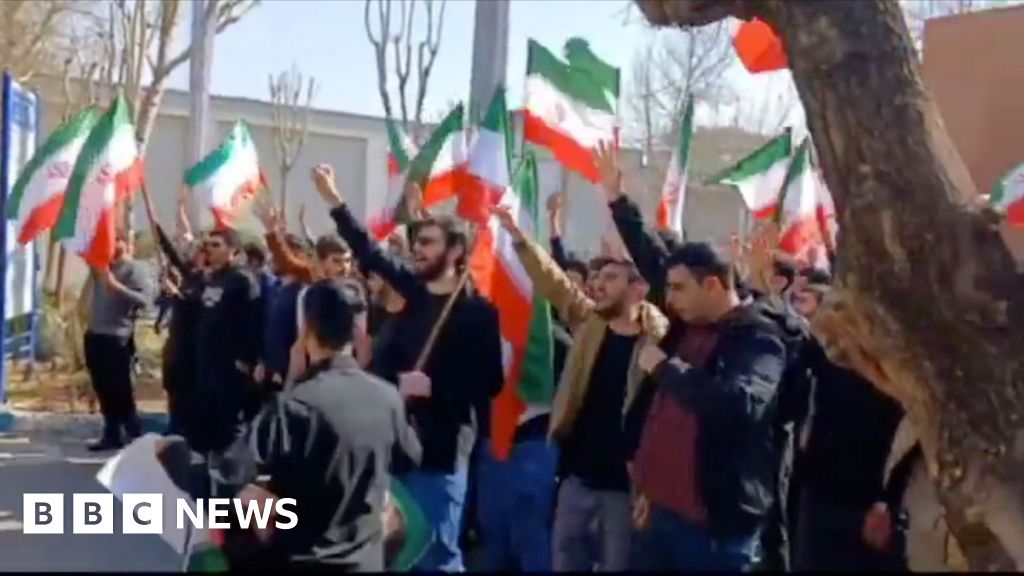
Large student-led anti-government protests took place across multiple Iranian universities (Sharif, Shahid Beheshti, Amir Kabir and in Mashhad), the biggest campus rallies since a deadly January crackdown. Rights groups report between roughly 3,100 (official Iranian figure) and 6,159 (HRANA) killed in the earlier wave, while Tehran is said to be preparing for a possible confrontation as the US builds up forces nearby and President Trump has signalled he may consider limited strikes amid ongoing nuclear talks. The developments increase short-term geopolitical risk for the region and could pressure risk assets, defense-related equities and energy market volatility if escalation or renewed sanctions occur.
Market structure: Near-term winners are defense contractors (Lockheed LMT, Raytheon RTX, Northrop NOC) and integrated oil majors (Exxon XOM, Chevron CVX) as geopolitical risk re-prices premiums on military spending and hydrocarbon security; losers include EM equities (EEM), regional airlines (DAL, LUV) and shipping/insurance-sensitive names. Expect higher crude volatility (Brent/WTI), USD strength, a bid for gold (GLD), and wider EM sovereign/corporate spreads; short-term liquidity may compress in options and CDS markets raising implied vols 20–50% intraday around escalation news.
Risk assessment: Tail risk is a US-Iran military exchange that disrupts Strait of Hormuz — low-probability but high-impact: oil > $120/bbl, Brent up +40% and S&P down 10–15% within weeks, with defense revenues accelerating over 2–4 quarters. Immediate window (days) is event-driven volatility; short-term (weeks–months) sees commodity and FX moves and supply-chain re-routing; long-term (quarters–years) could permanently raise energy security premiums and defense budgets. Hidden dependencies include shipping insurance, sanctions enforcement by banks, and OPEC spare capacity; catalysts are any US military action (article cites a ~10-day decision window) or Iranian retaliatory strikes.
Trade implications: Favor defined-risk, short-dated option plays and pairs: long 3–6 month call spreads on Brent/BNO and GLD, selective 1–2% cash longs in LMT/RTX and XOM/CVX, and 2–3% trimming or hedged shorts in EEM and airline exposure. Use pair trades (long XOM vs short DAL) to isolate oil vs demand risk; size positions to 0.5–2% of portfolio and scale on volatility spikes >25% in oil or VIX >25. Exit or re-evaluate at 30–90 days or if escalation does not materialize within 60 days.
Contrarian angles: Consensus may underprice non-linear oil supply shocks if shipping through Hormuz is intermittently closed, so oil calls may be underdone; conversely defense equities may be overbought already — avoid unhedged longs. Historical parallels (1990 Gulf War) show rapid initial rallies in oil/defense followed by mean reversion over 6–12 months as markets adapt, so favor option-defined risk and paired hedges to capture asymmetric payoffs while protecting against a 20%+ reversal in risk assets.
AI-powered research, real-time alerts, and portfolio analytics for institutional investors.
Request DemoOverall Sentiment
strongly negative
Sentiment Score
-0.60
