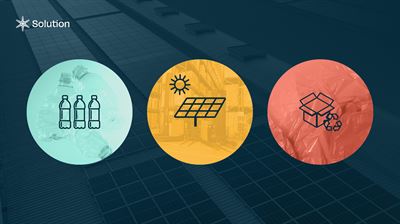
Solution International is advancing ESG-driven resilience across its supply chain and operations, reporting that since 2022 it has removed over three million pieces of plastic from packaging in collaboration with Tesco, Asda and Sainsbury’s, and that rooftop solar has generated over 80,000 kWh to power onsite forklifts supporting in-house fulfilment. The firm notes that over 50% of its suppliers participate in the Higg Index and all partner sites are audited by Sedex, while exploring recycled r-PET and closed-loop manufacturing; CEO Mark Mcloughlin says these measures align governance and disclosure with investor expectations as the company grows as a listed entity.
Market structure: Solution International’s disclosures signal incremental pricing power for suppliers that embed recycled-materials and verified ESG audits (winners: packaging converters with rPET capability, ESG auditors, large grocery partners like TSCO.L/SBRY.L). Expect 1–3% gross margin premium for compliant suppliers over 12–24 months as retailers reward shelf access; conversely pure virgin-resin producers (e.g., LYB, XOM plastics segments) face weaker growth and potential unit-volume loss. Rising rPET demand will tighten feedstock (post-consumer PET) and likely push rPET prices up ~10–20% in the next 6–12 months absent new collection capacity.
Risk assessment: Key tail risks include greenwashing audits or failed supplier audits that trigger retailer de-listings and a 5–15% EBITDA shock for exposed suppliers; regulatory acceleration (EU/UK packaging mandates) could force unplanned capex within 6–18 months. Immediate risk (days–weeks) is investor scrutiny around disclosures; short-term (3–9 months) is procurement/re-order cycles with retailers; long-term (1–3 years) is structural capex to scale closed-loop rPET supply. Hidden dependency: reliance on third-party audit frameworks (SEDEX/Higg) creates concentration risk if frameworks change standards or credibility collapses.
Trade implications: Tactical trades: long 2–3% positions in AMCR (Amcor, AMCR) and IVL (Indorama, IVL) to capture rPET pricing power, and 1–2% long in ITRK/SGSNF (Intertek/SGS) for auditing demand, funded by reducing 1–2% exposure to LYB (LyondellBasell) and integrated resin names. Consider a relative pair: long AMCR vs short LYB sized 1:1 for 3–9 months; buy 6–9 month calls on ITRK/SGSNF 15–20% OTM if IV (vol) is low. Enter positions in 25% tranches over 4–8 weeks; exit/trim if rPET-virgin PET spread compresses >200 bps or if retailers stop premium sourcing.
Contrarian angles: Market may be underpricing margin squeeze for small suppliers forced into one-off capex to meet ESG specs — short mid-cap single-source packagers without recycling contracts. Conversely, long auditor/verification names may be overbought if SEDEX/Higg become table-stakes; consider writing covered calls on ITRK/SGSNF 6–12 months out once a 10–15% move is realized. Historical parallel: early ‘BPA-free’ premium compressed within 12–24 months as certification became baseline, suggesting ESG-driven premiums may be front-loaded and then commoditized.
AI-powered research, real-time alerts, and portfolio analytics for institutional investors.
Request DemoOverall Sentiment
mildly positive
Sentiment Score
0.35
