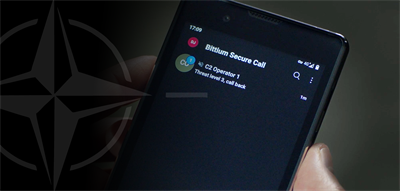
Bittium has signed a Basic Ordering Agreement with the NATO Communications and Information Agency (NCIA) designating it a preferred supplier for secure mobile communications devices, software and accessories (including Bittium Tough Mobile™ 2 C/3, Bittium SafeMove® and Bittium Secure Call™), facilitating accelerated procurement by NATO and member states and strengthening its defense market position. The company reported 2024 net sales of EUR 85.2 million and operating profit of EUR 8.6 million; the BOA expands addressable defense demand and could support revenue growth and order visibility for this Nasdaq Helsinki-listed specialist in secure communications and cybersecurity.
Market structure: NATO’s BOA turns Bittium into a preferred vendor, shifting procurement friction from multi-vendor sourcing to faster call-offs; for a company with €85.2m 2024 sales, even a modest 5–20% incremental book (≈€4–17m) over 12–36 months materially lifts top line and operating leverage. Winners are niche secure-comm and quantum-safe software vendors and European small-cap defense suppliers; losers are undifferentiated COTS vendors competing on price. Pricing power improves for certified, hardened devices where certification is a barrier to entry.
Risk assessment: Tail risks include a major cybersecurity breach, export-control changes, or a canceled NATO call-off that could wipe 10–30% of forward revenue visibility; sovereign budget shifts are second-order risks. Immediate impact (days) is likely limited to a sentiment bump; short-term (weeks–months) depends on concrete call-off awards; long-term (1–3 years) is upside if adoption across member states scales. Hidden dependencies: certification timelines, integration with national systems, and concentration risk on a single agency and EU/Euro FX exposure.
Trade implications: Tactical allocations favor Europe small-cap defense exposure and cyber security ETFs—express via BITTI (Bittium, Helsinki-listed), ITA/XAR (aerospace & defense ETFs) and HACK (cybersecurity ETF); use 0.5–3% position sizes and staggered entry over 4–12 weeks. Option plays: buy 3–9 month call spreads on PANW or HACK to capture sentiment-led re-rating while capping premium. Cross-asset: modest credit spread tightening for rated suppliers; FX impact minimal unless large foreign-denominated orders flow.
Contrarian angles: The market may overrate the immediacy—BOA is a framework, not guaranteed revenue; if no material call-offs in 6 months, downside is underappreciated. Historical parallels (small vendors winning framework agreements) show 6–24 month lag to revenue realization and occasional acquisition by primes, creating takeover upside or dilution risk. Watch procurement call-offs and security certification milestones as binary catalysts.
AI-powered research, real-time alerts, and portfolio analytics for institutional investors.
Request DemoOverall Sentiment
moderately positive
Sentiment Score
0.35
