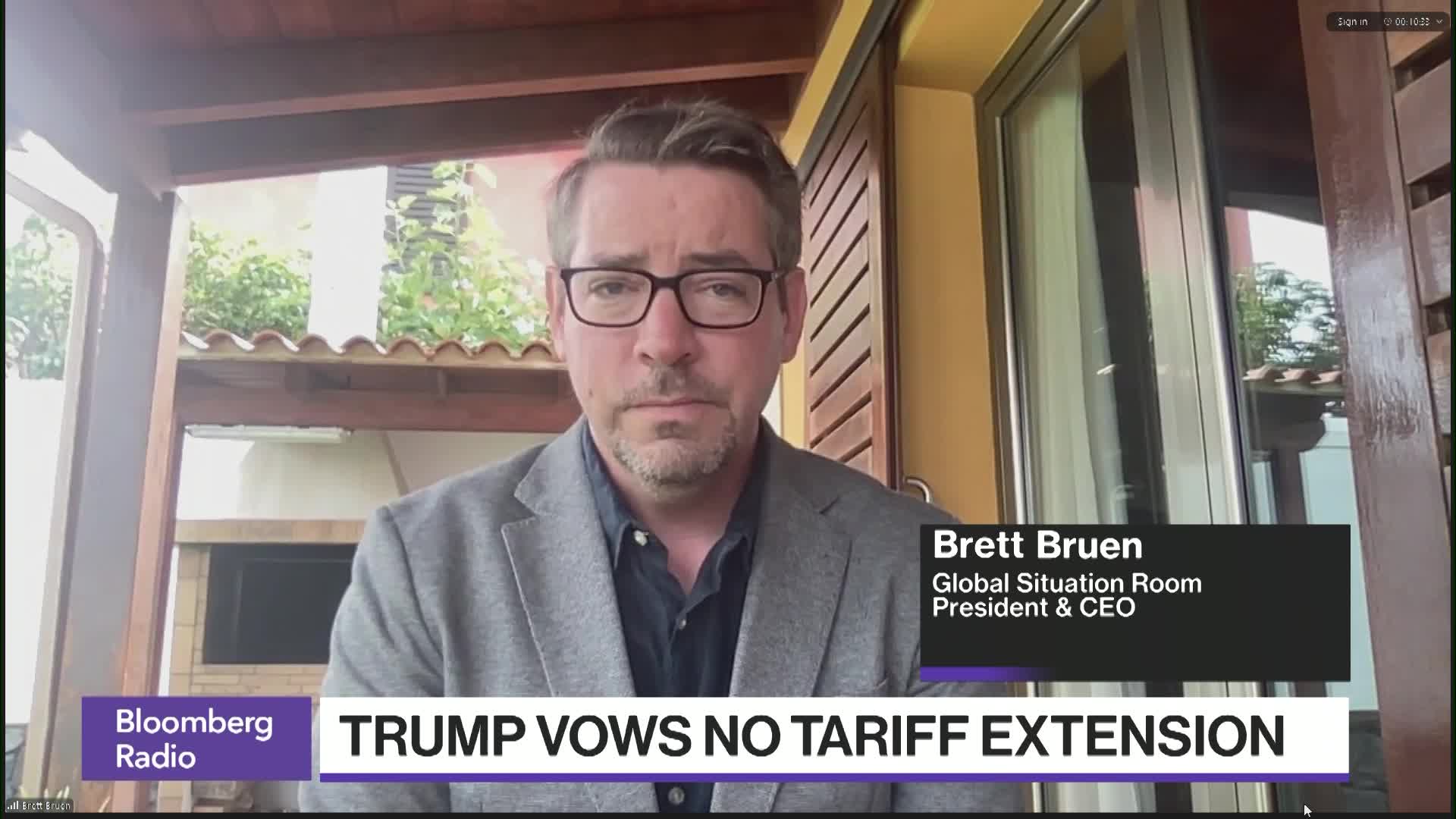
Recent Bloomberg discussions highlight President Trump's commitment to not extending tariffs past August 1, potentially easing trade policy uncertainty. This development occurs amid ongoing debate regarding the impact of potential tariffs on Japanese and South Korean auto imports for the U.S. industry, with former USTR Carla Hills warning of the devastating economic consequences of prolonged tariff uncertainty. Separately, geopolitical attention remains on unresolved Israel-Hamas issues following President Trump's meeting with Prime Minister Netanyahu.
The current market environment is characterized by significant policy uncertainty stemming from the Trump administration's trade agenda. A key development is President Trump's vow not to extend tariffs beyond the August 1 deadline, which introduces a firm timeline for potential market-moving decisions. However, this deadline is juxtaposed with warnings from figures like former USTR Carla Hills, who described the ongoing uncertainty as potentially "devastating," suggesting the interim period will likely be volatile. The focus of this uncertainty is sharpest in the automotive sector, with ongoing debates about the merits of implementing tariffs on Japanese and South Korean auto imports, creating specific risk for related industries and their supply chains. Compounding this trade policy ambiguity are unresolved geopolitical tensions, exemplified by the Israel-Hamas situation, which remains a key issue following President Trump's meeting with Prime Minister Netanyahu, adding another layer of macro risk for investors to monitor.
AI-powered research, real-time alerts, and portfolio analytics for institutional investors.
Request DemoOverall Sentiment
mildly negative
Sentiment Score
-0.20
