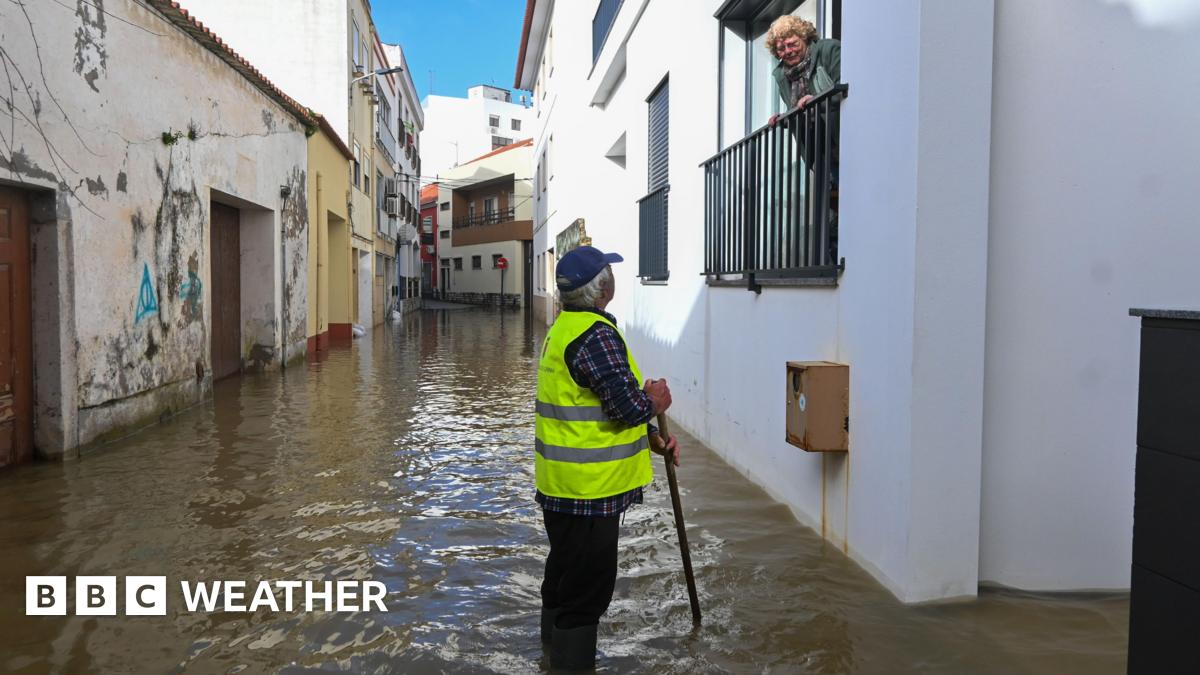
Storm Leonardo and a persistent weather pattern have produced severe flooding across southern/western Europe and northwest Africa—Andalucía evacuated 3,500 people, Grazalema recorded about 672 mm of rain in ~36 hours, Morocco has evacuated over 100,000 people and Tangier received roughly four times its January average—while Tunisia saw its heaviest rainfall in more than 70 years. Simultaneously a blocking high over Scandinavia has driven extreme cold in northeast Europe (Lithuania -34.3°C, Kyiv as low as -20°C), creating ongoing risks to transport, infrastructure and energy demand; key investor implications include potential insurance losses, transport/logistics disruption, agricultural damage, emergency fiscal spending and longer-term capex trends such as Morocco’s accelerated desalination investments.
Market structure: Acute flood damage in southern Iberia and north‑west Africa creates a bifurcated winner/loser set — capex winners include water & desalination engineers (e.g., VIE.PA, ANA.MC) and civil contractors (FER.MC, ACS.MC) due to expected repair and flood‑defense contracts worth low‑to‑mid single‑digit billions across the region over 6–24 months. Direct losers are regional property insurers and reinsurers (e.g., CS.PA, ALV.DE, MUV2.DE) facing elevated claims and potential reserve increases; logistics and rail operators will incur immediate revenue loss from service suspensions. Commodities: short gas market (TTF) tightening risk in NE Europe from heating demand while agricultural supply shocks (Andalucian olives/citrus) lift spot softs/wheat prices near term.
Risk assessment: Tail risks include a catastrophic dam release in Morocco or cascading infrastructure failures that could trigger sovereign stress and CDS widening (low probability, high impact; >€1bn loss event). Immediate (days) risks are operational disruptions and P&L volatility for insurers; medium (weeks–months) risk is claims adjustment and pricing reset; long term (quarters–years) is regulatory/ESG-driven mandatory flood defenses raising municipal capex by 10–30% regionally. Hidden dependencies: steel/cement supply and labor shortages could inflate remediation costs by 15–25% and delay revenue recognition.
Trade implications: Tactical longs: Acciona (ANA.MC) and Veolia (VIE.PA) 2–3% portfolio positions for 3–12 month trade, targeting +15–30% upside on awarded contracts; tactical shorts: AXA (CS.PA)/Allianz (ALV.DE) 1–2% positions hedged with 3‑month puts if reserve increases >10%. Options: buy 3‑month 10% OTM calls on VIE.PA and 1‑2 month strangles on top insurers to capture IV spikes around reserve announcements. Rotate 3–6% out of European property insurers into industrials/infrastructure; enter within 1–5 trading days, take profits 3–9 months, with stop-loss at 15% adverse move.
Contrarian angles: Consensus will hype permanent desalination windfall — but project timelines and political procurement mean revenues likely realize 12–36 months out, not instantly; don’t overpay now. Insurer sell‑offs could be overdone if losses remain within reinsurance layers; historical flood events show insurer equity recovery within 6–12 months. Secondary benefit: steel/cement suppliers and industrial distributors may see margin expansion; consider selective longs if construction activity data confirms >10% y/y order uptick.
AI-powered research, real-time alerts, and portfolio analytics for institutional investors.
Request DemoOverall Sentiment
moderately negative
Sentiment Score
-0.35
