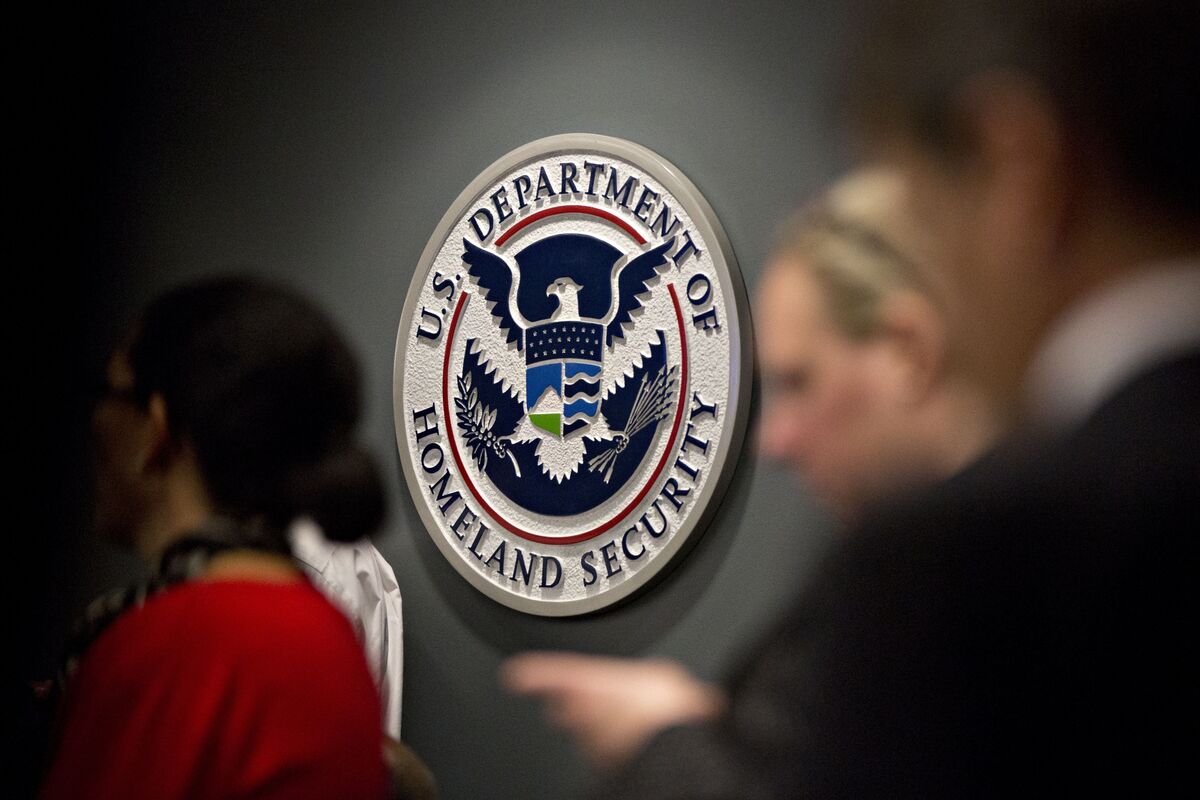
President Trump issued a memo directing the Secretary of Homeland Security, in coordination with the OMB Director, to use funds with a 'reasonable and logical nexus' to pay every DHS employee and provide the compensation and benefits they would have received absent the partial government shutdown. The action keeps DHS payroll funded amid a record-long shutdown and could reallocate agency spending but is unlikely to have a direct material impact on markets.
This action creates an operational-stability premium for assets whose cashflows are sensitive to frontline federal workforce continuity. In practical terms, reduced risk of phased service interruptions lowers the tail probability of acute operational shocks at airports, ports, and critical cyber infrastructure over the next 0–90 days, compressing short-dated implied volatility for impacted equities and travel/logistics revenue forecasts.
There is a second-order budgetary tradeoff: funding salary accruals via fungible DHS accounts will force near-term reallocation inside the department or draw on OMB-managed pools, effectively shifting expenditures rather than creating new money. Expect low-to-mid single-digit percentage hits to discretionary program lines over months, which will materially stress cash-flow timing for third-party contractors that lack balance-sheet depth, increasing idiosyncratic credit risk in the small-cap government IT/security supplier universe within 1–3 months.
Legal and political vectors are key catalysts. A court or legislative challenge that reverses the funding path would reintroduce operational risk within days and spike volatility across a narrow set of names; conversely, congressional funding or legal affirmation would normalize the reallocation and remove the operational premium. Over a multi-quarter horizon, the bigger structural effect is precedent: using budgetary nexus language to preserve pay blunts immediate disruption but transfers fiscal pressure to program deliverables, altering procurement timing and working capital profiles for contractors.
Net-net, large defense primes and the airline/logistics complex gain a modest, near-term positive shock from lower operational-disruption risk, while smaller vendors and subcontractors face a liquidity/commercial-risk widening that is asymmetric and time-sensitive.
AI-powered research, real-time alerts, and portfolio analytics for institutional investors.
Request DemoOverall Sentiment
neutral
Sentiment Score
0.00
