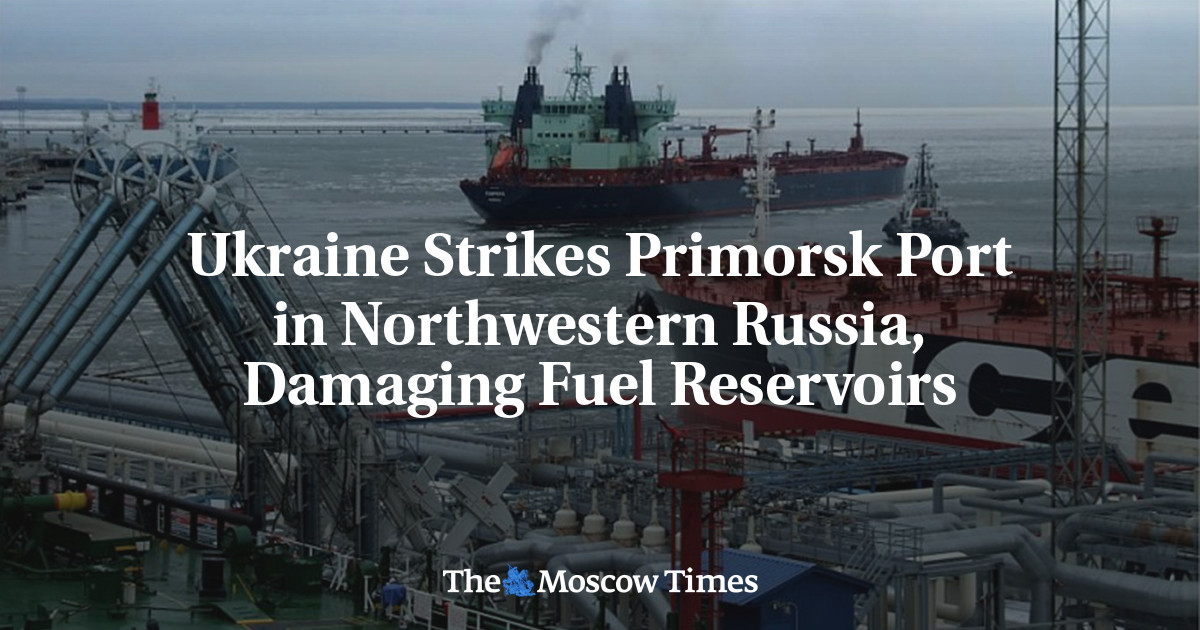
Primorsk port (capacity >1.0m barrels/day) was hit by a Ukrainian drone attack that damaged fuel reservoirs and sparked fires; Primorsk and nearby Ust-Luga (≈700k bpd) have suspended operations, potentially cutting up to ~1.7m bpd of Russian exports. Regional governor reported air defenses intercepted more than 70 drones; St. Petersburg's Pulkovo airport briefly suspended flights. The disruption compounds global energy market volatility amid Iran's effective closure of the Strait of Hormuz.
The immediate market reaction will be driven by a squeeze on seaborne loadings from the Baltic that forces marginal barrels onto longer, more expensive routes or into pipeline markets with limited spare capacity; that marginal friction can add $2–6/barrel to delivered cost for affected barrels and lift spot freight and insurance premia by double-digit percentages in weeks. Expect a 1–3 month window where physical frictions matter most: charter rates and Baltic cargo availability reprice quickly, while term contracts and arbitration over missed loadings take 2–6 months to resolve and can keep volumes depressed into the next quarter.
Second-order winners are specialty transport and reinsurance pockets — owners of modern MR/aframax and VLCC pools able to capture re-routing demand, and P&I/reinsurance underwriters that can raise premiums with low churn; losers are refiners inflexible to crude-slate changes and traders holding large forward cargo obligations priced to normal Baltic loading. European refinery feedstock composition will shift (more Atlantic/Med barrels), widening Urals discounts and pressuring refiners lacking sour-crude capability, which in turn can change product flows and refinery margins regionally over the next 3–9 months.
Catalysts to watch: public repair timelines from operators (days–weeks), a rapid diplomatic de-escalation or opening of alternative Persian Gulf corridors (weeks), and Russian operational pivots like accelerated pipeline nominations to Asia (1–3 months). Tail risks include escalation that targets additional export nodes or insurance blacklisting, which would push the dynamics from a weeks-long dislocation to a multi-quarter structural rerate for freight and Brent/Urals spreads.
Given the asymmetric nature of transport/insurance upside versus limited downside if flows are restored quickly, prioritize convex, time-limited exposures (options on freight/Brent and equity calls on shipping) while keeping short-duration hedges against a rapid resolution that would compress spreads within 1–4 weeks.
AI-powered research, real-time alerts, and portfolio analytics for institutional investors.
Request DemoOverall Sentiment
strongly negative
Sentiment Score
-0.65
