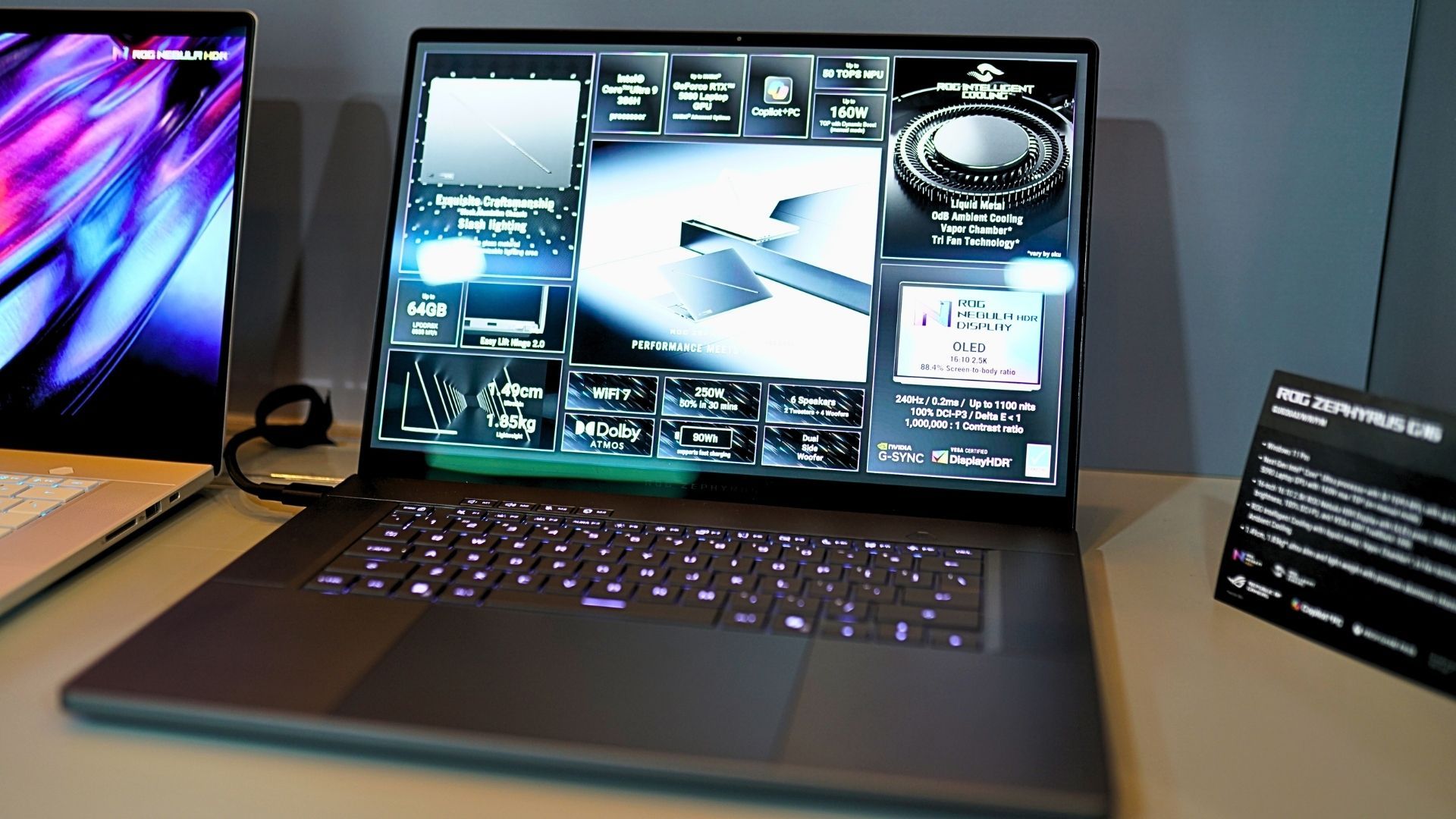
Asus unveiled two new ROG Zephyrus laptops at CES: the 16-inch G16 with an Intel Core Ultra Series 3 (Panther Lake) option and up to an NVIDIA RTX 5090 laptop GPU, and the 14-inch G14 with Intel or AMD Ryzen AI CPU options and up to an RTX 5080 GPU. Both models feature upgraded ROG Nebula HDR OLED panels (G14: 3K@120Hz; G16: 2.5K@240Hz, 0.2ms), 100% DCI-P3, Delta E <1, up to 1100 nits peak brightness, modern connectivity (USB4/Thunderbolt 4 with 100W PD, USB-A 3.2 Gen2, HDMI, SD/microSD, Wi‑Fi 7, Bluetooth 6.0) and lightweight designs (1.5–2.0 kg); Asus has not disclosed pricing or availability, limiting immediate revenue visibility but strengthening its product positioning in premium gaming and creative markets.
Market structure: Premium thin-and-light gaming/creator laptops shift value to OEMs (ASUSTeK 2357.TW), GPU suppliers (NVDA) and OLED/DRAM suppliers; this product cycle supports higher ASPs (+5–10% possible for premium SKUs) but is unlikely to move mainstream PC unit volumes materially in the next 2–4 quarters. Intel and AMD both gain design wins (Intel in G16, AMD in G14) so semiconductor share gains are incremental—competitive dynamics favor vendors that supply high-margin AI/graphics silicon and display components rather than commodity CPU volume plays.
Risk assessment: Tail risks include US export controls on high-end GPUs, Taiwan/China geopolitical disruption, and OLED panel shortages pushing input costs +10–20% in H2 2026; near-term (days–weeks) risk is muted, but quarter-to-quarter supply shocks or poor thermal/battery reviews could compress ASPs and margins within 3–6 months. Hidden dependencies: panel supply (Samsung/LG), power delivery chips, and channel inventory levels; key catalysts are pricing/availability announcements and independent performance reviews (expected within 30–90 days).
Trade implications: Tactical longs: premium OEM exposure and GPU exposure; use options to cap downside if market breadth weakens. Consider short positions in low-ASP PC OEMs or component suppliers exposed to commoditization. Monitor channel sell-through and CPI-adjusted ASPs as triggers for adding or trimming positions over the next 3–12 months.
Contrarian angles: The market may underprice OEM margin upside from sustained OLED adoption and Wi‑Fi7-driven accessory ecosystems—ASUSTeK could re-rate if pre-orders and margin expansion materialize; conversely, it may overprice semiconductor beneficiaries if GPU/laptop ASP upside is concentrated and small vs data-center demand. Historical parallel: 2018 premium gaming refreshes boosted ASPs for select OEMs but didn’t lift broad semiconductor revenues; expect a similar concentrated benefit unless volumes scale >5–7% of vendor revenue.
AI-powered research, real-time alerts, and portfolio analytics for institutional investors.
Request DemoOverall Sentiment
mildly positive
Sentiment Score
0.35
Ticker Sentiment
