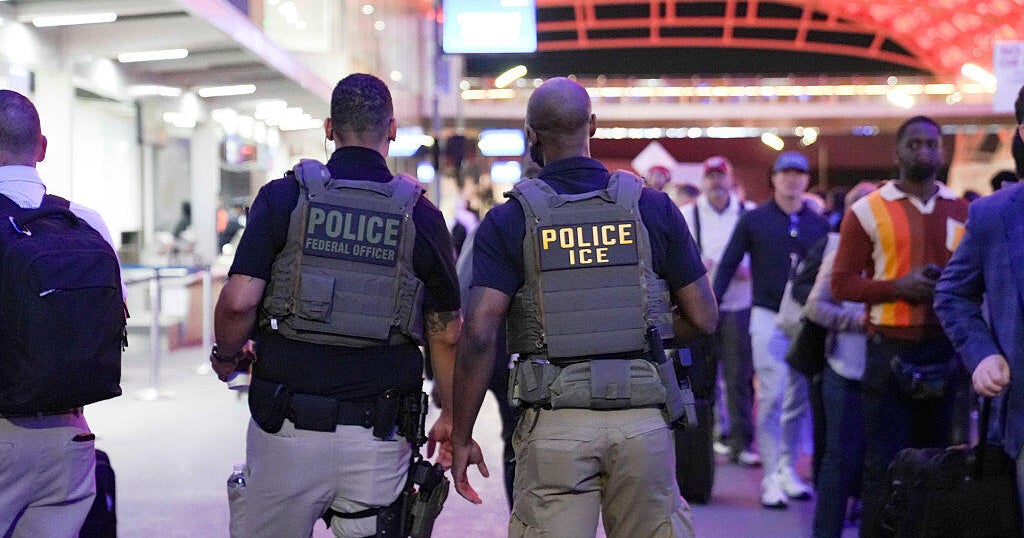
More than 41% of TSA agents at Hartsfield-Jackson reportedly called out on Sunday, prompting deployment of ICE/HSI agents (one of 14 airports with such deployment) to assist with line management and crowd control. The airport is advising passengers to allow at least 4+ hours for screenings amid large queues and heat complaints; local officials call the federal involvement 'unprecedented' and say Atlanta Police will continue to lead law enforcement operations. Operational disruption is ongoing and it is unclear whether the federal presence will materially improve passenger throughput.
A local security-staffing shock at a major hub amplifies operational concentration risk for carriers and service providers that rely on predictable throughput; if checkpoint throughput drops 20–30% for several days, expect 2–4% hit to near-term passenger revenue and outsized rebooking/IRROPS costs concentrated in hub-heavy airlines. Ancillary revenues (bags, upgrades, change fees) are the first to erode and can compress quarterly margins faster than fuel or labor line items, creating an earnings surprise risk within 30–90 days.
Short-term behavioral shifts matter: travelers will shift toward earlier arrival windows, increased demand for airport-adjacent lodging/parking, and higher take-up of expedited-entry products — a pattern that boosts near-term occupancy for adjacent hotels and boosts sales for private expediting vendors but also lengthens recovery time for throughput metrics. Over months, political and reputational pressure will accelerate procurement cycles for screening automation and identity-tech suppliers; winners are those with modular, certifiable solutions that fit federal contracting timelines (6–24 months).
Regulatory and political feedback loops are the key tail risks. Municipal and federal scrutiny can force rapid policy changes—either funding surges to federal screening agencies or restrictive limits on which federal units may operate in terminals—creating binary outcomes for suppliers and carriers within 1–6 months. The single largest reversal would be a quick labor settlement or emergency surge staffing that restores baseline throughput in days, materially reducing short-term downside for carriers.
For portfolio positioning, favor convexity (options) and pair trades that express operational concentration versus dispersion. Size directional bets small relative to portfolio (0.5–2%) and use event-driven triggers—earnings, policy announcements, and holiday travel windows—to tighten stops or realize gains. Focus timeline: tactical (weeks–months) for airlines/hotels, strategic (12–36 months) for automation and security contractors.
AI-powered research, real-time alerts, and portfolio analytics for institutional investors.
Request DemoOverall Sentiment
mildly negative
Sentiment Score
-0.25
