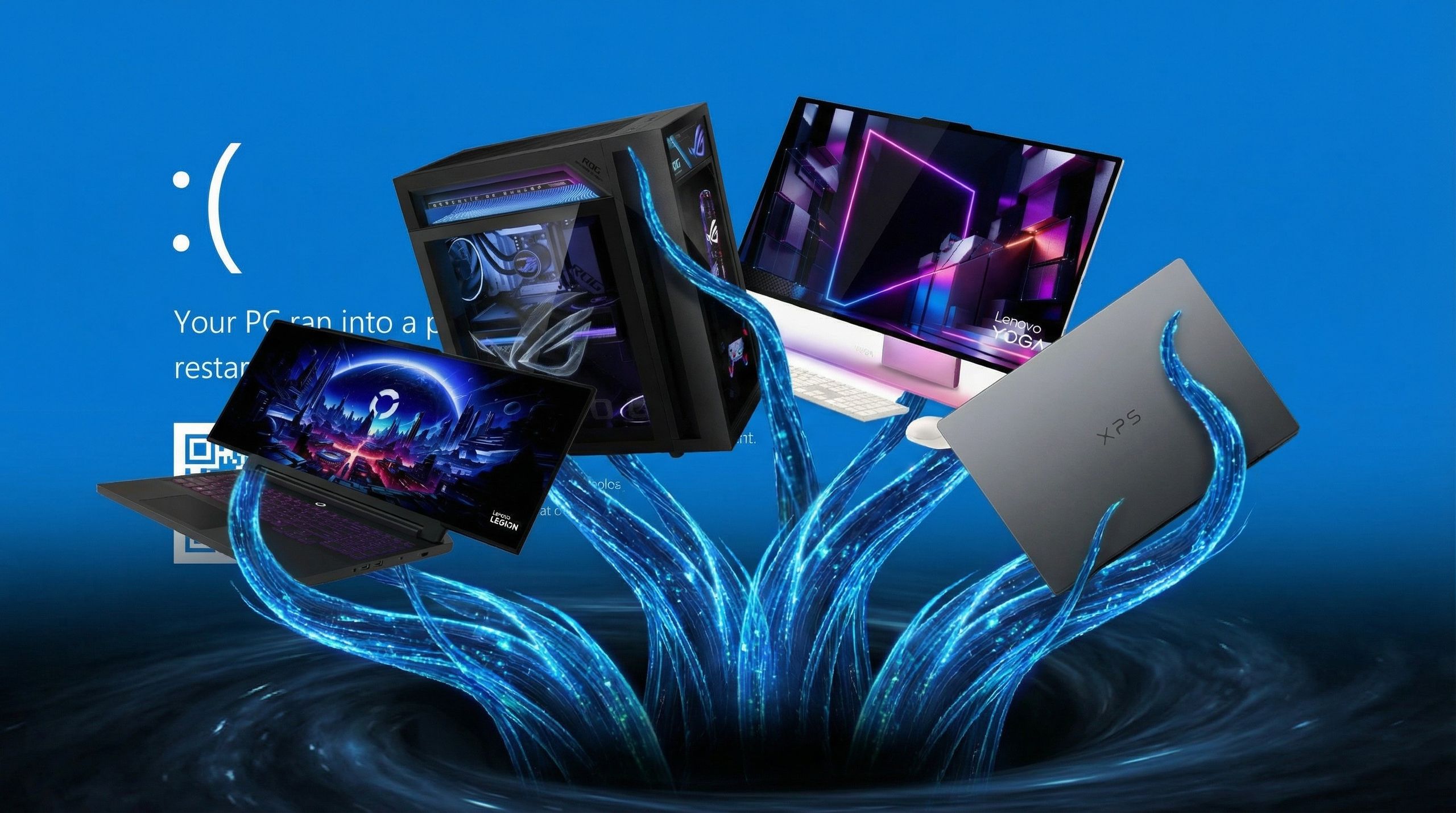
CES 2026 highlighted a strong upswing in PC hardware—thinner, more efficient laptops and novel concepts from Lenovo (global 2025 shipments ~71 million), ASUS (e.g., Zenbook A14 frequently discounted to ≈$600; ROG Zephyrus with up to NVIDIA RTX 5090), HP and others—supported by new Qualcomm Snapdragon X entrants. Offsetting these hardware tailwinds, Windows 11’s aggressive AI push (Copilot/Copilot+ features like Recall) is provoking user backlash and security/privacy concerns, and the author cites AI-driven coding and memory/storage shortages as sources of bugs and cost pressure; the net implication is positive hardware momentum but elevated execution and reputational risk for Microsoft and potential supply-driven cost inflation.
Market structure: CES signals hardware incumbents (QCOM, HPQ, NVDA) gaining share as engineering and form-factor differentiation become primary buying factors while Windows (MSFT) faces UX/security backlash that could slow software-led monetization. NVDA retains pricing power on datacenter/AI GPUs amid constrained supply — expect 10–20% revenue upside risk to consensus if Blackwell/RTX refreshes sustain demand over next 12 months. Qualcomm’s Snapdragon X in laptops positions QCOM to capture 3–5ppt incremental share in thin/light segments within 12–24 months, pressuring Intel/AMD midrange ASPs.
Risk assessment: Key tails include (1) regulatory clampdowns on agentic OS/data usage (5–15% probability over 12–18 months) that could force feature rollbacks and fines for MSFT; (2) a major Copilot data breach causing material enterprise churn; (3) supply-side shocks in DRAM/NAND or TSMC constraints driving component inflation and OEM margin pressure. Near-term (days–weeks) risk is CES headline volatility and inventory repricing; medium-term (quarters) risk centers on earnings and channel inventory corrections; long-term (2–3 years) risk is architecture shifts (ARM/Qualcomm gains vs x86).
Trade implications: Tactical: establish a 2–3% long position in QCOM (expect upside into FY2027 product ramps) and a 1–2% long in HPQ to play premium OEM demand. For NVDA, use 3–6 month call-spread (buy 6-month ATM, sell 20–30% OTM) sized 1–2% portfolio to capture upside while limiting theta bleed amid elevated IV. Hedge MSFT exposure by buying 3-month 5–7% OTM puts sized to cover 10–20% of position or consider a 6–9 month collar if you’re long.
Contrarian angles: Consensus is too negative on MSFT’s long-term enterprise stickiness — Azure and Office annuity cash flows cap downside absent a regulatory shock; MSFT downside may be 10–15% vs consensus panic pricing today. Conversely, hardware enthusiasm may be partially overdone: component inflation (DRAM/NAND up 10–25%) could compress OEM margins and delay upgrades; watch channel inventory and spot memory prices over 30–90 days for a decisive signal. Historical parallel: 2010s PC refresh cycles show hardware spikes can be transient without sustained software monetization.
AI-powered research, real-time alerts, and portfolio analytics for institutional investors.
Request DemoOverall Sentiment
mixed
Sentiment Score
-0.15
Ticker Sentiment
