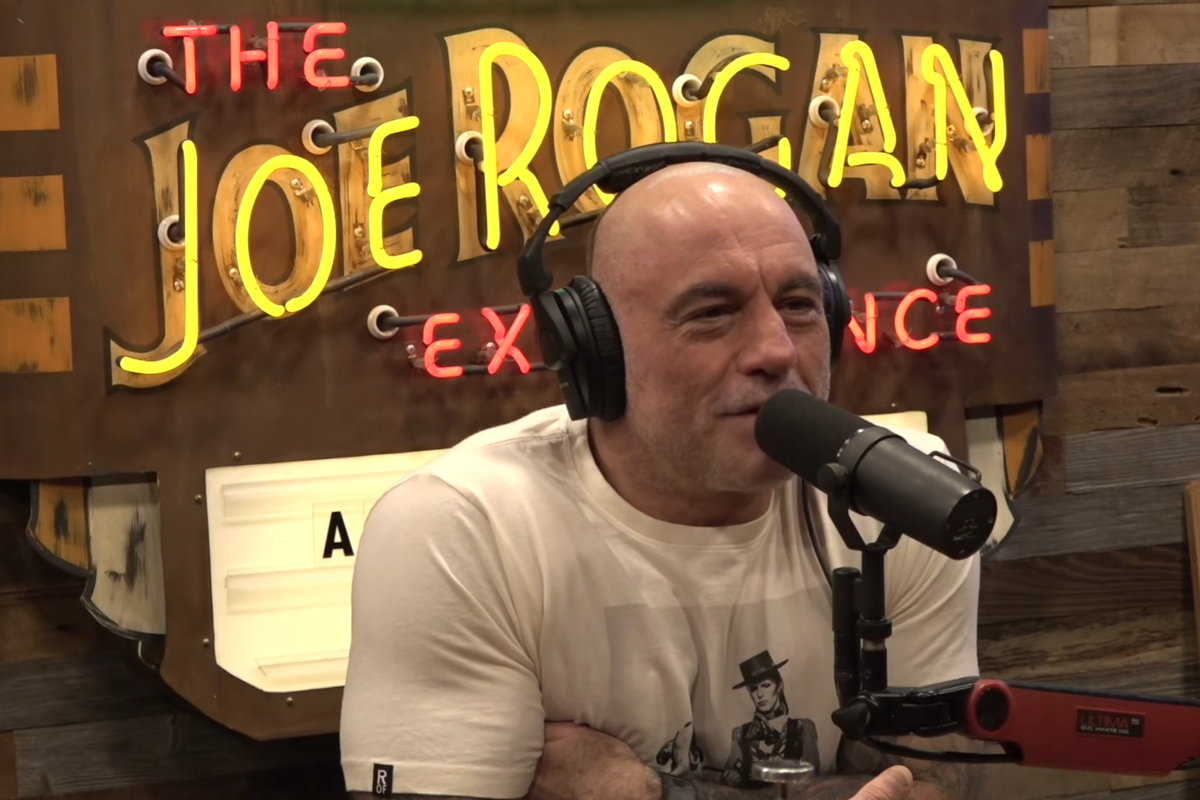
Joe Rogan publicly criticized the Trump administration’s Iran war timing and exit strategy, saying the decision "doesn't make sense" and questioning whether Israel influenced the move. The article also notes Trump’s response that Iran’s military is "totally defeated" after six weeks, but the conflict’s timeline and endgame remain unclear. The story is mainly geopolitical/political commentary with limited direct market impact, though it keeps risk sentiment elevated around Middle East escalation.
This is less about one podcaster’s opinion than about the fragility of the administration’s coalition. When a high-reach, nontraditional validator starts publicly questioning the strategic logic, it increases the odds of policy becoming more erratic as political incentives override military sequencing. That kind of signaling matters because it can raise the market’s perceived probability of escalation without clear end-state, which is usually worse for risk assets than a clean, finite event.
The second-order beneficiary is the defense and prime contractor complex, but not uniformly: systems tied to missile defense, ISR, EW, and munitions replenishment should see the strongest follow-through, while platforms exposed to prolonged overseas commitment risk can become political lightning rods. The real transmission mechanism is budget expectation, not immediate revenue; if the conflict narrative hardens over the next 1-3 months, appropriations chatter can re-rate defense multiples before bookings show up. Energy is the other indirect lever: a broader regional risk premium can lift crude and shipping insurance costs even without a direct supply shock.
The biggest market risk is not a single strike, but an ambiguous exit path that forces repeated headlines and keeps volatility bid. That tends to punish cyclicals and small caps first, while lifting defense and select energy names on a relative basis. If the White House gets boxed into a de-escalation message within days, the trade reverses quickly; if not, the duration of uncertainty becomes the catalyst itself.
The contrarian view is that the consensus may be overpricing headline noise and underpricing institutional resistance to a long campaign. If the operation is structurally constrained by domestic politics, the window for a lasting escalation premium may be shorter than implied by the rhetoric, creating a fade opportunity after the initial spike. In that scenario, the best trade is not outright war beta, but volatility and relative-value positioning around names that benefit from uncertainty without requiring prolonged conflict.
AI-powered research, real-time alerts, and portfolio analytics for institutional investors.
Request TrialOverall Sentiment
mixed
Sentiment Score
-0.10
