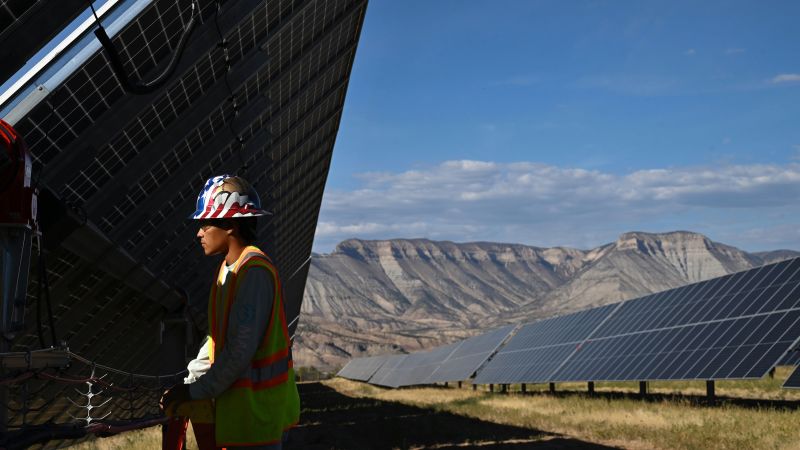
The Trump administration's new tax bill will significantly curtail clean energy tax credits, reducing a decade of support for utility-scale wind and solar to just one year before a sharp phaseout. Despite extensive lobbying by clean energy CEOs highlighting the industry's cost competitiveness, job creation in key districts, and its role in meeting surging demand from AI and data centers, Republican opposition, spearheaded by Trump, largely prevailed. This policy change is projected to increase energy costs across the U.S. and lead to job losses in the clean energy sector, potentially forcing energy-intensive industries to seek operations abroad, underscoring heightened political risk and policy headwinds for renewable energy investments.
The U.S. renewable energy sector faces a significant policy shock following the passage of a new tax bill that curtails critical subsidies for wind and solar. The legislation reduces a decade-long support framework to a mere one-year extension followed by a sharp phaseout, directly contradicting the industry's lobbying efforts which highlighted cost-competitiveness, job creation in Republican districts, and the necessity of renewables to meet surging electricity demand from AI and data centers. The primary driver of this policy shift was President Trump's staunch opposition, framing the credits as a "Green New Scam," which proved more influential than the economic arguments presented by energy CEOs and pro-business Republicans. The direct consequences, as reported, include projected energy price increases across the continental U.S., potential job losses at renewable and EV manufacturing facilities, and existential fears about the nation's capacity to power its technological growth. While a last-minute negotiation removed a punitive excise tax and provided a slightly longer runway for projects to claim the final year of full credit—an outcome some lobbyists considered a partial victory—the overarching narrative is one of heightened political risk and a severe blow to the sector. The event also exposed strategic weaknesses within the clean energy lobby, which was criticized by its own members for a lack of unified and aggressive messaging compared to established groups like the American Petroleum Institute.
AI-powered research, real-time alerts, and portfolio analytics for institutional investors.
Overall Sentiment
strongly negative
Sentiment Score
-0.60
