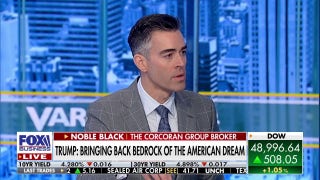
Citadel CEO Ken Griffin told the World Economic Forum that the Biden administration's regulatory approach created constant friction for businesses and that the end of that 'regulatory onslaught' after the election has given entrepreneurs renewed energy. He cited the DOJ's antitrust challenge to JetBlue's proposed acquisition of Spirit Airlines — noting Citadel was a creditor and that Spirit is now in bankruptcy — as an example of regulation harming economic outcomes. Griffin said the Trump administration's rollback of Biden-era rules has so far been gradual but represents an 'extraordinary boom' for U.S. business, signaling a positive sentiment shift among corporate executives toward growth and deregulation.
Market structure: Deregulatory momentum favors capital-allocation businesses (large asset managers, PE, IBs) and M&A advisors because faster deal closings raise fee pools; expect a 6–12 month uplift in fee revenue of ~5–10% for top-tier IBs (GS, MS) and asset managers (BLK) if antitrust enforcement eases materially. Airlines face a bifurcated outcome — successful consolidation raises pricing power and yields (potential +2–5% RASM within 6–12 months) while standalone weaker carriers and creditors (Spirit/JBLU in article context) remain distressed.
Risk assessment: Tail risks include a regulatory re-tightening via courts/congress (low probability 20–30% over 12 months but high impact) and state-level or consumer-enforcement backstops that could reintroduce friction; litigation timelines (6–24 months) mean policy shifts may be slow. Hidden dependencies: DOJ staffing, appellate rulings, and bankruptcy outcomes will be decisive; catalysts to watch are federal executive orders, DOJ filings, and 2–3 major court decisions in the next 3–9 months.
Trade implications: Tactical trades favor overweight financials and IB fee-companies and underweight exposed travel/airline credits like JBLU. Options: use 3–6 month call spreads on GS/BLK to capture fee tailwinds and 3-month puts on JBLU (10–15% OTM) to hedge continued distress. Rotate 3–5% of portfolio from consumer discretionary/retail into financials and energy over 30 days, and trim positions if regulatory rollback stalls for >90 days.
Contrarian angles: Consensus assumes deregulation is uniformly positive; missing is litigation/reputational risk that raises effective cost of capital for deal sponsors and could compress multiples for consumer-facing acquirers. Historical parallel: 2017 deregulation produced ~15–25% outperformance in bank stocks over 12 months but also elevated M&A-related litigation spikes; if markets price a 10–15% rerating, second-order credit stress among mid‑cap targets may create shortable opportunities.
AI-powered research, real-time alerts, and portfolio analytics for institutional investors.
Request DemoOverall Sentiment
mildly positive
Sentiment Score
0.28
Ticker Sentiment
