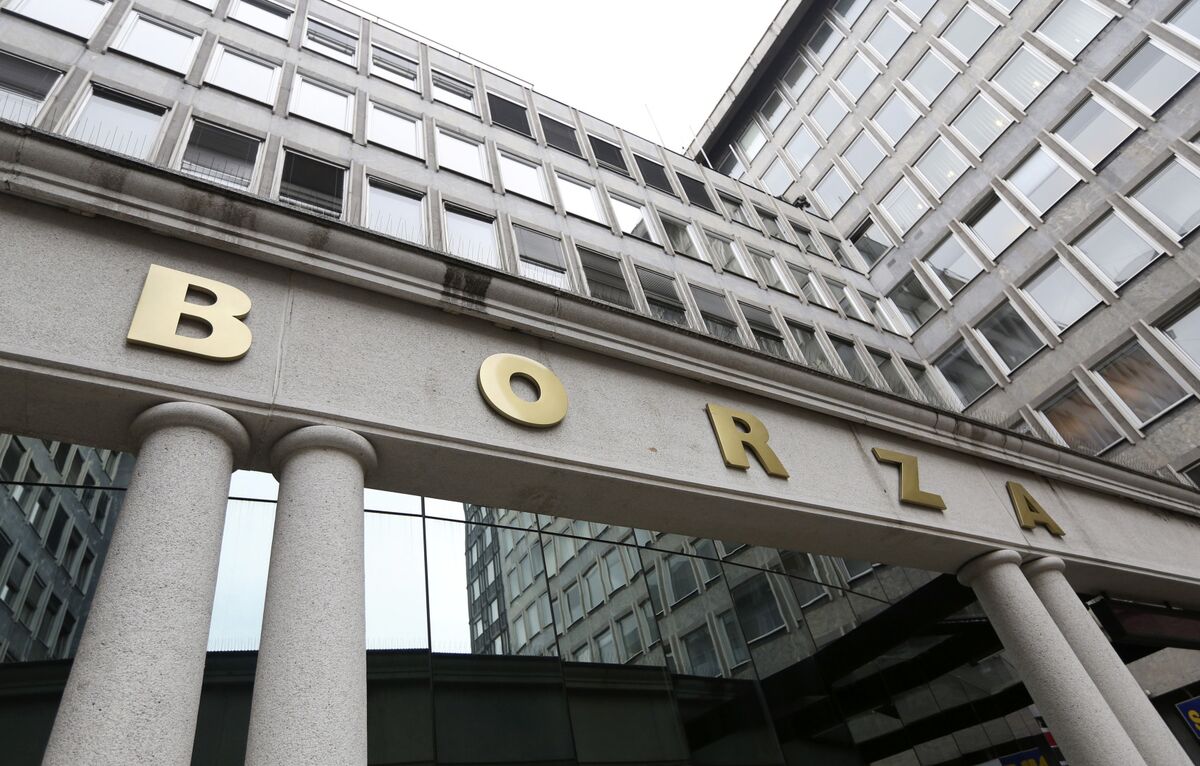
Slovenian regulators moved to block a Croatian government agency's attempt to take over the Ljubljana Stock Exchange after Croatia's Financial Agency (Fina) sought to become the majority shareholder of the Zagreb Stock Exchange, which has owned the Ljubljana bourse since 2015. Croatian regulators had approved the transaction, but Slovenia's watchdog intervened on Tuesday, creating regulatory uncertainty for regional exchange consolidation and potential cross‑border control of key market infrastructure.
Market structure: Slovenia’s block preserves fragmentation of Central & Southeast European (CSEE) trading venues, benefitting incumbent local brokers and the Ljubljana bourse (illiquidity premium) while disadvantaging Zagreb’s owner and any Croatian-state consolidation strategy. Expect trading volumes to remain thin on LJSE, keeping bid/ask spreads ~50–200bp wider vs regional peers and directing institutional order flow toward larger venues (Wiener/Deutsche/Euronext) over 3–12 months. Cross-asset: small widening of sovereign/state-linked CDS and 5–10bp wider funding spreads for Croatia-linked quasi-state issuers is plausible if political frictions escalate; FX impact limited (both countries on euro), commodity flows negligible.
Risk assessment: Tail risks include escalation to reciprocal blocks or EU antitrust intervention that could freeze M&A activity across CSEE (low prob, high impact). Near term (days–weeks) expect headline-driven volatility in exchange/financial names; medium term (3–12 months) risk is valuation compression for regional exchange operators (10–25% rerating possible). Hidden dependencies: ETF/index rebalances and passive flow routing could amplify liquidity migration; catalysts are Slovenian court rulings, EU Commission opinions, and Croatian parliamentary moves—watch 30–90 day windows.
Trade implications: Priority is to capture order-flow reallocation: long large, liquid exchange operators (DB1.DE, ENX.PA, WBAG.VI) and regional universal banks with market-share of CSEE flow (EBS.VI) while trimming mid/small-cap Slovenia/Croatia equity exposure. Use directional equity positions sized 0.5–2% and options (6-month calls on DB1.DE 8–12% OTM) to lever asymmetric upside if consolidation re-routes flows. Time entries ahead of expected legal milestones (30–90 days) and set disciplined stops (7–10%).
Contrarian angle: Consensus treats this as a small political spat, but that understates permanent frictions cost: prolonged fragmentation raises recurring revenue risk for exchange operators by ~5–10% of EBITDA in CSEE. Historical parallel: 2010–2015 regional consolidation attempts showed multi-year delays and price discounts of 15–30% vs pro-forma peers; therefore buying large, acquisitive exchange operators at modest premiums is underdone. Unintended consequence: sustained illiquidity could push institutional order routing to non-local venues long-term, structurally reducing margins for local brokers and mid-cap issuers.
AI-powered research, real-time alerts, and portfolio analytics for institutional investors.
Request DemoOverall Sentiment
moderately negative
Sentiment Score
-0.30
