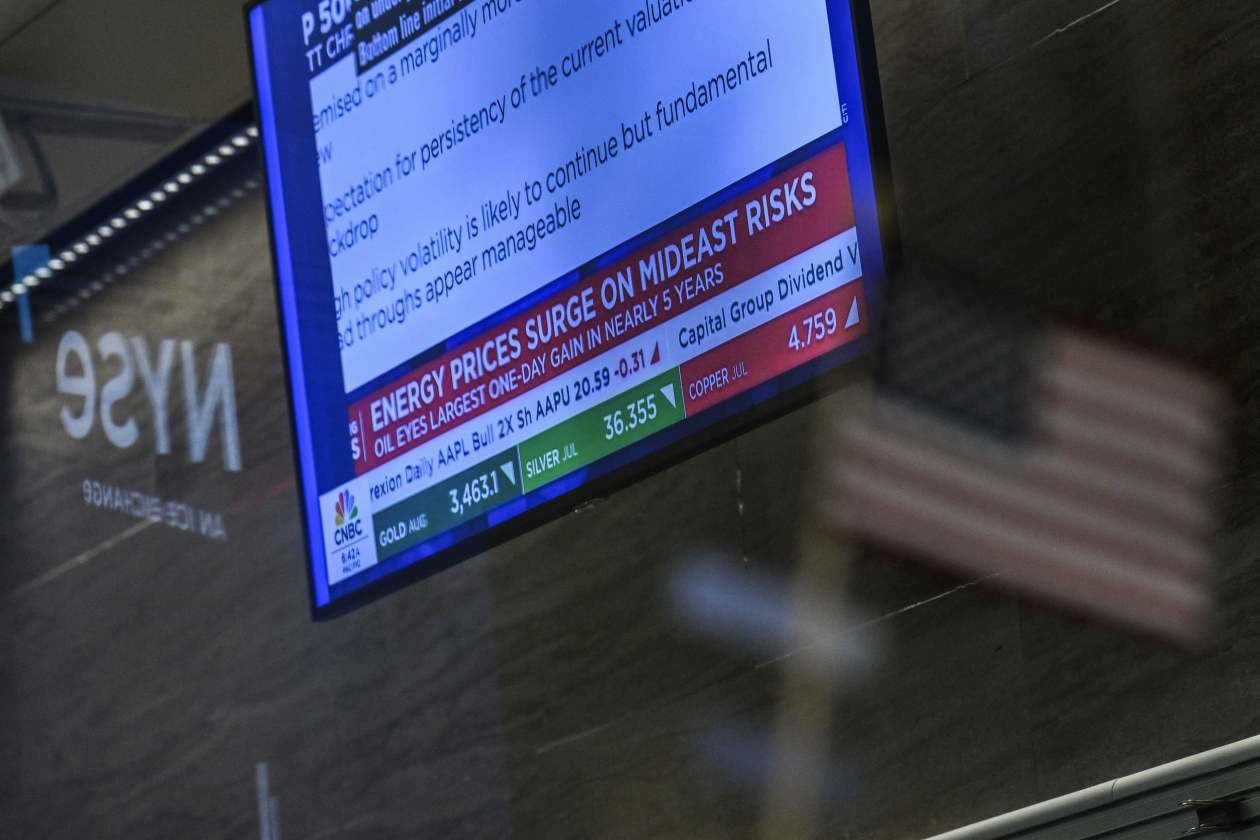
Following Israel's attacks against Iran, the 10-year Treasury yield rose 7 basis points to 4.43%, diverging from typical safe-haven asset behavior during geopolitical tensions. Mohamed El-Erian suggested a decline in confidence in U.S. sovereign debt, while others cited concerns about stagflationary shocks driven by rising oil and commodity prices, and uncertainty related to the Federal Reserve's upcoming policy meeting. Despite concerns about a 'buyers strike' due to tariffs, recent Treasury auctions have been successful, though a broader shift may be occurring with gold and the dollar rising as Treasuries sell off.
The U.S. Treasury market exhibited atypical behavior following Israel's military actions in Iran, with the benchmark 10-year Treasury yield (BX:TMUBMUSD10Y) rising 7 basis points to 4.43%, diverging from its traditional role as a safe-haven asset during geopolitical escalations. This anomaly is attributed by experts like Mohamed El-Erian to potentially diminishing global confidence in U.S. sovereign debt. Other contributing factors cited include heightened concerns over stagflationary shocks, as articulated by Gennadiy Goldberg of TD Securities, stemming from rising oil and commodity prices which could exacerbate inflation and constrain the Federal Reserve. The upcoming Federal Reserve policy meeting and the unwinding of a significant rally in Treasuries earlier in the week, where the 10-year yield had fallen 15 basis points through Thursday, also likely influenced market dynamics. While recent Treasury auctions were reportedly well-received, mitigating immediate 'buyers strike' fears according to Vanguard's Roger Hallam, strategists like Guy LeBas from Janney Montgomery Scott suggest a broader shift may be underway, with assets like gold (GC00) and the U.S. dollar (DXY) attracting haven flows while Treasuries sold off, possibly reflecting concerns about the U.S.'s evolving global role and the substantial volume of Treasury supply. Despite these observations, some analysts maintain that Treasury demand would likely increase if the conflict were to escalate into a broader geopolitical crisis.
AI-powered research, real-time alerts, and portfolio analytics for institutional investors.
Overall Sentiment
moderately negative
Sentiment Score
-0.50
Ticker Sentiment
