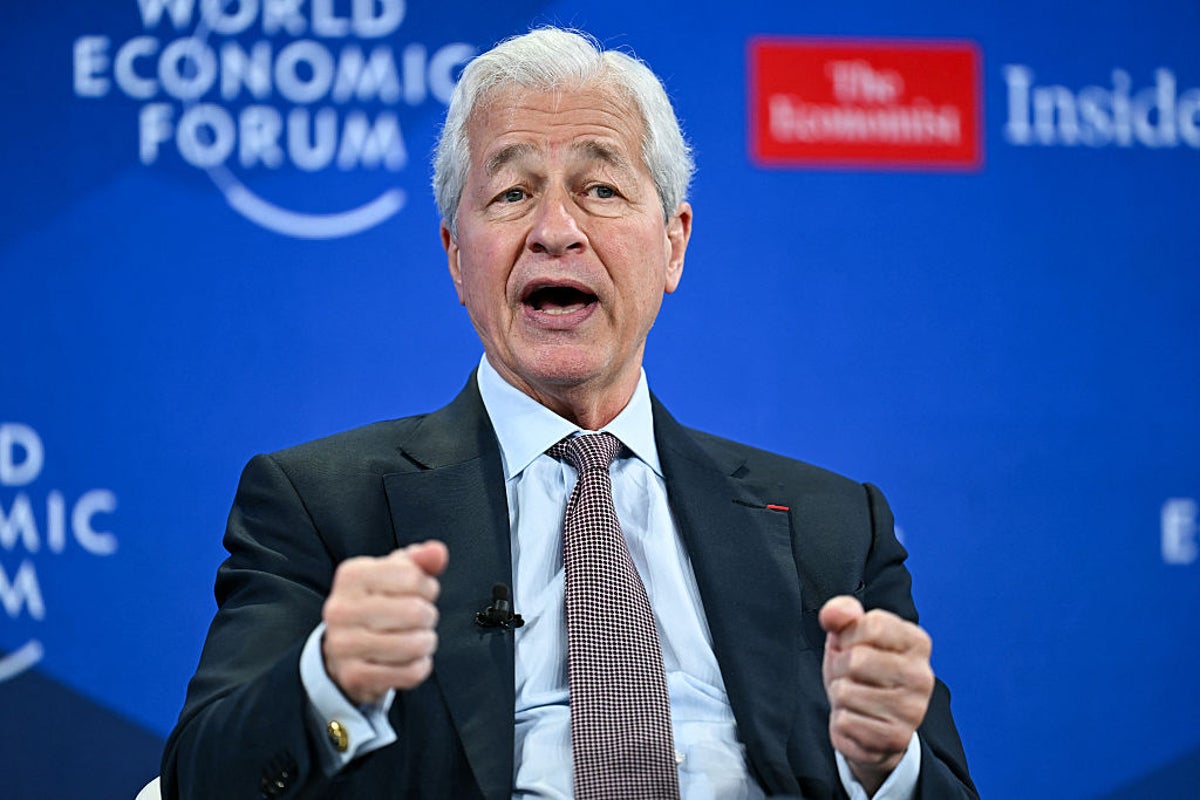
JPMorgan CEO Jamie Dimon warns the war in Iran could trigger "significant" ongoing oil and commodity shocks that make inflation stickier and push interest rates higher than markets currently expect. Brent crude sits around $110/bbl and the Bank of England is at 3.75% with the MPC due to meet on 30 April; traders are pricing ~two UK rate hikes this year while economists generally expect rates to be held into H1 2026. Persistent elevated energy and commodity prices could lift UK CPI toward ~4% this year and push food inflation to more than double that level, increasing borrowing costs and slowing growth.
Geopolitical energy shocks have shifted the risk from transitory spikes to a higher probability of elevated commodity-price floors that persist for many quarters, which in turn forces nominal rates higher than current market-implied paths. Mechanically, a sustained 75–150bp upward re-pricing of central bank terminal rates over 6–18 months would not only increase funding costs but also re-weight corporate CAPEX decisions toward energy-efficient and onshore supply-chain investments.
Second-order winners will be commodity upstreams and certain materials (fertiliser, specialty gases, copper/steel) that capture margin expansion and pricing power; losers include fuel-sensitive transport and margin-compressed OEMs that cannot pass through input inflation. Supply-chain reshoring increases durable-goods capex, implying stronger demand for industrial capital equipment and base metals over a 12–36 month window.
Financials face a two-way split: volatility and higher short-term rates lift trading and NII temporarily, while prolonged higher rates that trigger growth weakness will increase charge-offs and create mark-to-market equity swings. Large diversified banks should outperform regionals in a disorderly shock scenario, but any fragmentation of global economic alliances raises longer-run FX/sovereign and counterparty concentration risks.
Key catalysts to watch are inflation breakevens, front-end money-market repricing, and commodity curves — a move of breakevens +20–40bp or Brent sustaining above a range that implies $70–100 forward will alter policy paths and corporate earnings expectations materially over quarters.
AI-powered research, real-time alerts, and portfolio analytics for institutional investors.
Request DemoOverall Sentiment
moderately negative
Sentiment Score
-0.60
Ticker Sentiment
