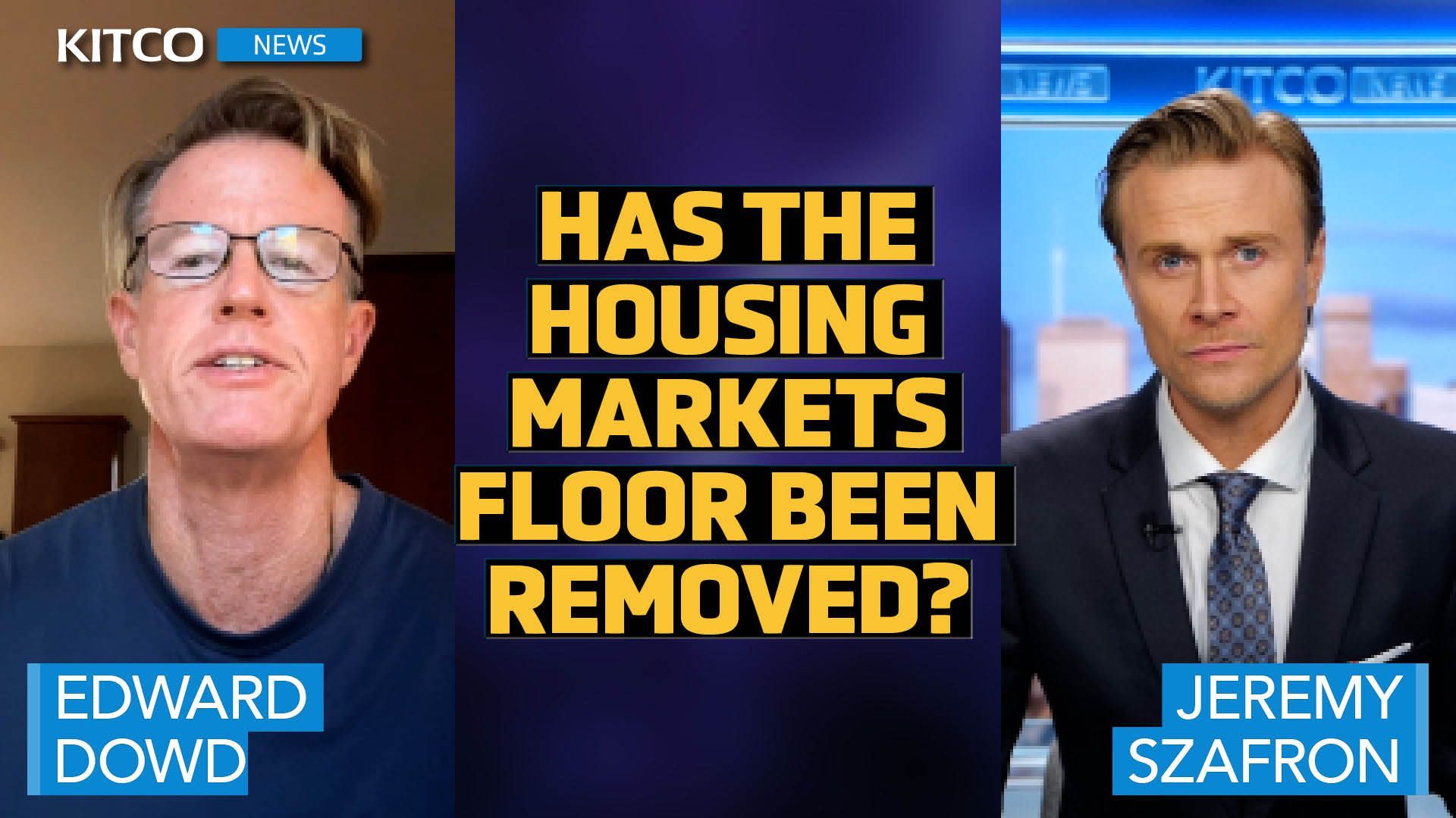
Kitco News hired Jeremy Szafron as an anchor and producer in its Vancouver bureau; Szafron has a long journalism background spanning entertainment, business reporting with a focus on mining and small-caps, and macro-market commentary. He previously developed digital programs for PressReader, launched The Green Scene Podcast (over 400,000 subscribers), and ran Investor Scene and Initiate Research, and has worked as a market strategist and investor-relations consultant across mining, energy, CPG and tech — an editorial appointment that strengthens Kitco’s commodities and small-cap coverage but is unlikely to materially move markets.
Winners are niche commodities media (Kitco), retail-focused precious-metals ETFs (GLD, IAU, SIVR) and junior-miner equities/ETFs (GDXJ, JVZ) that benefit from increased, targeted coverage and deal-flow amplification; losers are information-poor juniors and IR/PR firms that lose share if Kitco internalizes distribution. Greater visibility lowers search/marketing frictions for small-cap mining issuers, which can transiently re-rate valuations by 15–30% on concentrated retail flows, while pricing power for majors is largely unchanged.
Key risks include reputational/regulatory tail events from perceived conflicts of interest given the anchor’s IR background — a disclosure or market-manipulation probe could produce >20% knee-jerk drawdowns in covered small-caps within days. Time horizons: immediate (0–14 days) = sentiment bump; short-term (1–3 months) = measurable flows and volatility (+15–35% realized in names of repeated coverage); long-term (6–18 months) = structural uplift in retail attention if Kitco scales content and partnerships.
Actionable trade implications: favor liquid ETFs to capture flow dynamics (GDXJ, SIVR) and use relative-value pair trades to isolate retail-driven alpha (long juniors vs short majors). Options can asymmetrically capture upside ahead of concentrated coverage spikes: buy-call spreads 2–3 month tenor with position sizing limited to 0.5–1.5% of AUM. Monitor catalysts (major discovery news, mining M&A, commodity move >5% in 30 days) that would amplify coverage impact.
Contrarian view: the market underestimates regulatory second-order effects and the ceiling on retail capacity — coverage may create short-lived spikes rather than sustained re-ratings; therefore prefer scalable, hedged exposures (ETF + short index or majors) and avoid large stakes in single Canadian juniors until 3+ positive, independent media mentions occur. Historical parallels: media-driven microcap pumps in mining returned rapid >30% moves then 40–60% mean reversion over 6–9 months.
AI-powered research, real-time alerts, and portfolio analytics for institutional investors.
Request DemoOverall Sentiment
mildly positive
Sentiment Score
0.25
