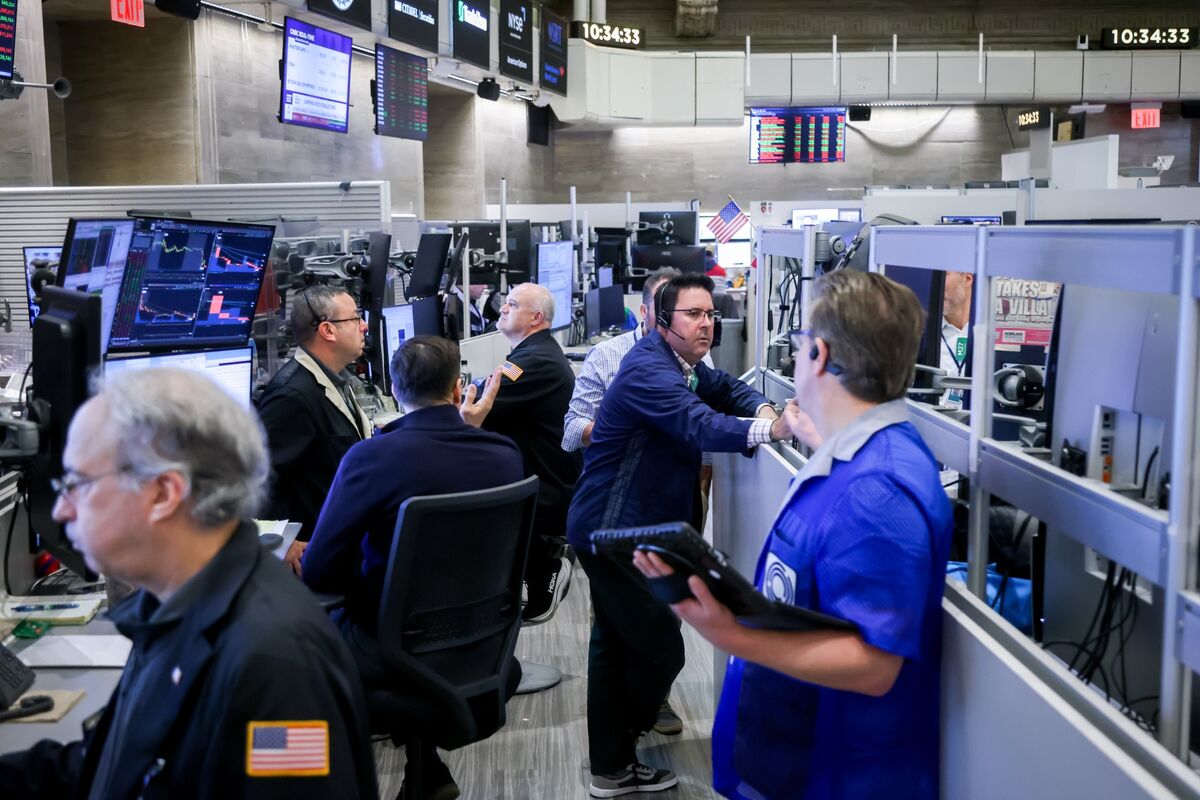
U.S. equities rose for a fifth straight session after the Chicago Mercantile Exchange resumed trading following an earlier outage and investors maintained bets on a Federal Reserve rate cut next month. At 7:12 a.m. in New York the S&P 500 was up 0.2% and the Nasdaq 100 gained 0.3%, with the S&P on track for its biggest weekly advance since June and the Cboe VIX hovering around 17. Restored trading capacity combined with steady rate-cut expectations supported risk-on positioning across futures and equity markets.
Market structure: The resumption of CME trading after an outage and steady Fed-cut odds favors exchange operators (CME) and high-frequency liquidity providers who capture flow and fees; expect CME volumes to re-normalize within 1–4 weeks, benefiting revenue per contract if volatility stays ~VIX 17–20. Losers: short-duration cash bond dealers and regional banks (interest-margin compression if cuts occur) who see compressed yields; FX and commodities will reprice—lower front-end yields typically pressure USD (~1–2% down if a cut occurs within 4–8 weeks) and lift gold (+3–6%) and long-duration equities (tech). Cross-asset: lower rates compress financing costs, increase correlations among growth equities and duration-sensitive assets, and reduce implied volatility term structure, flattening futures basis flows.
Risk assessment: Tail risks include repeat CME operational outages causing multi-hour clearing freezes or regulatory fines (probability low but impact systemic), and a Fed “no-cut” surprise that would spike front-end yields and VIX >25 in days. Immediate horizon (days): intraday liquidity risk and whipsaw; short-term (weeks/months): positioning into the Fed decision; long-term (quarters): structural reallocations into passive growth and duration. Hidden dependencies: heavy use of futures for hedging means options/equity desks can face margin squeezes; catalysts that could reverse the bull case are stronger-than-expected inflation prints, payroll surprises, or major FX moves (USD >1.5% move).
Trade implications: Tactical: establish 2–3% long QQQ (1–3 month horizon) to capture a rate-cut bid; pair with 2% short KRE (regional banks) to hedge rate-sensitivity. Fixed income: buy TLT 3–6 month (2% allocation) or buy TLT 3×30d call spread (strike 1–1.5% OTM) as a duration play if cut occurs. Options/hedge: buy 30–45d SPY 2% OTM puts (size 0.5–1% portfolio) or VIX 30d calls (notional hedge 0.25–0.5%) to protect against a Fed surprise; consider selling near-term IV in single-names with stable earnings (collect premium) but cap risk with defined-risk spreads. For CME (CME), consider a tactical 1% dip-buy if shares fall >3% intraday and no regulatory escalation.
Contrarian angles: The market is likely overpricing an immediate cut—if Powell delays, expect a 3–7% equity drawdown and yields re-steepen within 1–3 weeks; consensus underestimates operational/regulatory fallout from exchange outages, which could force higher market-making costs and bid-ask spreads. Historical parallels: 2019 pivot rallies were reversed when data surprised; this time liquidity is thinner (higher passive flows), amplifying moves. Unintended consequence: low VIX (~17) encourages leverage that could produce outsized corrections; keep convex, limited-loss hedges rather than naked short-vol exposure.
AI-powered research, real-time alerts, and portfolio analytics for institutional investors.
Request DemoOverall Sentiment
mildly positive
Sentiment Score
0.30
Ticker Sentiment
