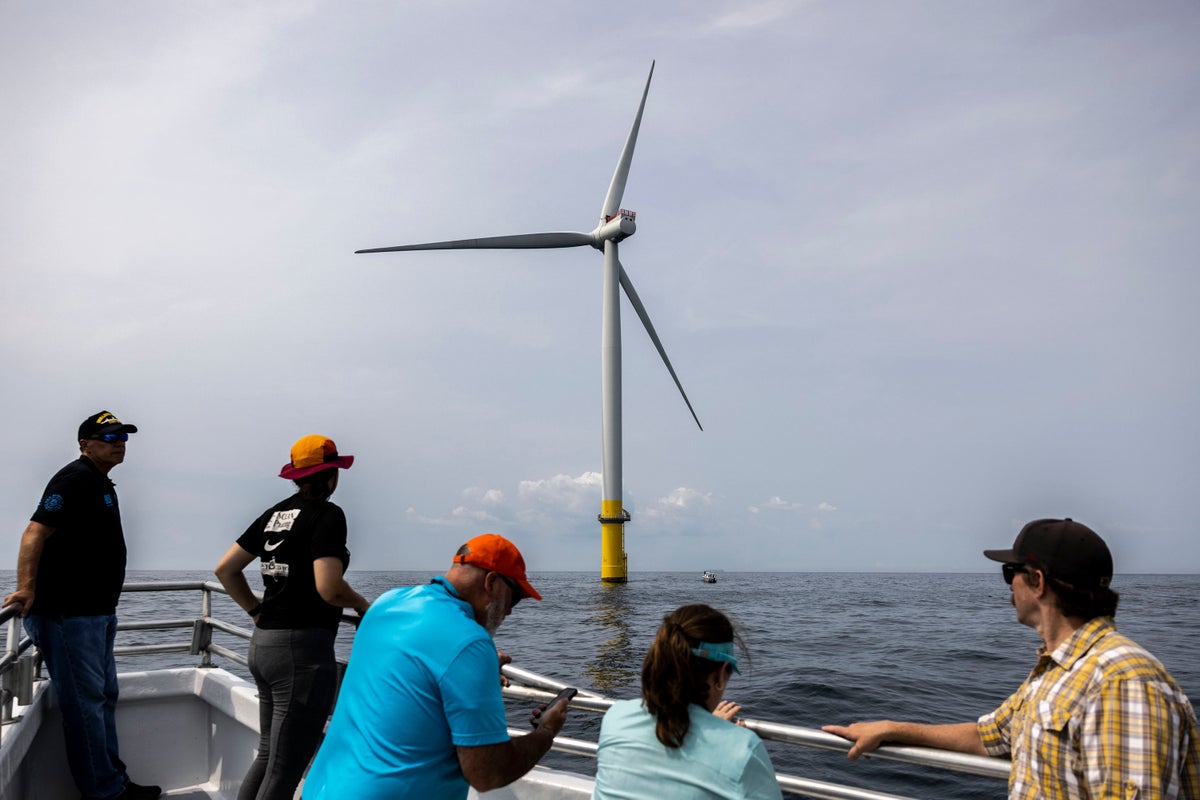
The Trump administration has immediately paused leases for five large offshore wind projects off the East Coast—affecting sites offshore New York, Connecticut, Rhode Island and Virginia—citing unspecified “emerging national security risks” and referencing radar interference concerns from a 2024 Energy Department report. The move puts roughly 5.8 GW of expected capacity (scheduled 2025–2029) and about $10 billion of industry investment since 2021 at risk, raises regulatory uncertainty for developers and investors, and signals potential coordination issues between the Interior Department and the Department of Defense that could delay or reduce U.S. offshore renewable deployment.
Market structure: The immediate pause threatens ~5.8 GW of US offshore capacity (2025–29) and puts at-risk roughly $10bn of invested capital since 2021, concentrating near-term winners in onshore renewables, existing gas-fired generators and grid-scale storage that can pick up lost capacity. Direct losers are offshore developers/utilities with material pipeline exposure (Dominion Energy, suppliers to US offshore OEMs) while defense contractors and radar/aviation-tech vendors gain bargaining power as DoD influence rises.
Risk assessment: Tail risks include a federal moratorium or state-level legal battles that could create multi-year stranded asset writedowns (>10–30% equity hits for exposed developers) and financing covenant breaches; a fast litigation win for developers is a low-probability but high-payoff reversal. Immediate market moves will play out in days–weeks; meaningful credit and capex impacts emerge over 3–12 months; full restructuring of US offshore policy would take 1–3 years.
Trade implications: Near-term alpha comes from expressing concentrated exposure differences: short utilities/developers tied to offshore (D) and suppliers with US sales concentration; rotate to less-exposed renewables (NEE), integrated oil (XOM/CVX) and defense (LMT/NOC). Use options to express views — 3–9 month put spreads on D and 6–12 month call spreads on LMT/NOC — to control capital and time risk while targeting 15–40% returns on catalyst windows.
Contrarian angles: Consensus treats the pause as permanent, but technical mitigations (radar filtering, siting) exist and multi-stakeholder coordination historically resolved similar conflicts in months–years. If DoD provides narrow technical fixes within 30–90 days, forced repricing could create 20–40% rebound opportunities in mispriced developers; conversely prolonged executive policy risk would structurally favor onshore renewables and gas for several years.
AI-powered research, real-time alerts, and portfolio analytics for institutional investors.
Request DemoOverall Sentiment
strongly negative
Sentiment Score
-0.60
Ticker Sentiment
