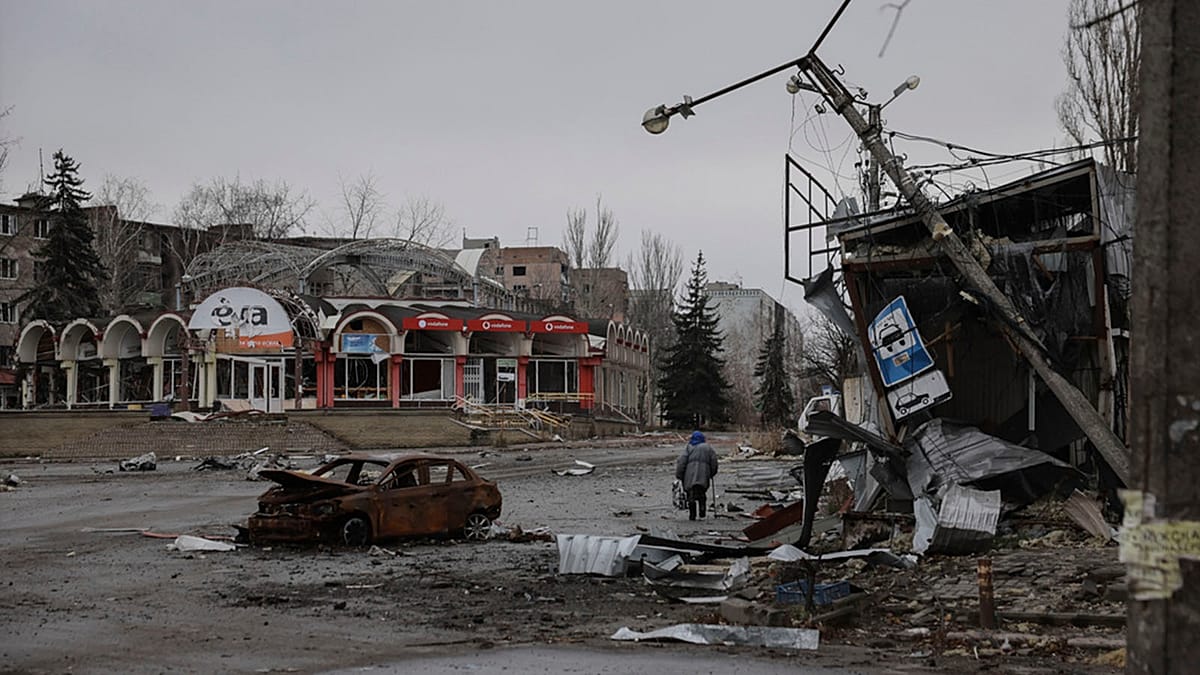
Ukrainian forces struck multiple targets in Russian and Russian-occupied territory, damaging the Tamanneftegaz oil terminal, an oil pipeline, two docks and two ships (sparking a major fire), two fighter jets and ammunition and drone facilities, while Russia launched 86 drones overnight (Ukraine reports shooting down 58). Continued Russian attacks in Donbas (27 attacks near Kostyantynivka in 24 hours) and widespread damage to energy infrastructure across five Ukrainian regions raise near-term energy supply and transport disruption risks and increase geopolitical risk premia, implying potential volatility in energy prices and selective upside for defense-related assets.
Market structure: The immediate winners are defense primes and energy producers that can marginally increase output (US majors XOM, CVX, peers in XLE) and insurers/reinsurers pricing war risk; losers are Ukrainian utility assets, European gas-dependent industries and regional banks tied to commodity flows. Expect a short-term oil/gas risk premium of ~$3–10/bbl if disruptions approach 200–500 kb/d and European TTF volatility spikes 20–50%; equities volatility and oil implied vols will lead, pressuring risk assets and lifting gold.
Risk assessment: Tail risks include NATO escalation or Black Sea closure causing >1 mb/d supply shock (>$15–30/bbl), or broad sanctions disrupting fertilizer/grain exports causing food-price inflation >10% YoY. Time horizons: days — commodity and option volatility spikes; weeks–months — re-rating of defense contractors and energy spreads; quarters–years — capital allocation to resilience and reconstruction. Hidden dependencies: shipping war-risk premiums, insurance, and fertilizer/grain flow constraints that propagate to emerging markets.
Trade implications: Tactical (days–3 months) calls for long energy call exposure (WTI/Brent) and buying defense equities (RTX, LMT) with volatility hedges; medium-term (3–12 months) overweight XLE and GLD while increasing Treasury duration 1–3% to hedge risk-off. Use options to size convexity: capped call spreads on oil and long-dated LEAPS on select defense names to limit drawdowns. Reduce Europe-centric cyclicals and regional bank exposure in favor of energy/defense and cash/light duration.
Contrarian angles: Consensus will push everyone into large-cap defense; valuation-sensitive alpha exists in mid-cap contractors (HII, LHX) with backlog and cheaper multiples — less crowded. The market may overshoot oil upside: US shale can add 200–400 kb/d within 3–9 months, capping long-term prices, so scale-out rules and mean-reversion shorts after >14-day uninterrupted Brent >$95 are prudent.
AI-powered research, real-time alerts, and portfolio analytics for institutional investors.
Request DemoOverall Sentiment
strongly negative
Sentiment Score
-0.60
