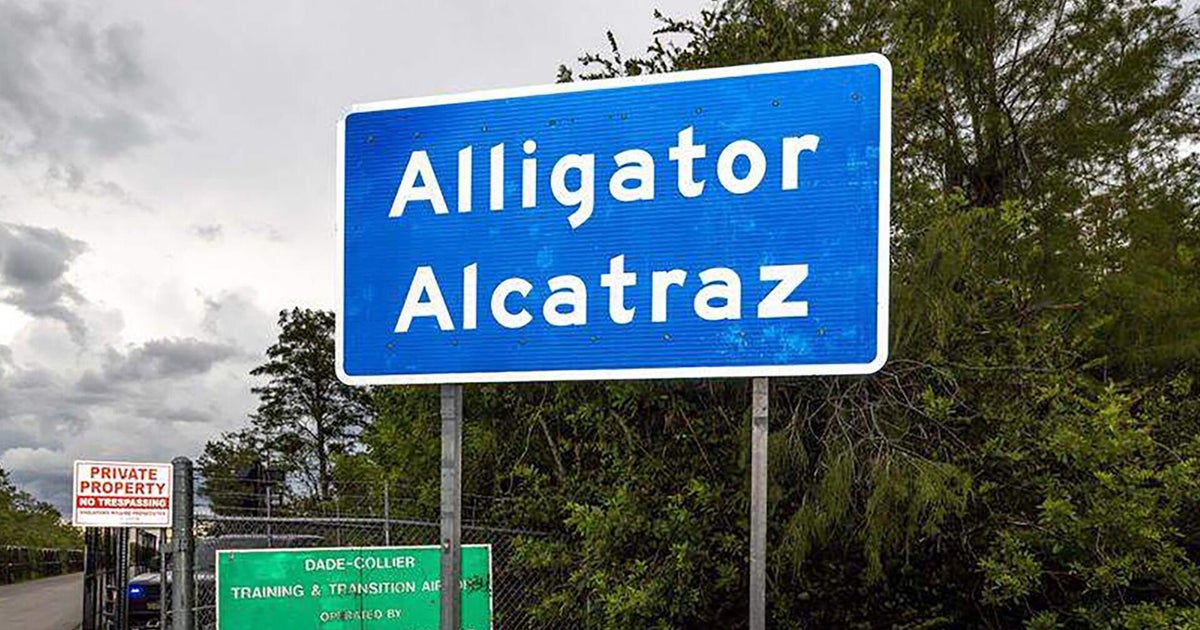
Florida plans to close the Alligator Alcatraz detention center as soon as June, with roughly 1,400 detainees to be removed over the coming weeks and demobilization expected to take another two to three weeks. The facility’s cost has climbed to nearly $1 billion, and the state may only recover the initial $608 million federal reimbursement request while the additional $300 million in operating costs could fall to taxpayers. The site is expected to reopen later as a small pilot-training airport.
The immediate market consequence is not the shutdown itself but the implied unwind of a fast-expanding, politically sensitive state-services footprint. When a facility’s economics rely on a reimbursable federal backstop, the real equity value sits in the timing gap between incurred costs and cash recovery; that gap now appears to be closing in Florida’s favor only partially, which raises the odds of a budgetary write-down or reallocation elsewhere in the state system. Vendors exposed to emergency management and correctional-adjacent contracts should see near-term payment, but the second-order loser is any contractor whose margin model assumed open-ended duration rather than short-cycle demobilization. The bigger tell is that politically motivated infrastructure can reverse faster than the market expects when the fiscal narrative turns. That creates a template risk for other state-level detention, transport, and temporary housing projects: once reimbursement uncertainty appears, procurement can freeze, extensions get contested, and the tail of revenue becomes much less bankable. For suppliers, the highest risk is not cancellation of the current contract, but exclusion from the next round if lawmakers conclude the spend was reputationally costly and operationally inefficient. Contrarianly, the negative read may be slightly overdone for generalist infrastructure and security names. Demobilization itself is a service event — fencing removal, transport, site restoration, and future conversion work — and these end-of-life projects can offset some lost operating revenue, albeit at lower margins and shorter duration. The better trade is against firms with concentrated exposure to politically contingent, state-funded temporary facilities, not against broad public-works or correctional services baskets. The catalyst window is days to weeks for reimbursement headlines, then 1-3 months for budget optics and any spillover into next fiscal-year contracting.
AI-powered research, real-time alerts, and portfolio analytics for institutional investors.
Request DemoOverall Sentiment
mildly negative
Sentiment Score
-0.20
