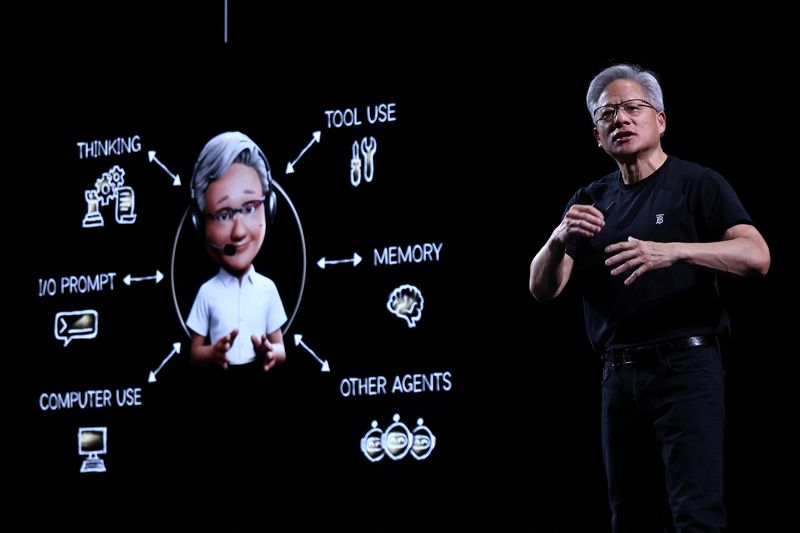
Marvell announced a strategic partnership with NVIDIA that includes a $2.0B investment from NVIDIA and drove Marvell shares up ~11%. The agreement links Marvell to NVIDIA’s AI factory and NVLink Fusion ecosystem; Marvell will provide custom XPUs and NVLink Fusion–compatible scale-up networking while NVIDIA supplies Vera CPU, ConnectX NICs, BlueField DPUs, NVLink interconnect and Spectrum-X switches. The partners will collaborate on silicon photonics and aim to transform telecommunications (5G/6G) networks into AI infrastructure (AI-RAN), potentially accelerating demand for specialized AI compute in telecoms and hyperscale deployments.
Marvell is being re-positioned from a component supplier into a platform play for heterogeneous AI infrastructure; the non-obvious lever is control of high-speed optical interconnect and XPU-like customization, which creates optionality on both high-margin IP licensing and recurring module sales. Expect actual revenue re-acceleration to be lumpy: design wins (board-level validation, OEM certification, field trials) typically take 6–18 months to produce material serial shipments, while photonics capacity and qualified transceiver supply have 12–24 month lead times that can create early scarcity-driven pricing power.
The competitive dynamic pressures traditional switch-ASIC and NIC incumbents — Broadcom, Intel, and entrenched switch vendors — to either accelerate compatible product roadmaps or pursue M&A to preserve system-level share. That creates a two-speed market: system OEMs and integrators that embrace the new interoperability stack can expand gross margins and share, while laggards face shrinking TAM for legacy fabrics; this will drive dispersion in margins across the supplier base over the next 12–36 months.
Key tail risks are execution and ecosystem lock-in: integration bugs, vendor interoperability failures, or a competing consolidation (large incumbent buying a strategic supplier) can reverse re-rating quickly. Near-term market moves are likely sentiment-driven and can overshoot; meaningful fundamental confirmation will be visible through multi-quarter trends in design-win announcements, optical module shipments, and OEM system revenue rather than a single press cycle.
Consensus is pricing in a near-term revenue step-up for smaller suppliers; that is likely overdone in calendar Q1–Q2 but underestimates multi-year structural upside if design wins convert. Therefore position sizing should be asymmetric—capture optionality while limiting headline-risk exposure until end-to-end OEM validation is observable.
AI-powered research, real-time alerts, and portfolio analytics for institutional investors.
Request DemoOverall Sentiment
strongly positive
Sentiment Score
0.75
Ticker Sentiment
