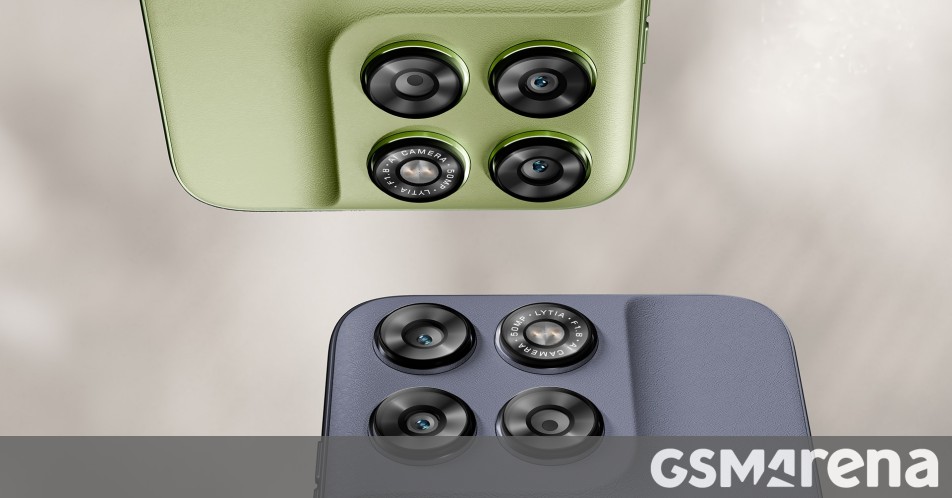
Motorola launched two midrange handsets — the Moto G77 and Moto G67 — rolling out across Europe, the Middle East and Africa starting today. The G77 is positioned as the higher-end model with a 6.8-inch FHD+ 120Hz AMOLED, Dimensity 6400 chipset, 8GB RAM, the series' first 108MP f/1.7 main camera with 3x lossless zoom, and a 5,200 mAh battery with 30W charging for €300/£250; the G67 shares the display and battery but uses a Dimensity 6300, 4GB RAM and a 50MP main sensor, priced at €260/£200. Both ship with Android 16 (Hello UX), microSD expansion, IP64 and Gorilla Glass 7i, representing a modest but competitive midrange refresh unlikely to meaningfully move markets but relevant for consumer demand and regional sales dynamics.
Market structure: Motorola’s Moto G77/G67 refresh tightens midrange competition in EMEA/MEA/AFR at €260–€300 price points, increasing content value for premium suppliers (Corning/GLW on Gorilla Glass 7i, AMOLED panel makers, MediaTek chipsets). Direct winners: GLW (higher-spec glass adoption) and MediaTek (Dimensity 63/64xx volume); losers: low-cost cover-glass entrants and lower-margin camera-sensor suppliers. Expect modest ASP tailwinds for component suppliers (+$1–$5 content per handset) if volumes scale over the next 2–12 months, with limited macro impact on bonds/commodities but potential small FX support to TWD and USD-linked semiconductor names.
Risk assessment: Tail risks include a sharp EM demand shock (smartphone shipments down >10% Y/Y), supply-chain disruption or rapid commoditization of glass substitutes; regulatory export controls on imaging or display tech are low-probability but high-impact. Immediate (days): negligible price moves; short-term (1–3 months): order flows and Corning/MediaTek guidance will re-price expectations; long-term (6–18 months): sustained share gains if Motorola scales adoption across models. Hidden dependency: Motorola/Lenovo’s procurement cadence—one or two large buy orders can swing supplier revenue by several percentage points.
Trade implications: Primary alpha is supplier exposure—GLW is the highest-conviction read-through; MTK benefits from SoC placements. Use directional equity (small sizes) and defined-risk options around quarterly catalysts (Corning earnings, MediaTek shipment updates). Consider sector tilt into Technology Hardware for 3–6 months funded by trimming defensive fixed-income exposure given idiosyncratic upside potential.
Contrarian angles: Consensus may underweight incremental midrange content value and overestimate commoditization speed—if Gorilla Glass 7i becomes standard across other OEMs, GLW could see a 6–12% revenue re-rate within 12 months. Conversely, the market may be pricing too much optionality into panel and sensor names; the real upside is concentrated in glass and SoC suppliers. Historical parallel: 2019 midrange spec bumps produced concentrated supplier wins over 6–12 months, not immediate OEM equity reratings; monitor order cadence before enlarging positions.
AI-powered research, real-time alerts, and portfolio analytics for institutional investors.
Request DemoOverall Sentiment
mildly positive
Sentiment Score
0.25
Ticker Sentiment
