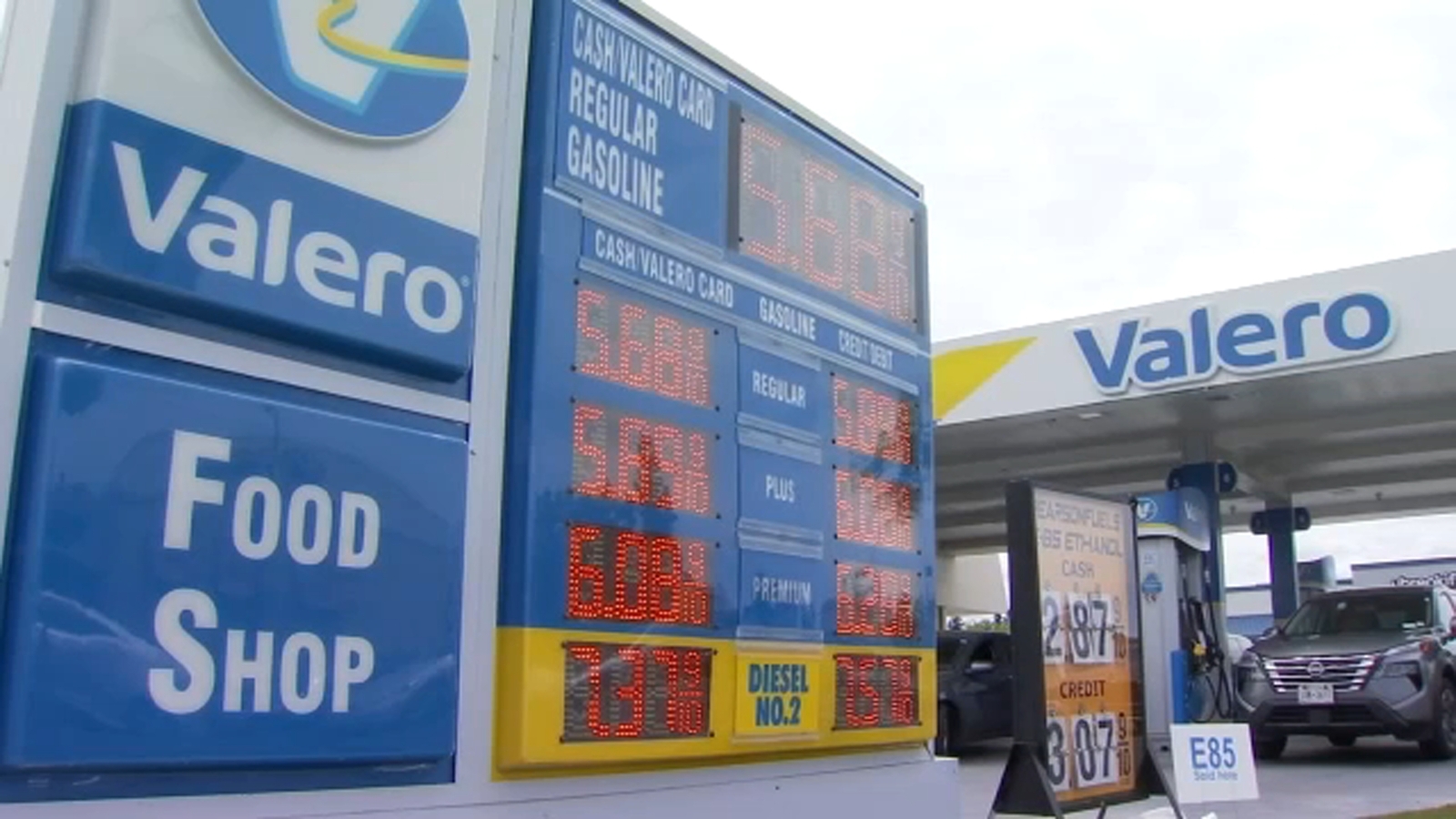
Gas prices have jumped to their highest levels since the start of the war with Iran, with the West Coast average rising from $3.66 in January to $5.41 last week. In Fresno, regular gas reached $6.39 per gallon, while PDS Plumbing and Air said its monthly fuel bill climbed from about $17,000 to $36,000, forcing delayed raises and higher customer prices. Chevron CEO Mike Wirth said stabilization could take weeks or months, implying continued margin pressure for fuel-intensive businesses and broader inflation risk.
The market is still underestimating the second-order margin squeeze from sustained fuel inflation. The immediate winners are upstream energy and refiners, but the more durable beneficiaries are firms with pricing power and low transport intensity; the losers are small/mid-sized service businesses that run fleets and lack hedge programs, where fuel becomes a fixed-cost shock that cannot be absorbed without either delaying compensation or re-pricing end demand. That creates a lagged pass-through into local service inflation over the next 1-2 quarters, which is more important for the macro tape than the headline pump price itself. For consumers, the bigger risk is not just discretionary pullback but a reallocation inside household budgets toward essentials, which pressures home services, auto repair, restaurants, and retail logistics. The strongest second-order effect is on demand elasticity: once businesses raise prices to protect margins, they may lock in volume loss even after fuel normalizes. That makes the shock asymmetric; relief in crude can happen quickly, but customer churn and margin damage unwind slowly. The contrarian view is that this may be a short-duration impulse if maritime flows normalize, but equity markets often overreact to the first leg of a geopolitical supply shock and then fade it once inventories and alternative routing stabilize. For integrated energy names, the move is less about the absolute price spike and more about duration; if the disruption lasts only weeks, the EPS effect is real but not enough to re-rate the group. The cleaner expression is in transport, consumer, and service businesses with weak pass-through and high fuel intensity, where even a brief spike can force operational changes that persist beyond the commodity move.
AI-powered research, real-time alerts, and portfolio analytics for institutional investors.
Overall Sentiment
strongly negative
Sentiment Score
-0.55
Ticker Sentiment
