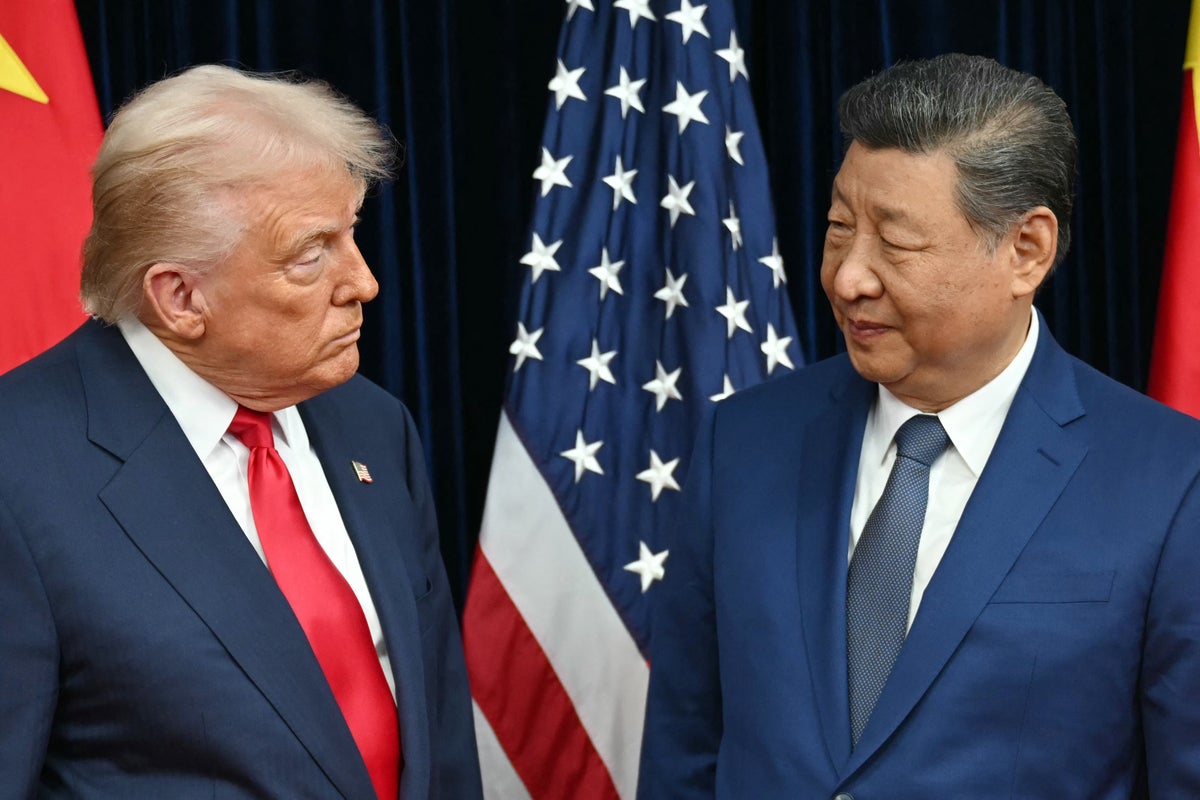
The article argues that Trump’s failure to end the Iran conflict or secure leverage over China could shift geopolitical power toward Beijing, with implications for Taiwan, Ukraine, and US allies. It highlights the risk to oil flows through the Straits of Hormuz, China’s discounted sanctioned-oil imports, and potential concessions including a possible $11 billion Taiwan military aid rollback. The piece frames the outcome as broadly negative for Western security and global trade stability.
The market implication is less about a single summit and more about a credibility transfer: if Washington appears willing to trade strategic restraint for a face-saving exit, allies will price in a lower willingness to underwrite global chokepoints. That is bullish for state-capital models that can absorb sanctions and coercion, but bearish for every supply chain dependent on predictable US deterrence — especially semis, rare-earth processing, and maritime insurance. The second-order effect is a higher geopolitical risk premium on Asian manufacturing exposure, because the “rules-based” backstop is being discounted.
Energy is the immediate transmission channel. A durable easing in Gulf tension would mechanically remove a risk premium from crude, but the more important effect is strategic: China gains optionality on discounted sanctioned barrels while the US loses leverage over both Iran and the shipping lanes that matter to global trade. That combination is negative for tanker earnings, positive for Chinese refiners and commodity traders with access to non-OECD supply, and it widens the relative-cost advantage for China’s industrial base versus import-dependent allies.
The defense and Taiwan angle is the underappreciated tail risk. If Beijing can secure even informal US retrenchment on Taiwan support in exchange for de-escalation in Iran, the repricing will be fast in defense primes, Taiwan-linked semicap equipment, and Japan/Korea risk assets — not because fundamentals change overnight, but because probability-weighted tail scenarios do. Time horizon here is weeks to months: summit language first, budget and procurement signals second, market multiple compression third.
Contrarian view: the market may be overestimating Xi’s ability to deliver a clean off-ramp. Tehran has its own incentives and may resist any arrangement that looks like external custody of its nuclear materials; if talks fail, the current setup shifts from de-escalation to a broader sanctions-and-interdiction regime, which would reintroduce energy upside and keep shipping volatility elevated. So the right trade is not a binary peace bet, but a hedge against a diplomatic failure that re-ramps oil and Asia risk assets simultaneously.
AI-powered research, real-time alerts, and portfolio analytics for institutional investors.
Request DemoOverall Sentiment
strongly negative
Sentiment Score
-0.65
