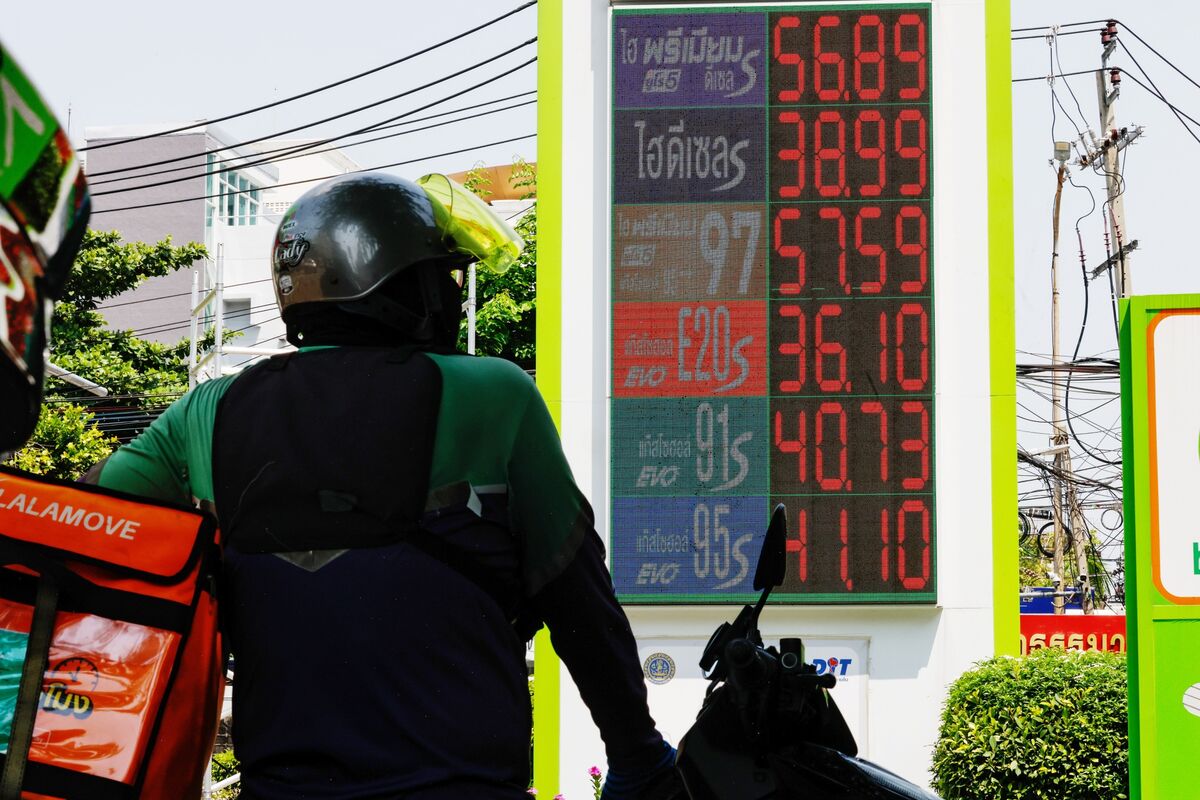
Thailand’s central bank signaled a wait-and-see monetary policy, stating interest-rate cuts are unlikely to be effective against a Middle East-driven oil shock and leaving open the option to tighten if inflation pressures persist. Assistant Governor Chayawadee Chai-Anant noted the shock is supply-driven—limiting the efficacy of monetary easing—and said targeted fiscal and regulatory measures would be more appropriate to support the economy.
Thailand’s effective choice to avoid pre-emptive rate cuts against an externally-driven oil shock increases the chance that real policy rates will remain higher than market currently prices for the next 3–9 months, supporting domestic bank net interest margins as deposit repricing lags loan repricing. Higher headline inflation from a sustained oil move forces two channels: (1) a direct terms-of-trade shock that widens the current account deficit and (2) an indirect distributional shock compressing urban consumption, with consumption durable volumes likely to lag by 2–4 quarters.
A likely second-order fiscal response is targeted subsidies or delayed excise tax adjustments rather than broad-based stimulus; those measures tend to increase fiscal deficits with concentrated benefits to lower-income households, raising supply-side distortions and keeping sovereign bond front-end yields elevated into the next budget cycle. Corporate winners are those that can either pass through higher fuel costs (integrated energy firms, freight/logistics providers with fuel surcharges) or benefit from higher rates (domestic banks); losers are discretionary retail, non-essential consumer finance and tourism segments where margin compression and demand destruction occur within 1–3 quarters.
Key downside catalysts that would reverse this regime are a quick oil-price reversal (Brent down $15+ within 60 days), coordinated SPR releases, or a sharp demand-slowdown out of China that removes pass-through inflation — any of which would force BOT back toward easing and compress front-end yields rapidly. Upside policy risk — persistent inflation above target for 2–4 quarters — could force a hawkish pivot, steepening the sovereign curve and creating an asymmetric downside for long-duration Thai assets.
AI-powered research, real-time alerts, and portfolio analytics for institutional investors.
Overall Sentiment
neutral
Sentiment Score
0.00
