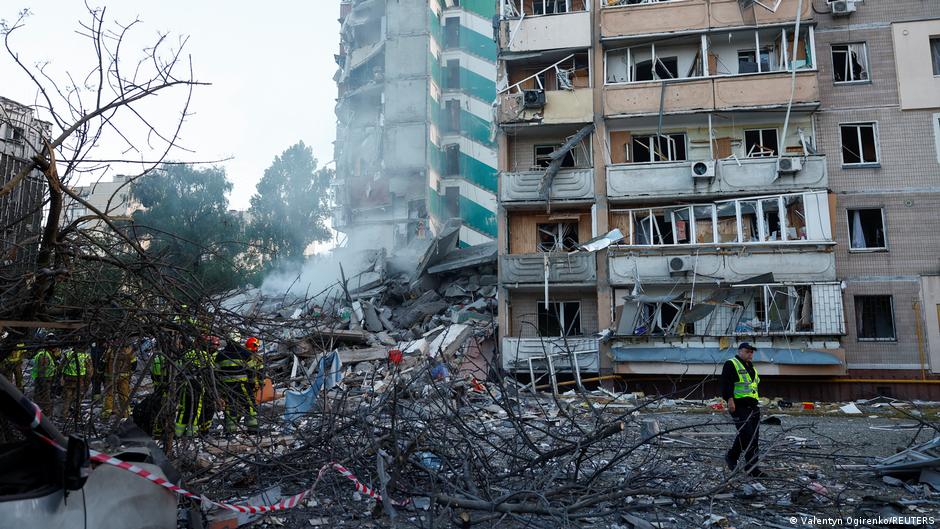
Russian strikes on Kyiv and other Ukrainian cities killed at least eight people, injured dozens more, and damaged 180 structures nationwide, including 50 residential apartment blocks. Ukraine said more than 1,560 Russian drones have been launched since Wednesday, underscoring the largest attacks since the full-scale invasion. The escalation raises geopolitical risk and could weigh on broader risk assets, especially within emerging markets and Europe.
The market implication is not the headline casualty count; it is that Russia is signaling it can scale offensive volume faster than Ukraine can replenish interceptors. When the attack mix shifts toward cheap drones plus intermittent ballistic/cruise missiles, the economic contest becomes asymmetric and duration-sensitive: even with a high interception rate, defender cost per successful intercept rises sharply, while civil infrastructure repair creates a slow-moving drain on fiscal capacity and insurance markets. Second-order effects are most relevant in Europe. Sustained strikes on residential and transport-adjacent infrastructure increase the probability of episodic power disruptions, tighter labor mobility, and higher reconstruction imports, which is mildly supportive for European heavy materials, generators, cable/electrical equipment, and select defense electronics. The bigger macro risk is not immediate commodity supply shock but a gradual hardening of political risk premia across Eastern Europe, especially if attacks continue through the next 2-6 weeks and coincide with stalled diplomacy. Contrarian read: the path dependence for markets may be more bullish for defense and air-defense supply chains than the current consensus suggests, because repeated mass strikes expose the shortage of low-cost interception layers. If Western support does not materially increase, Ukraine’s ability to preserve urban functionality becomes a procurement problem, not just a battlefield problem. That creates a medium-term setup where defense winners can outperform even if the broader geopolitical tape briefly fades after each headline cycle.
AI-powered research, real-time alerts, and portfolio analytics for institutional investors.
Request DemoOverall Sentiment
extremely negative
Sentiment Score
-0.95
