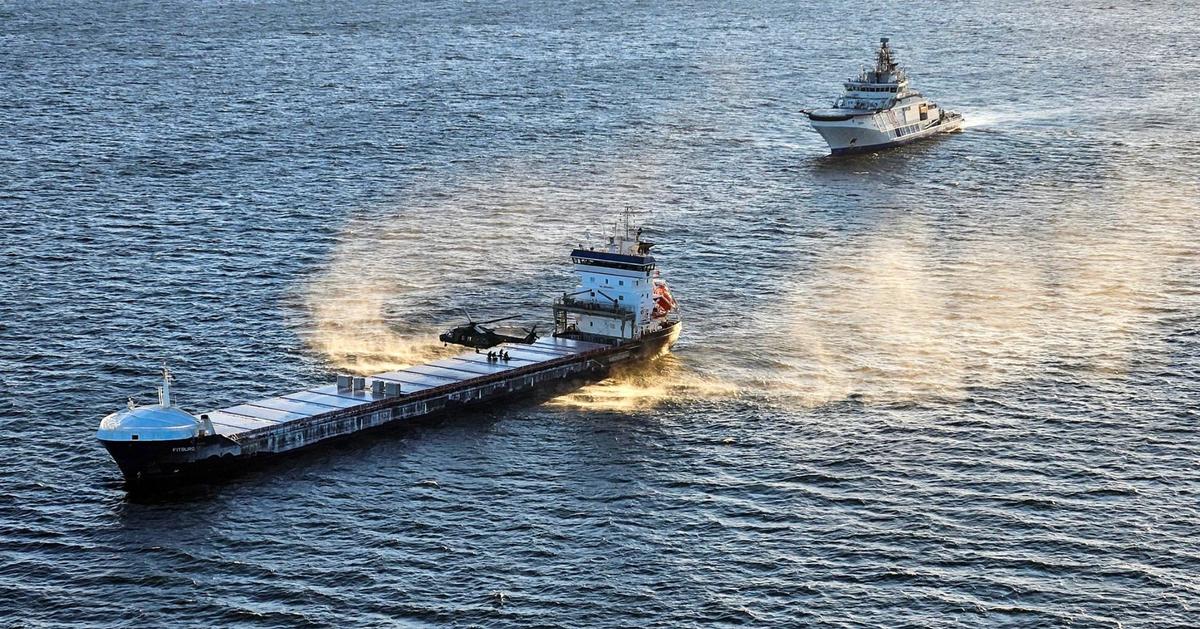
Finnish authorities seized a vessel suspected of sabotaging an undersea telecommunications cable in the Baltic Sea, the latest in a series of apparent attacks on subsea infrastructure. The incidents — with cables to Taiwan reportedly damaged annually and alleged involvement by state actors such as China and Russia — highlight growing geopolitical risk to data and fuel conduits and underscore legal ambiguities that complicate international prevention and response efforts, raising security and supply-chain concerns for operators and policymakers.
Market structure: Sabotage of undersea cables is a structural tailwind for defense contractors (electronic surveillance, naval patrol assets), subsea engineering/cable manufacturers, satellite backhaul providers, cybersecurity firms and reinsurers; telecom incumbents and regional ports/shipping operators are direct losers through higher capex, repair costs and insurance. Expect commercially negotiated cable-laying and repair dayrates to rise; we estimate a 10–20% rise in specialized vessel/dayrates and a 5–15% rise in awarded cable contracts across 12–24 months, lifting pricing power for Prysmian/Nexans-type manufacturers and Subsea7-like integrators.
Risk assessment: Tail risks include a major multi-country outage (low prob, high impact) that could shave 1–2% off affected regional GDP for weeks and force emergency state actions; regulatory tail risk includes EU/NATO mandates that re-allocate telecom capex to security (accelerant). Immediate (days) -> transient risk-off in Nordic/EU markets; short-term (weeks/months) -> insurance rate resets and contract repricing; long-term (quarters/years) -> sustained higher capex and industry consolidation. Hidden dependencies: cable ownership consortia, port access and legal ambiguity that slow collective defense responses and create second-order demand for private security and hardened routing.
Trade implications: Direct plays are overweight defense (LHX, NOC), subsea cable manufacturers (PRY.MI, NEX.PA), satellite comms (IRDM, VSAT) and top-tier cybersecurity (CRWD, PANW), plus selective reinsurers (SREN.MI, MUV2.DE). Use 3–12 month call spreads to express the theme and buy 6–9 month protective puts to hedge geopolitical tail risk; underweight small-cap shipping/ports (e.g., ZIM) for 1–3 month periods as insurance and detours raise costs.
Contrarian angles: Consensus focuses on immediate security spending; it underestimates durable supply constraints in cable manufacture and specialized vessels, which favors early equity exposure to Prysmian/Nexans and Subsea7 for 12–36 months. Conversely, satellite substitution is easier said than done — short-duration satellite plays may be overbought after headlines; avoid crowded short-term bets and prefer staggered entries tied to concrete signals (policy announcements, insurance filings).
AI-powered research, real-time alerts, and portfolio analytics for institutional investors.
Request DemoOverall Sentiment
moderately negative
Sentiment Score
-0.35
