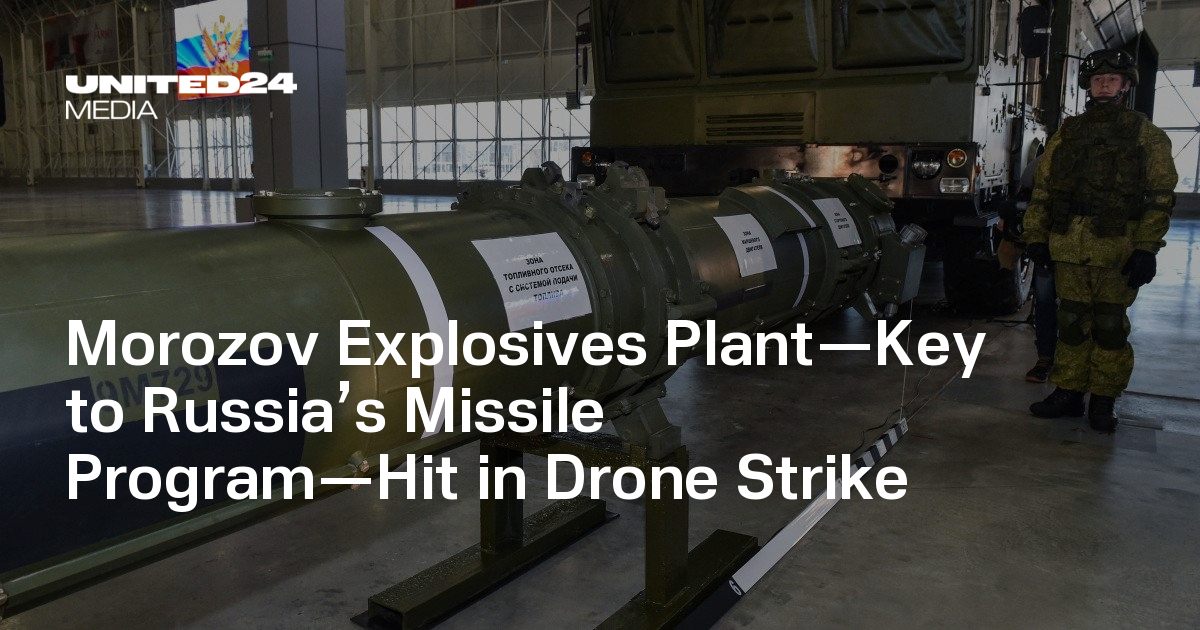
Drone strikes overnight on April 3 targeted the Morozov explosives plant in Leningrad region; regional governor said seven hostile UAVs were shot down and two people were injured. Ukrainian intelligence and independent reporting link the facility to solid fuel and propellant components for Topol‑M and Iskander‑M missiles; the plant is already subject to US/EU/UK/Canada/Japan sanctions. Separate late‑March Ukrainian strikes damaged storage tanks at Primorsk and Ust‑Luga, disrupting export schedules at facilities that handle over 40% of Russia’s seaborne oil exports, raising near‑term energy market and geopolitical risk.
A disruption concentrated in a niche part of the solid‑propellant supply chain functions like a choke‑point: one offline mixer/caster can remove 15–40% of program throughput for months because qualifying replacement lines and reagents require certification. That dynamic pushes prime contractors to accelerate buys from short‑cycle subcontractors and to prepay inventory, creating near‑term cash flow tails for small suppliers while compressing margins for integrators forced to buy at spot premia.
Separately, intermittent hits on export and port infrastructure create asymmetric transportation risk that favors tankers and owners of flexible ship capacity over refiners dependent on specific terminals. Expect short‑term spikes in freight rates and a widening of differentials between seaborne crudes (front‑month Brent vs. heavy sour benchmarks), with physical backwardation that can persist 4–12 weeks until rerouting and storage adjustments are made.
Market pricing currently discounts a binary outcome — either rapid redundancy or steady attrition — but the more likely path is episodic attrition with rising risk premia. That implies convex returns for liquid ways to express transport/energy dislocations and for small, specialized chemical/munitions suppliers that can scale capacity quickly; it also implies a non‑trivial tail to escalation that would reprice defense equities materially over 3–12 months. Near‑term reversals are possible if spare capacity is mobilized or a diplomatic de‑escalation happens, which would quickly relieve rate and commodity premia.
AI-powered research, real-time alerts, and portfolio analytics for institutional investors.
Overall Sentiment
strongly negative
Sentiment Score
-0.60
