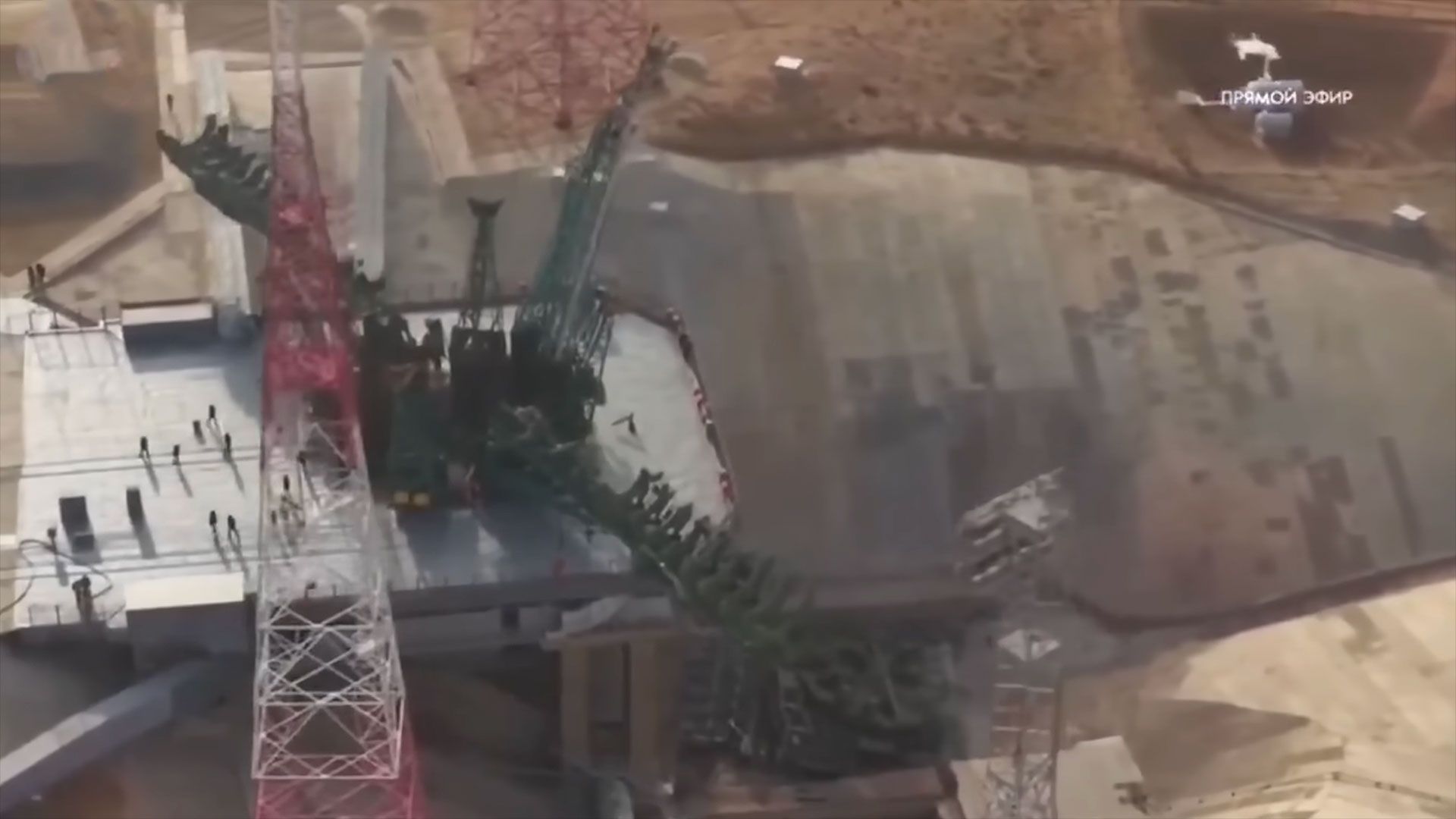
A Soyuz MS-28 launch on Nov. 27 damaged the maintenance cabin/service platform (8U0216) in the flame trench at Baikonur Cosmodrome Site 31/6, Russia's only active pad for crewed ISS flights, potentially delaying future Russian crew and cargo launches. Roscosmos says inspections are underway, spare parts are available and repairs will be made, but preliminary estimates suggest restoration of the platform could take up to two years and may imperil a scheduled Progress resupply mission in December, creating operational and schedule risk for Roscosmos and international ISS partners.
Market structure: Damage to Baikonur’s only active crew pad (repair estimates up to 24 months) immediately raises demand for non‑Russian ISS launch capacity. Short‑term winners are US commercial launch and cargo contractors (SpaceX SPCE, Northrop Grumman NOC, Boeing BA) who gain pricing power for crew/cargo slots; losers are Roscosmos and Russia‑exposed assets (RSX, RUB) with potential 2–5% downside in FX and wider sovereign CDS pricing. Expect spot launch premiums of ~5–15% over 3–6 months as manifests re‑price and range slots become scarce.
Risk assessment: Tail risks include an extended outage >6–12 months causing contract reassignments, an on‑orbit contingency forcing expensive emergency resupply, or a geopolitical escalation that disrupts ISS cooperation. Immediate (days) risk: Progress December manifest uncertainty; short (weeks–months): NASA procurement reallocations and insurance repricing; long (quarters–years): permanent market share shift toward commercial US providers. Hidden dependencies: range availability, payload integration capacity and insurance limits can cap how much western providers can absorb; monitor NASA contractual timelines (30–90 days) as catalysts.
Trade implications: Direct plays: bias toward SPCE (liquidity to scale) and NOC (resupply niche) via limited size equity and option exposure; prefer 3–6 month call spreads to reflect event‑driven upside while limiting premium. Pair trades: long SPCE / short RSX to express shift away from Russian capacity. Rotate +3–5% into Aerospace & Defense (ITA or XAR) at the expense of EM Russia exposure; set profit‑taking if equities spike >20%.
Contrarian angles: Consensus assumes immediate and large revenue transfers to US providers—misses capacity constraints (range windows, factory throughput) that can delay monetization by 3–9 months. Reaction may be underdone in derivatives (short‑dated calls expensive) and overdone in spot equities; use options to capture asymmetric upside and avoid overpaying for immediate re‑rating. Historical parallels (previous Russian outages) show multi‑quarter lags between capability loss and contract reallocation.
AI-powered research, real-time alerts, and portfolio analytics for institutional investors.
Request DemoOverall Sentiment
moderately negative
Sentiment Score
-0.45
