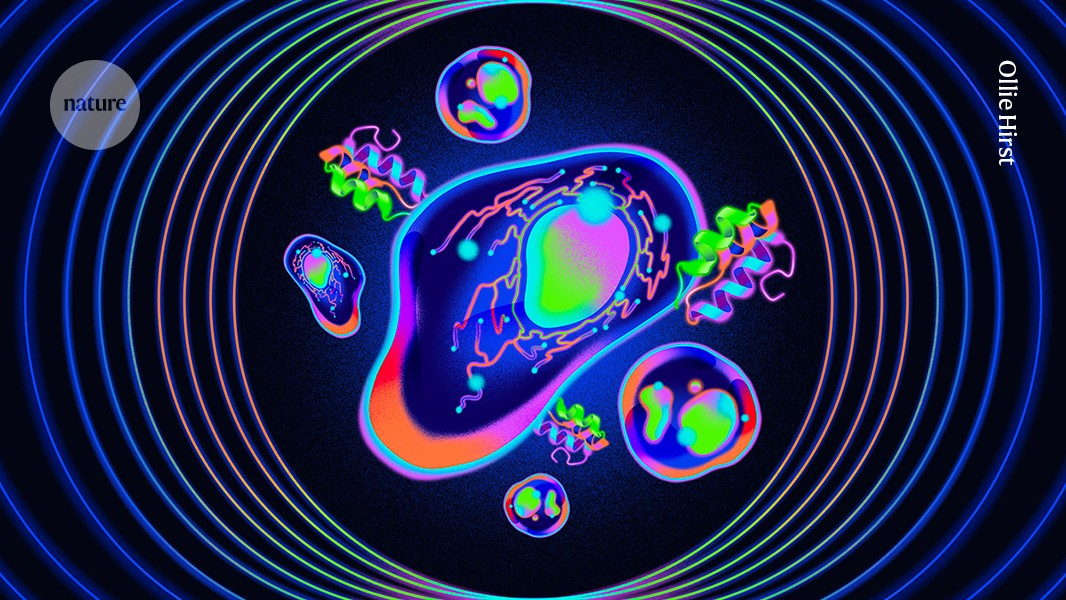
Researchers have demonstrated that common fluorescent proteins — notably enhanced yellow fluorescent protein (EYFP) — can be driven into coherent triplet spin states and used as room-temperature quantum sensors, with fluoresced light showing roughly a 30% magnetic-field-dependent variation and functioning in living bacterial cells. The approach promises finer-scale, genetically targetable quantum sensing inside cells compared with NV-diamond sensors and has attracted institutional support (US NSF funding boost in 2023 and the UK Quantum Biomedical Sensing Research Hub launched December 2024), but significant engineering challenges remain, including photodegradation and the need to select or design variants that spend more time in the triplet state to boost sensitivity.
Market structure: Fluorescent-protein quantum sensing shifts economic value away from bespoke quantum-material manufacturers (NV-diamond specialists) toward life-science reagent and instrument suppliers that already service cell biology labs. Expect modest near-term revenue transfer: large life-science tools suppliers could see a 1–5% top-line uplift within 12–24 months from new reagent/instrument sales if academic-to-commercial translation proceeds; meaningful market-share shifts for niche diamond vendors would take 24–48 months. Pricing power will favor instrument OEMs (Bruker-type) that bundle microwaves/optics with consumables, while commoditized fluorescent proteins will keep reagent margins under pressure.
Risk assessment: Tail risks include regulatory/genetic-editing restrictions or biosecurity reviews that could impose multi-quarter delays, and IP fragmentation (litigation) that could double go-to-market time to 3+ years. Short-term (0–6 months) risk is execution and reproducibility; medium-term (6–24 months) risks are productization and photostability limitations; long-term (2–5 years) risks are substitution by better solid-state sensors. Hidden dependencies: need for microwave control, stable triplet-state engineering, and diamond/rare-material supply chains; failure in any could reduce adoption by >50%.
Trade implications: Favor instrument and reagent incumbents with broad customer bases (life-science tools, imaging) and avoid/sell pure-play quantum hardware names that lack bio channels. Use concentrated, time-boxed exposure: 12–36 month horizons with protective hedges; prefer call spreads or LEAPS rather than outright longs to limit downside. Catalysts to watch: peer-reviewed live mammalian-cell demonstrations, first commercial kit, and partnerships with Thermo Fisher/Danaher within 6–12 months.
Contrarian angles: Consensus may overestimate rapid biotech adoption and underweight the role of instrument OEMs—real winners are likely suppliers who own the control electronics and workflow, not novel protein IP owners. Adoption curve historically resembles other imaging advances (GFP era): slow institutional uptake for 12–36 months, then rapid licensing; mispricing likely in small-cap quantum names that price immediate commercial impact.
AI-powered research, real-time alerts, and portfolio analytics for institutional investors.
Request TrialOverall Sentiment
mildly positive
Sentiment Score
0.27
