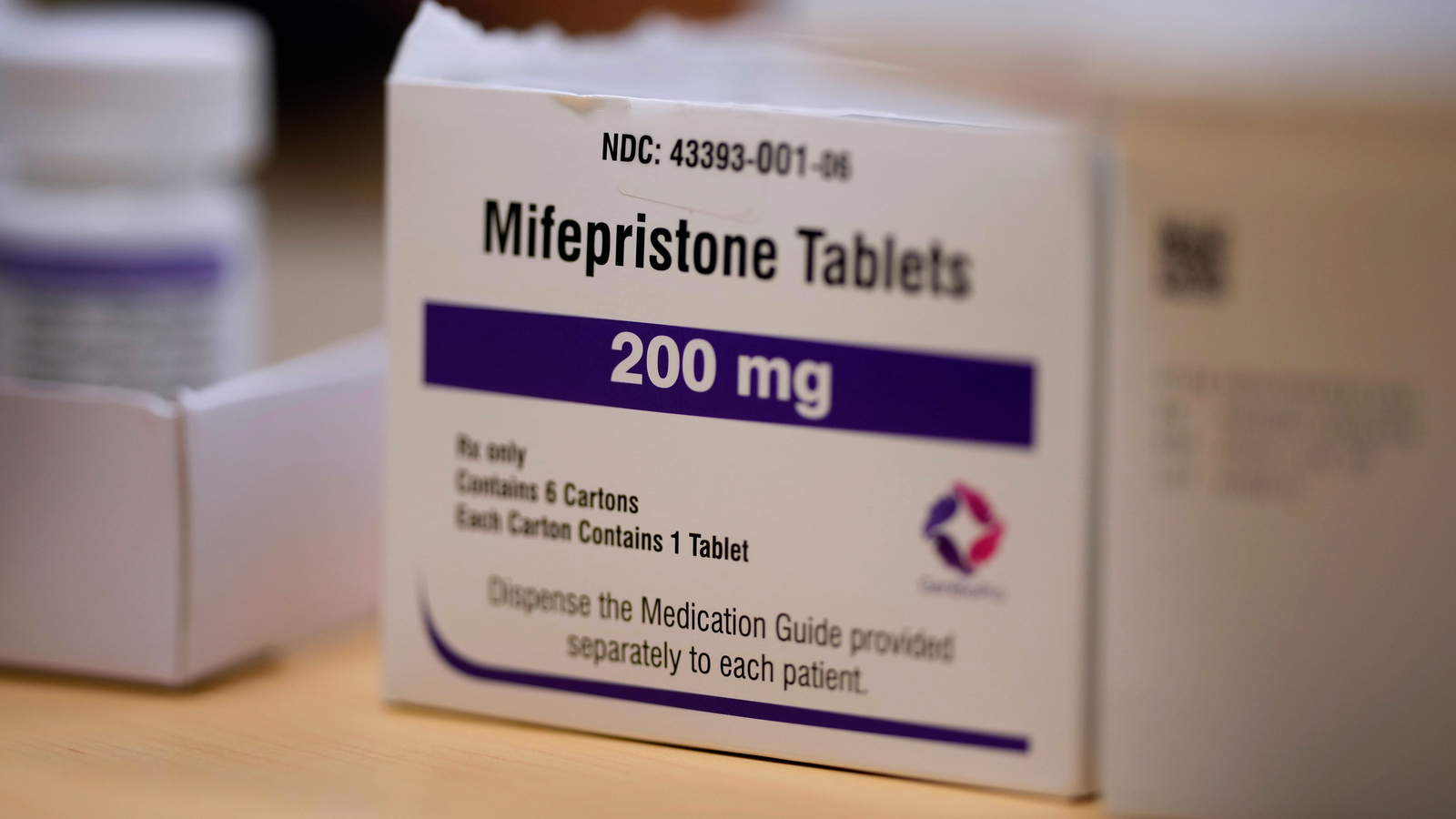
The Supreme Court temporarily restored broad access to mifepristone, allowing pharmacies and mail delivery while it considers emergency appeals for another week. The ruling preserves existing abortion-pill access after a federal appeals court had imposed new restrictions, limiting near-term disruption to telehealth providers and manufacturers. The dispute remains highly consequential for healthcare regulation and state-level abortion access, but the immediate market impact is mainly sector-specific rather than market-wide.
The immediate market read-through is less about the legal headline and more about preserving a distribution channel that is cheaper, scalable, and operationally resilient. Any restriction that forces an in-person workflow would raise friction, compress telehealth volume, and shift demand toward higher-touch providers, but the Court’s pause keeps the incumbent low-cost model intact for now. That matters because the economic moat here is convenience plus logistics, not brand or physician scarcity; if that channel remains open, the bear case for providers dependent on clinic visits stays deferred. Second-order effects are likely concentrated in pharmacy, mail-order, and telehealth infrastructure rather than in headline healthcare names. A prolonged legal overhang increases variance in order flow but also incentivizes redundancy: providers will maintain misoprostol fallback pathways, diversify dispensing partners, and build state-by-state compliance stacks. That creates a small but durable spend pool for legal, compliance, and telemedicine vendors even if the ultimate case goes against broader access. The key catalyst window is days to weeks, not months: the court’s next action could swing operational assumptions for clinics and telehealth platforms quickly, but a durable policy shift would require either a broader judicial move or a new administrative posture. The larger tail risk is political, not medical—state-level enforcement asymmetry can create fragmented access and pricing dislocations without changing the national headline. Consensus is likely underpricing the operational whiplash risk: even a temporary reversal can force providers to retool workflows, generate customer acquisition churn, and temporarily favor cash-pay or self-managed care over organized telehealth networks.
AI-powered research, real-time alerts, and portfolio analytics for institutional investors.
Overall Sentiment
neutral
Sentiment Score
-0.05
