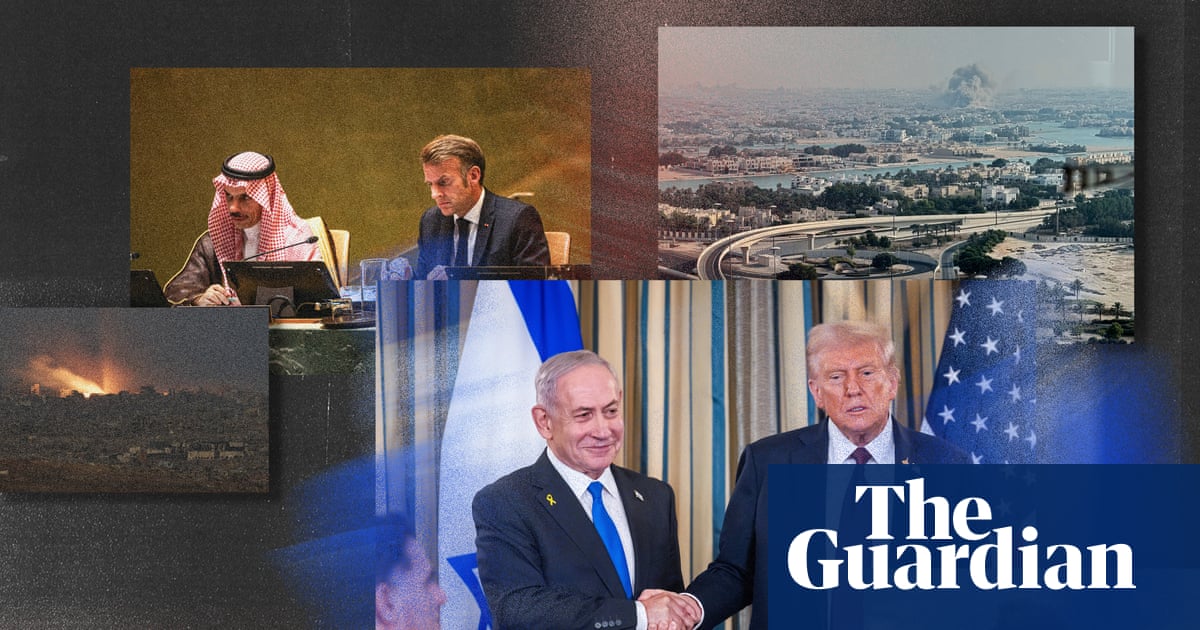
Recent diplomatic efforts to resolve the Gaza conflict highlight a complex and volatile geopolitical landscape, with a Saudi-French 'day-after' plan, endorsed by the UN, proposing a reformed Palestinian Authority and Hamas disarmament, facing opposition from Israel and initial US skepticism. While former President Trump's administration engaged in discussions that removed mass Palestinian expulsions from consideration and received a conditional 'yes' from Hamas on a peace plan, Israeli Prime Minister Netanyahu has consistently resisted proposals leading to a Palestinian state or PA return to Gaza. This ongoing diplomatic friction and deep-seated historical narratives suggest a challenging path to resolution, with potential for a technocratic governance body under figures like Tony Blair, but continued political uncertainty impacting regional stability.
The diplomatic landscape surrounding the Gaza conflict is characterized by persistent challenges and evolving international efforts. A Saudi-French 'day-after' plan, endorsed by the UN General Assembly (with Israel and the US voting against), proposes Hamas disarmament and a reformed Palestinian Authority (PA) to govern Palestine. This initiative, which broke the perceived US monopoly on the peace process, includes commitments from PA President Mahmoud Abbas for elections and internal reform, and aims to establish a common regional architecture akin to ASEAN or OSCE.
The US approach has seen shifts, with former President Trump's administration engaging in discussions that led to the removal of mass Palestinian expulsions from the agenda, a critical red line for regional states like Jordan and Egypt. Despite this, Israeli Prime Minister Netanyahu has consistently resisted proposals for a Palestinian state or the PA's return to Gaza, publicly assuring his domestic audience of these 'red lines.' His actions, including an attack on Hamas negotiators in Qatar, suggest a preference for military solutions and a desire to avoid concessions.
Hamas, despite initial ambiguities, provided a 'yes, but' response to a peace plan, indicating a willingness to relinquish hostages, driven by a transactional shift in Palestinian politics where the 'bare minimum' for stability is sought. A technocratic body, potentially chaired by Trump and led by Tony Blair, is envisioned to govern post-ceasefire, aiming to derive legitimacy from effectiveness amidst upcoming elections in Israel and Palestine. However, deep-seated historical narratives and internal Palestinian divisions, including PA efforts to sabotage dialogue, pose significant obstacles to long-term resolution.
AI-powered research, real-time alerts, and portfolio analytics for institutional investors.
Request DemoOverall Sentiment
moderately negative
Sentiment Score
-0.50
