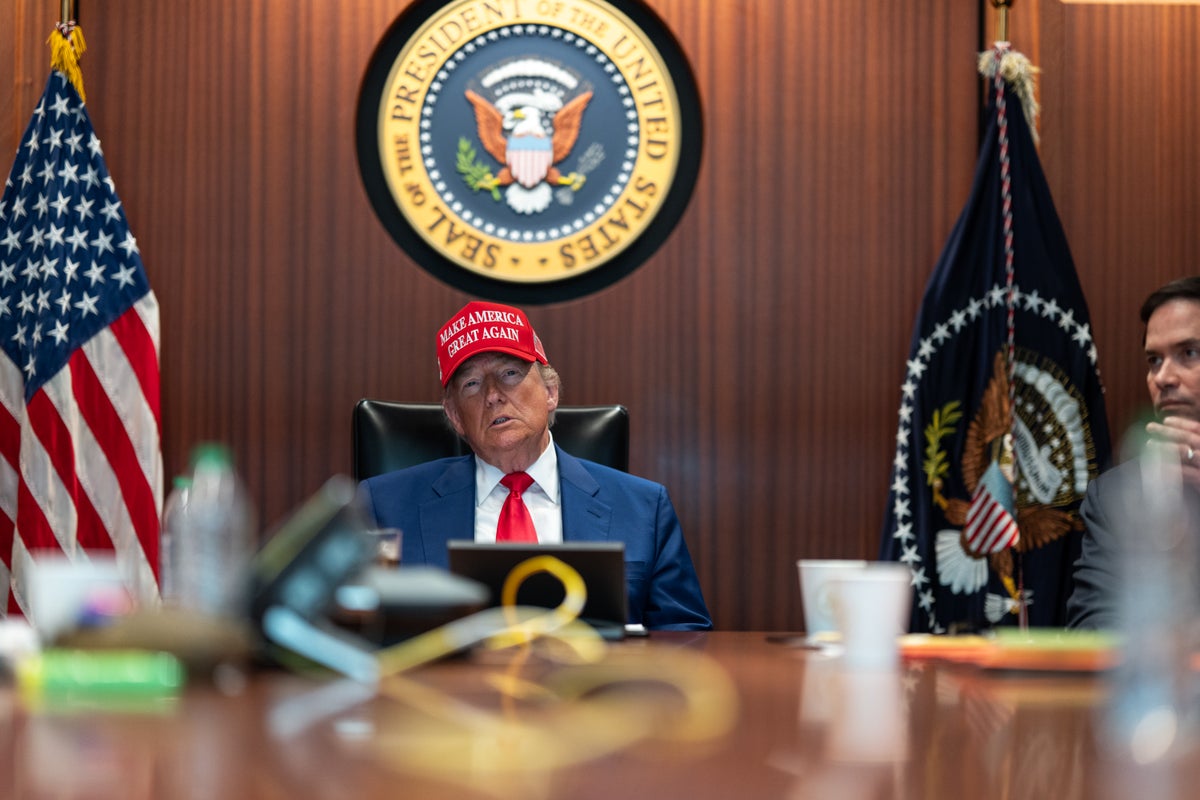
A new report reveals President Trump rejected a more comprehensive military strike plan against Iran's nuclear facilities, reportedly due to an assessment that previous strikes caused only minimal damage to two of three targeted sites, contradicting his earlier claims. The rejected 'all-in' plan, designed to dismantle Iran's nuclear program over several weeks, was reportedly halted to align with his 'America First' agenda and avoid high casualties. This indicates a more cautious U.S. military posture towards Iran than previously suggested, despite ongoing tensions, and highlights the divergence between official rhetoric and intelligence assessments regarding the efficacy of military action.
A new intelligence report reveals a significant de-escalation in U.S. military posture towards Iran, contradicting prior administration rhetoric. President Trump reportedly rejected a comprehensive, multi-week "all-in" plan to dismantle Iran's nuclear program after an assessment found that initial strikes under "Operation Midnight Hammer" inflicted only minimal damage on two of the three targeted facilities. This finding is notably at odds with the president's public claims of having "obliterated" the sites, highlighting a divergence between political statements and intelligence assessments. The decision to halt further military action was reportedly driven by the limited effectiveness of the first wave and an alignment with the "America First" agenda to avoid protracted foreign conflicts and casualties. While this reduces the immediate likelihood of a full-scale war, the report also suggests that Iran's nuclear enrichment capabilities were only delayed and could resume within months, indicating that the core geopolitical risk remains unresolved and that the efficacy of U.S. military options may be less decisive than publicly portrayed.
AI-powered research, real-time alerts, and portfolio analytics for institutional investors.
Overall Sentiment
mixed
Sentiment Score
0.05
