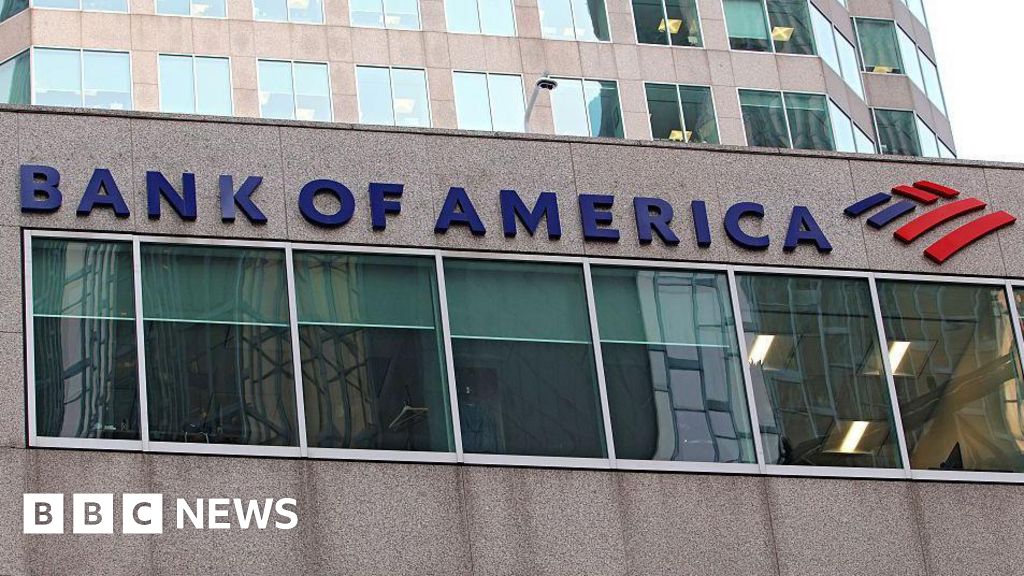
Bank of America agreed to a $72.5m settlement in a class-action suit alleging it facilitated Jeffrey Epstein's sex trafficking; the deal is labeled "no admission of liability" and awaits judicial approval. The complaint cites alarming account behavior and references more than $150m paid to Epstein by Leon Black; the settlement follows JPMorgan's $290m and Deutsche Bank's $75m resolutions. Bank of America had sought dismissal, calling the claims meritless, while plaintiffs' counsel said the deal advances justice.
This episode is less about the headline dollar amount and more about a crystallization of reputational and regulatory risk that has been building across large banks. Expect management teams and regulators to treat these cases as evidence for higher baseline KYC/AML standards: model a 3–7% incremental increase in bank G&A over 12–24 months from technology, headcount and remediation programs, which mechanically pressures ROE by ~50–100bps for the most exposed names.
Competitively, the short-term flow dynamic will favor well-capitalized, lower-litigation franchises for client deposit and treasury flows; conservatively assume a 1–2% reallocation of mobile deposits and private-banking balances away from the highest-profile defendants in episodic windows after headlines. Funding spreads for those names can widen 5–15bps intra-quarter, a non-linear cost for trading/treasury-heavy operations even when the underlying capital hit is “one-off.”
Key catalysts to watch are procedural legal milestones (class certification, judge approval, discovery rulings) in the next 1–9 months — each can either reinflate headlines or close the story and remove uncertainty. The worst-case path is multi-year follow-on litigation, regulatory fines and incremental suits that make these costs serial rather than idiosyncratic; conversely, a clean judicial closure can trigger a quick relief trade as headline risk evaporates.
The market’s short-term negative repricing likely overstates long-term capital impairment but understates near-term operational drag. That creates event-driven, asymmetrical opportunities: small, hedged shorts or options positions to capture headline-driven downside, and event-contingent longs that play relief when the court process concludes or when regulators signal no further systemic action.
AI-powered research, real-time alerts, and portfolio analytics for institutional investors.
Request DemoOverall Sentiment
mildly negative
Sentiment Score
-0.25
Ticker Sentiment
