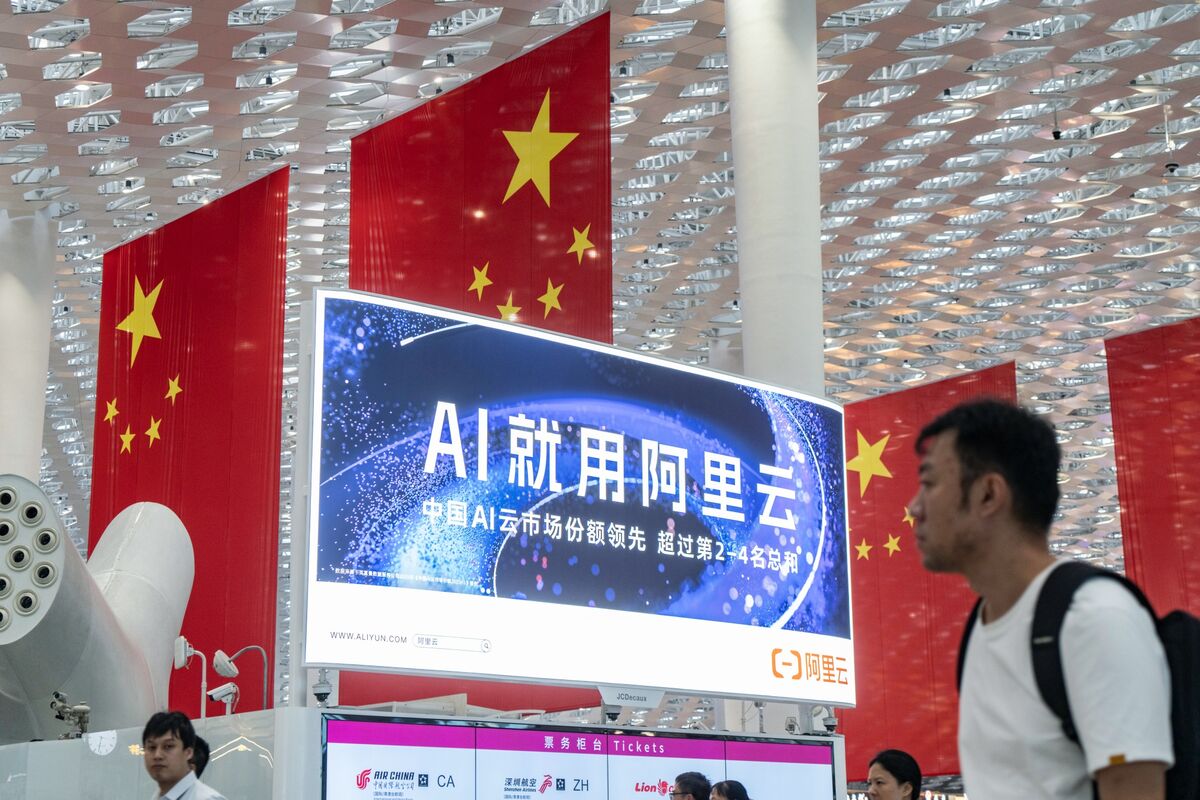
China’s largest tech firms are concentrating on AI agents as the next competitive battleground, indicating a strategic shift toward agent-based products and likely increased R&D and product investment in generative AI capabilities. In a separate development, Apple eliminated dozens of positions across its sales organization — a rare, broad cut that highlights cost-management moves among major hardware players and could influence near-term go-to-market execution.
Market structure: China’s push into AI agents reallocates value from hardware-centric incumbents to software/platform and infra providers. Winners: cloud platforms (BIDU, BABA, TCEHY), AI-inference infrastructure (NVDA, AVGO, local GPU partners) and data/ML services; losers: legacy ad/engagement monetization models and discretionary hardware demand (AAPL faces near-term sales pressure as signaled by cuts). Expect increased pricing power for inference compute and SaaS-like AI services over 12–36 months, compressing margins for low-margin resellers.
Risk assessment: Key tail risks are renewed China regulatory action or tightened US export controls on H100-class GPUs (low-probability, high-impact) and a sudden slowdown in consumer electronics demand that drags tech capex. Immediate (days) risk is volatility spikes around product/earnings announcements; short-term (weeks–months) risk centers on supply-chain constraints and sentiment; long-term (3–5 years) outcome depends on domestic GPU supply and data-privacy legislation. Hidden dependencies include reliance on US chip supply and large labeled training datasets controlled by a few incumbents.
Trade implications: Tactical allocation should rotate from consumer hardware to AI infra and Chinese cloud over the next 30–90 days while sizing for execution risk. Direct plays: long NVDA for infra exposure (buy 9–12 month LEAPs or 3–6 month calls around earnings) and long BIDU/BABA for China agent monetization; trim AAPL by 1–3% of portfolio. Use options (protective puts or put spreads) to hedge China regulatory tail risk and sell covered calls to harvest premium in near-term AAPL positions.
Contrarian angles: Consensus underestimates the pacing risk from GPU scarcity—if US export control eases, China AI names could re-rate quickly; conversely, overestimation of immediate monetization is common and could lead to a 20–40% valuation derating if agents fail to convert users. Historical parallel: cloud migrations took 4–6 years to show sustained margin expansion; expect similar multi-year timelines. Unintended consequence: rapid AI adoption could raise power/energy capex needs, benefiting utilities and industrial suppliers, a second-order trade to watch.
AI-powered research, real-time alerts, and portfolio analytics for institutional investors.
Request DemoOverall Sentiment
neutral
Sentiment Score
0.00
Ticker Sentiment
