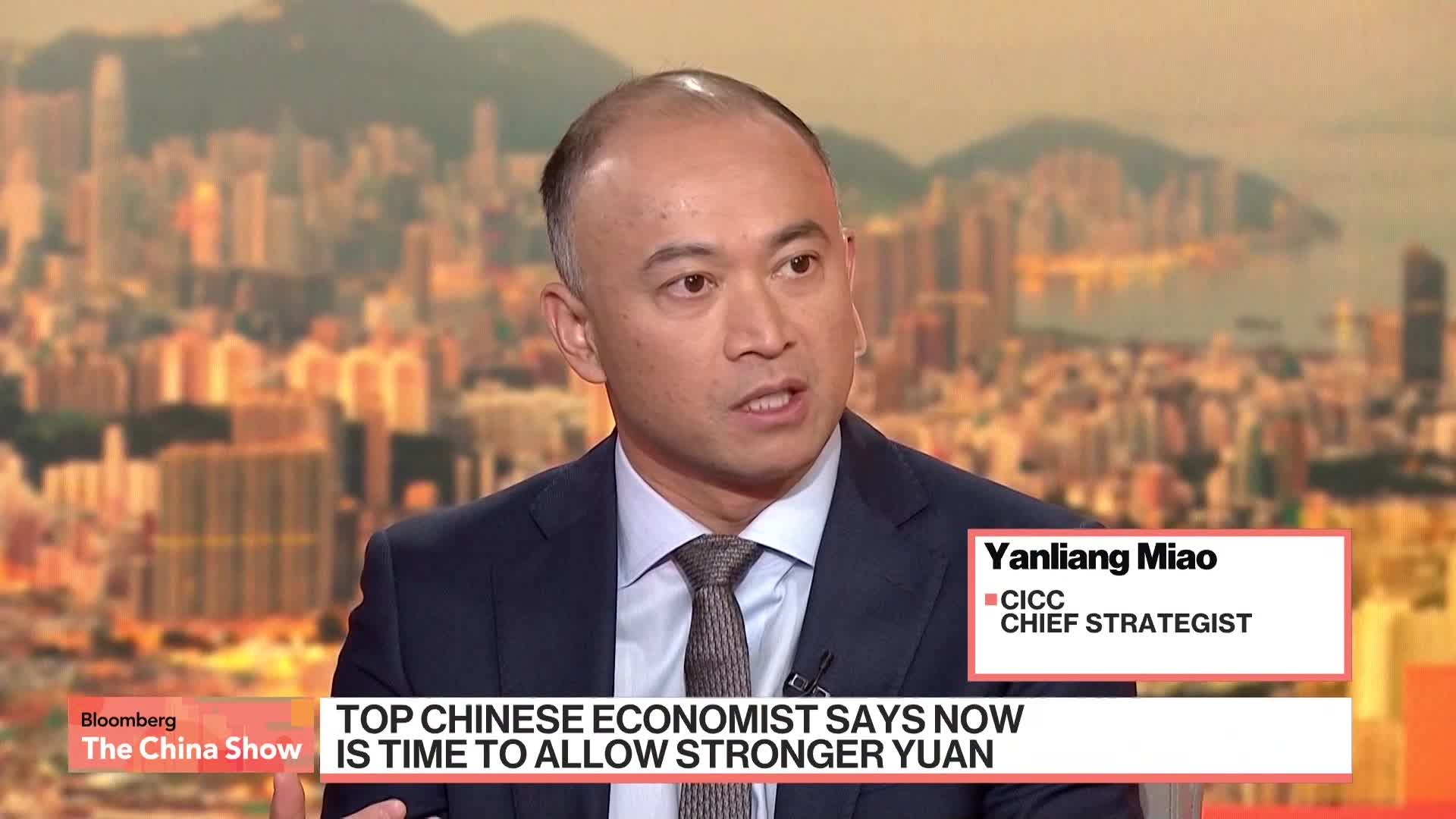
The interview argues the renminbi is attractive to allow a gradual market-driven appreciation — it is the weakest in real effective terms since 2012, having depreciated roughly 16% over the past decade — while the US dollar remains near multi‑decade highs (DXY peaked near 110 in January and is around 100 today). The speaker recommends coordinated monetary easing and fiscal support (to boost transfer income and consumption), expanded issuance of onshore/offshore safe bonds and easier market access to support RMB internationalization (current RMB reserve share ~2–3%), and contends modest appreciation would not materially damage export competitiveness given Chinese firms’ resilience; Chinese 10‑yr yields are cited around 1.6–1.8%.
Market structure: A modest, policy-enabled renminbi appreciation (3–8% over 3–12 months) shifts nominal winners to importers, tourism, domestic services and FX-sensitive bond holders while pressuring low-margin export-competitors. Banks with large FX mismatches and corporates funding USD debt will face translation gains/losses; sovereign and high-quality corporate bonds become relatively more attractive to global buyers as onshore yields compress (expect 20–50bp compression on 3–5y CGBs if easing continues). Cross-asset, a stronger RMB lowers imported inflation (downside to commodity price pass-through) and reduces FX volatility premia priced into CNH options.
Risk assessment: Tail risks include sudden capital-flow controls, a USD reflation shock (USD index +5% in 1–2 months) or a renewed property-sector funding crisis that reverses flows—each would blow out CNH appreciation trades. Immediate (days) risks: policy headlines and Fed-speak; short-term (weeks–months): year-end repatriation flows and PBoC/Fiscal announcements; long-term (quarters–years): true RMB internationalization and safe-asset supply. Hidden dependency: a stronger RMB here is conditional on concurrent fiscal support; without central fiscal backstop appreciation could tighten domestic demand.
Trade implications: Tactical plays favor long RMB and domestic-consumption risk, funded by trimming exports/commodity cyclicals. Use FX options (3–6m USD/CNH puts, strike 3–5% below spot) and overweight China equities (CSI300/HK dual-list tech & consumer) for 6–12m horizons; add 3–5y CGB duration exposure for yield compression. Catalysts to accelerate trades: announced increase in offshore RMB bond issuance, PBoC commentary easing bias, or Fed chair pivot; unwind triggers include capital-control signals or USD rally >5%.
Contrarian angles: Consensus underestimates the combination of lower China yields + year-end repatriation as a supply-demand recipe for RMB appreciation — current positioning still net-short CNH in many global funds. Reaction may be underdone rather than overdone: modest appreciation can be non-linear if safe-asset supply increases (new onshore/offshore issuance). Historical parallel: post-QE USD strength (2010s) shows fiscal easing does not guarantee currency weakness — monitor sovereign issuance and cross-border flows closely for asymmetric outcomes.
AI-powered research, real-time alerts, and portfolio analytics for institutional investors.
Request DemoOverall Sentiment
mildly positive
Sentiment Score
0.25
Ticker Sentiment
