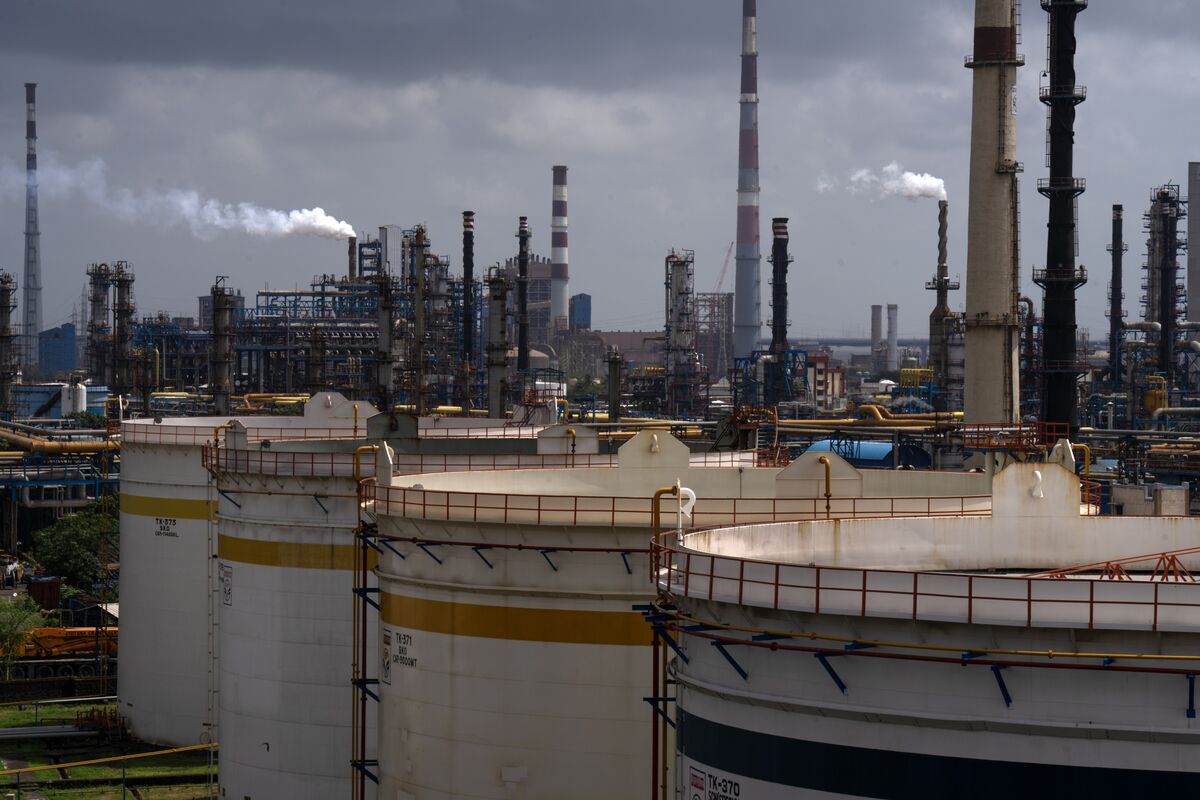
Two supertankers have embarked on an unusually long roughly 11,000-mile (17,700 km) voyage carrying Guyanese crude to India as refiners there seek alternatives to sanctioned Russian barrels after the US tightened restrictions on discounted Russian oil. The shipments illustrate shifting trade flows and the additional freight and supply-chain costs Indian refiners are absorbing to secure non-Russian supply, with potential implications for refining margins, delivered crude costs and regional energy trade patterns.
Market structure: The rerouting of Guyanese cargoes to India is a win for VLCC owners and tonne-mile beneficiaries (Frontline FRO, Euronav EURN, Scorpio STNG) and for upstream Guyana producers (Hess HES, Exxon XOM) that can access distant buyers at full netbacks. Indian refiners that relied on discounted Russian barrels face higher delivered costs (longer voyage + freight), pressuring GRMs by an estimated $1–3/bbl incremental landed cost over weeks–months if this becomes persistent.
Risk assessment: Tail risks include expanded US sanctions or shipping restrictions that could abruptly halt Russian-to-India flows (high-impact, low-probability) or a Suez/Red Sea closure that spikes freight (days–weeks). Near term (0–3 months) expect volatile freight and bunker costs; medium term (3–12 months) outcome hinges on Guyana production scale-up and alternative West African/US supply flows; hidden dependency is storage capacity in India — if full, margin pain is blunted.
Trade implications: Tactical longs on VLCC equities and freight proxies for 3–9 months; selective upstream exposure to Guyana-focused names for 6–18 months; hedge India import-pain via FX (long USD/INR forwards) or short India refining spreads if landed crude cost moves +$2–3/bbl. Options: buy 3–6 month call spreads on FRO/STNG sized 0.5–1% of portfolio to capture asymmetric upside in freight spikes.
Contrarian angle: The market may overstate structural shift — Guyana volumes are still small relative to global seaborne crude and tonne-mile boost may fade if cheaper barrels from West Africa or USGC re-route to India. If VLCC rates revert within 3–6 months, tanker equities could mean-revert quickly; trade with tight stops and monitor sanction guidance in the next 30 days as the primary catalyst.
AI-powered research, real-time alerts, and portfolio analytics for institutional investors.
Request DemoOverall Sentiment
neutral
Sentiment Score
0.00
