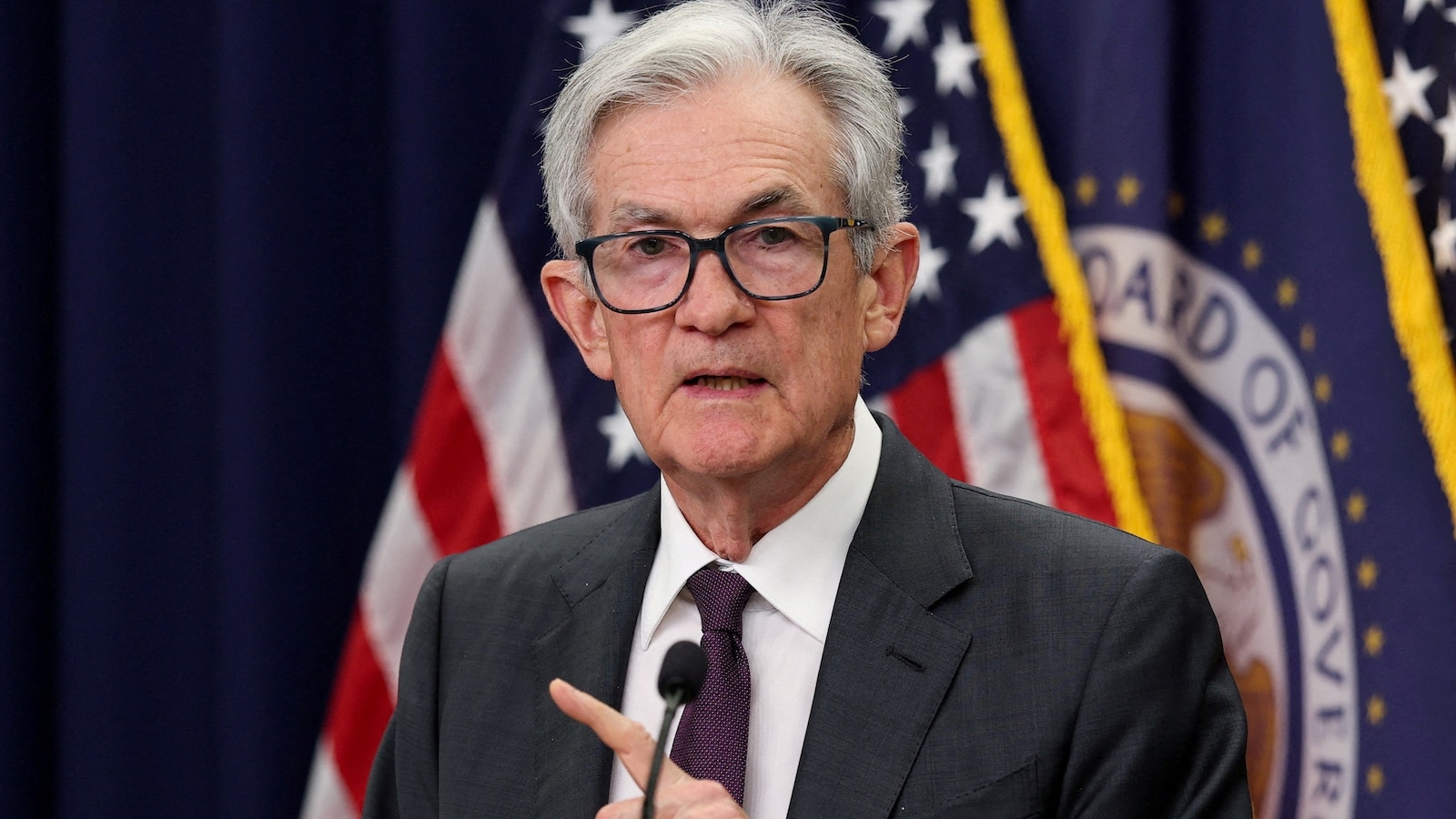
Federal Reserve Chair Jerome Powell's upcoming Jackson Hole speech is highly anticipated as the central bank navigates conflicting economic signals and intense political pressure. The Fed faces a dilemma between slowing employment growth and rising underlying inflation, while President Trump continues to push for interest rate cuts. Despite holding rates steady at 4.25%-4.5% for eight months, markets now price in a nearly 75% chance of a 25-basis point cut in September, making Powell's remarks crucial for clarifying the Fed's policy trajectory and its response to recent weak jobs data and political interference.
Federal Reserve Chair Jerome Powell's upcoming speech at Jackson Hole is set against a backdrop of significant policy uncertainty and mounting political pressure. The central bank is navigating a classic dilemma, caught between a recent sharp slowdown in hiring, evidenced by downward revisions in the latest jobs report, and a simultaneous pickup in underlying inflation. This conflict challenges the Fed's dual mandate of maximizing employment and maintaining price stability. For eight months, the FOMC has held the federal funds rate steady at a restrictive 4.25%-4.5% range, with Chair Powell previously stating this stance was "well positioned" to manage risks, including the uncertain effects of tariffs. However, the weak employment data, which emerged after his last public comments, has intensified speculation of a policy pivot. This is reflected in futures markets, which are now pricing in a nearly 75% probability of a quarter-point rate cut in September. The situation is further complicated by President Trump's persistent public calls for lower rates and direct criticism of Fed officials, introducing a non-economic variable that tests the central bank's stated commitment to political independence.
AI-powered research, real-time alerts, and portfolio analytics for institutional investors.
Overall Sentiment
moderately negative
Sentiment Score
-0.35
