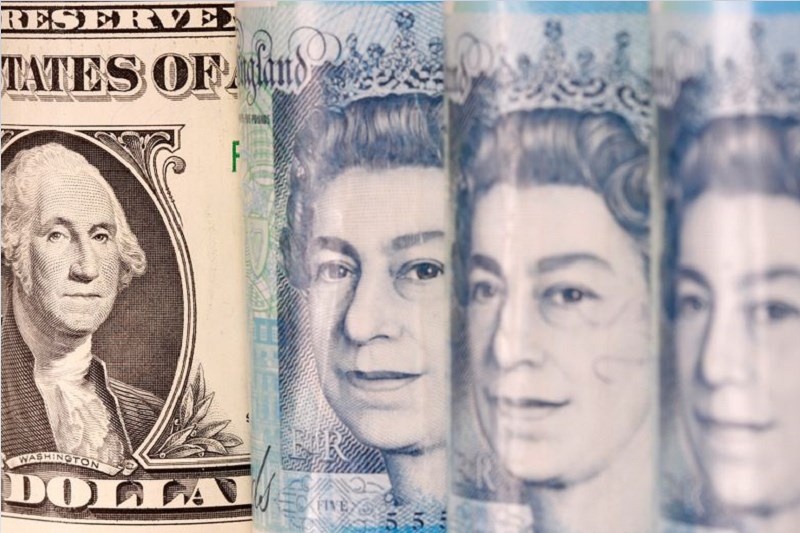
A two-week ceasefire and safe passage through the Strait of Hormuz sparked a risk-on rally, with sterling trading near $1.3432 (building on a 1.26% advance) and GBP/USD intraday range $1.3284–$1.3446. The dollar retreated (DXY had risen just over 3% through March) as markets priced roughly 14 bps of Fed easing for December, though ING warns DXY could still find support around 98–98.50 and truce durability is uncertain. The euro held near $1.1683 after a 1.3% surge, while the PBOC set a lower USD/CNY fix pushing onshore USD/CNY below 6.83, supporting China-linked and commodity currencies and potentially sending USD/KRW toward 1,450–1,460 if energy prices remain subdued.
The market’s pivot from tail-risk to “re-opening” mode is compressing risk premia and reviving carry and growth exposures; that dynamic is most supportive for capital goods and AI infrastructure where deferred capex becomes investible again. Lower energy tail risk non-linearly improves margins for power-hungry server farms and memory vendors (higher gross margins per unit sold) while simultaneously removing a defensive bid for commodity-linked equities and insurance-related shipping stocks.
Second-order winners include downstream datacenter suppliers (cooling, PDUs, memory) whose order books are highest-convexity to a cyclical recovery in capex; exporters that benefit from a firmer currency and cheaper shipping insurance will see working-capital cycle improvements within 1–3 quarters. Losers will be names whose cash flows depended on sustained energy premia or wartime government spending (maritime insurers, tactical defense suppliers) — they face both demand and valuation compression if risk premia normalise.
Key risks are asymmetric and time-framed: a re-escalation of hostilities would re-price energy and insurance premia within days and could induce a 10–20% equity re-rating on crowded long positions. Over months, central-bank positioning remains the bigger macro leash — policy that refuses to cut will sap the reflation trade and punish long-duration growth even if geopolitical risk is quiescent.
Positioning is crowded: the current move looks like a classic volatility-suppressed directional rally (long beta, low vols). That sets up attractive defined-risk ways to lever a thematic view (AI infra > adtech) while buying cheap tail protection against a policy or geopolitical reversal that would re-introduce a flight to quality.
AI-powered research, real-time alerts, and portfolio analytics for institutional investors.
Request DemoOverall Sentiment
mildly positive
Sentiment Score
0.25
Ticker Sentiment
