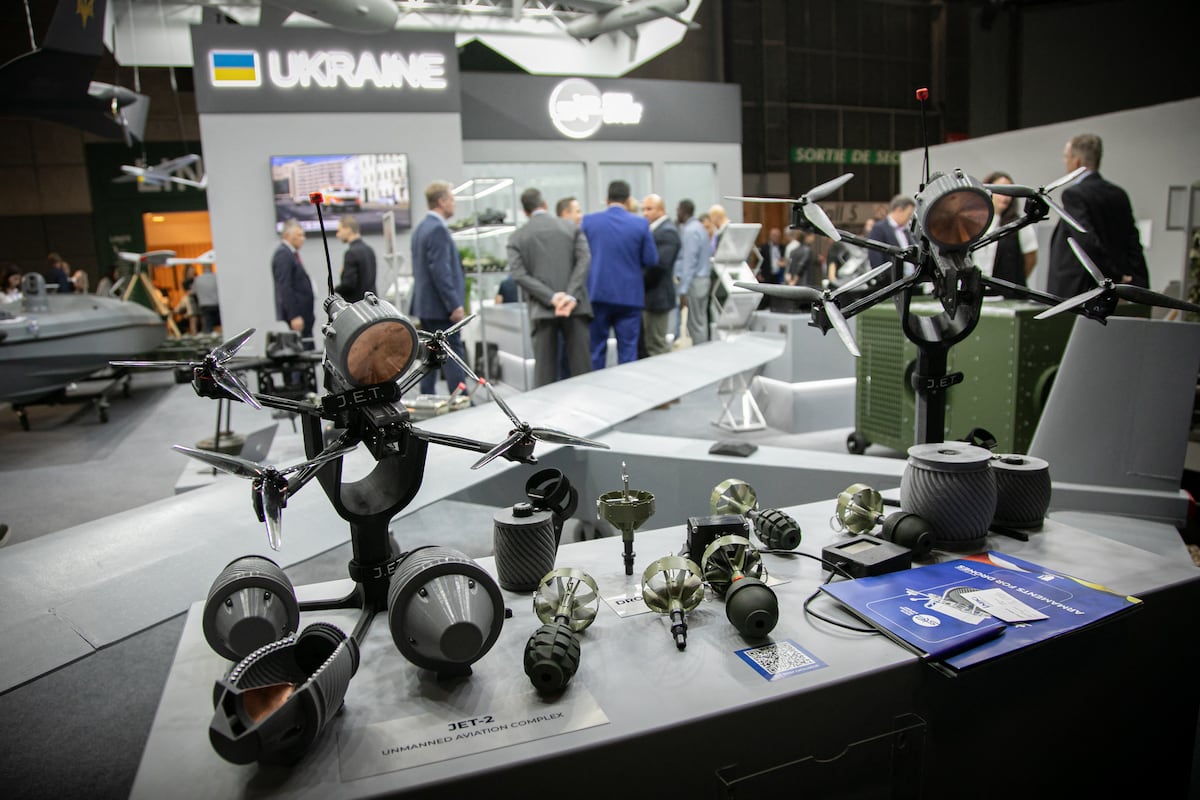
European defense officials and industry leaders warn that preparing for high-intensity conflict requires scalable, adaptable production rather than stockpiling, noting Ukraine’s eight-to-ten-week drone cycle versus Western Europe’s months-or-years cadence. The EU’s March 2024 defense-industrial strategy and French DGA efforts target modular components, civilian-line adaptation and accelerated production testing, but financing, supply-chain bottlenecks, machine upgrades and demand visibility remain key constraints that imply long lead times and uncertain near-term revenue upside for defense suppliers.
Contrarian angles: Consensus ignores software/modularity winners — companies selling common drone subsystems (cameras, comms, autopilots) will compound faster than platform makers; look for high-margin software/recurring-service models that can reach 20–30% gross margins. The market may overprice primes if governments cap prices or impose offsets; therefore pair trades (long components, short heavy OEMs) may capture mispricings. Historical parallel: Cold‑War surge in the 1980s rewarded flexible subcontractors more than integrated OEMs; expect similar dispersion this cycle.
AI-powered research, real-time alerts, and portfolio analytics for institutional investors.
Request DemoOverall Sentiment
neutral
Sentiment Score
-0.10
